Quantum Entanglement and the Mystery of Time: A Strange Realm
Quantum Correlations and Thought Experiments
Imagine two friends standing at opposite sides of the globe. The instant one conceives a specific thought, the other thinks of the exact same concept—without phone calls, messages, or internet. Such a scenario sounds miraculous in everyday life.
What Is Quantum Entanglement?
Yet in the subatomic world, nature exhibits precisely such a phenomenon: quantum entanglement. When two particles are generated in an entangled state, measuring the quantum properties of one instantaneously determines the corresponding state of the other, despite having no physical connection between them across space.
Einstein’s ‘Spooky Action at a Distance’
Albert Einstein famously resisted this implication, referring to it dismissively as “spooky action at a distance.” To Einstein, the notion that one particle could influence another instantaneously across vast distances conflicted with local realism.
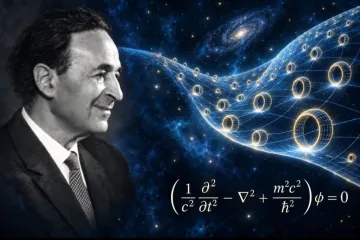
John Stewart Bell and Bell’s Theorem
In the 1960s, physicist John Stewart Bell formulated Bell’s Theorem, establishing a mathematical test to differentiate between local hidden-variable theories and genuine quantum entanglement. The experimental violation of Bell’s inequalities confirmed quantum mechanics over local realism.
Nobel-Winning Experiments Confirming Entanglement
Pioneering experiments by John Clauser in the 1970s, Alain Aspect in the 1980s, and Anton Zeilinger in the 1990s definitively proved the violation of Bell inequalities. Their transformative discoveries established the reality of quantum entanglement, earning them the 2022 Nobel Prize in Physics.
The Enigma of Time in the Quantum Realm
This raises profound questions: What role does time play here? Does quantum entanglement fundamentally overturn our traditional perception of linear time?
Instantaneous Correlations Across Cosmic Distances
Consider two entangled electrons separated by interplanetary distances—one on Earth and the other on Mars. Altering the spin state of the terrestrial electron instantaneously manifests an anti-correlated state in the Martian particle. This instantaneous synchronization occurs without signal transmission through space.
Challenging the Cosmic Speed Limit
Because classical information cannot exceed light speed, entanglement implies that entangled pairs share a timeless, non-local quantum state that operates outside conventional spacetime coordinates.
Retrocausality and Future Influences
In classical reality, time flows inexorably forward from past to future. Yet in quantum delayed-choice experiments, measurement choices made in the present seem to determine whether a photon behaved as a wave or particle in the past, suggesting that time’s arrow may be far more malleable than macroscopic intuition implies.
Rethinking the Linear Flow of Time
Entanglement suggests that past, present, and future may coexist within a unified holographic fabric, where entangled particles participate in a timeless web of relations.
Emerging Technologies and Quantum Computing
Far from being purely abstract philosophy, entanglement powers next-generation information technologies. Quantum computers utilize entangled qubits to solve complex calculations millions of times faster than classical supercomputers. Quantum key distribution guarantees unhackable communications through physics-based encryption.
Speculations on Quantum Time Dynamics
Could quantum correlations ever facilitate communication across closed timelike curves? While backward time travel remains speculative, entanglement forces physicists to reconsider the fundamental nature of temporal flow.
A Deeper Perspective on Physical Reality
Quantum entanglement demonstrates that physical reality transcends visible boundaries. Whether time is an objective physical flow or an emergent macroscopic illusion, quantum mechanics continues to reshape the frontiers of human understanding.