Earth's Largest Digital Camera: The 3.2-Gigapixel LSST Eye on the Sky
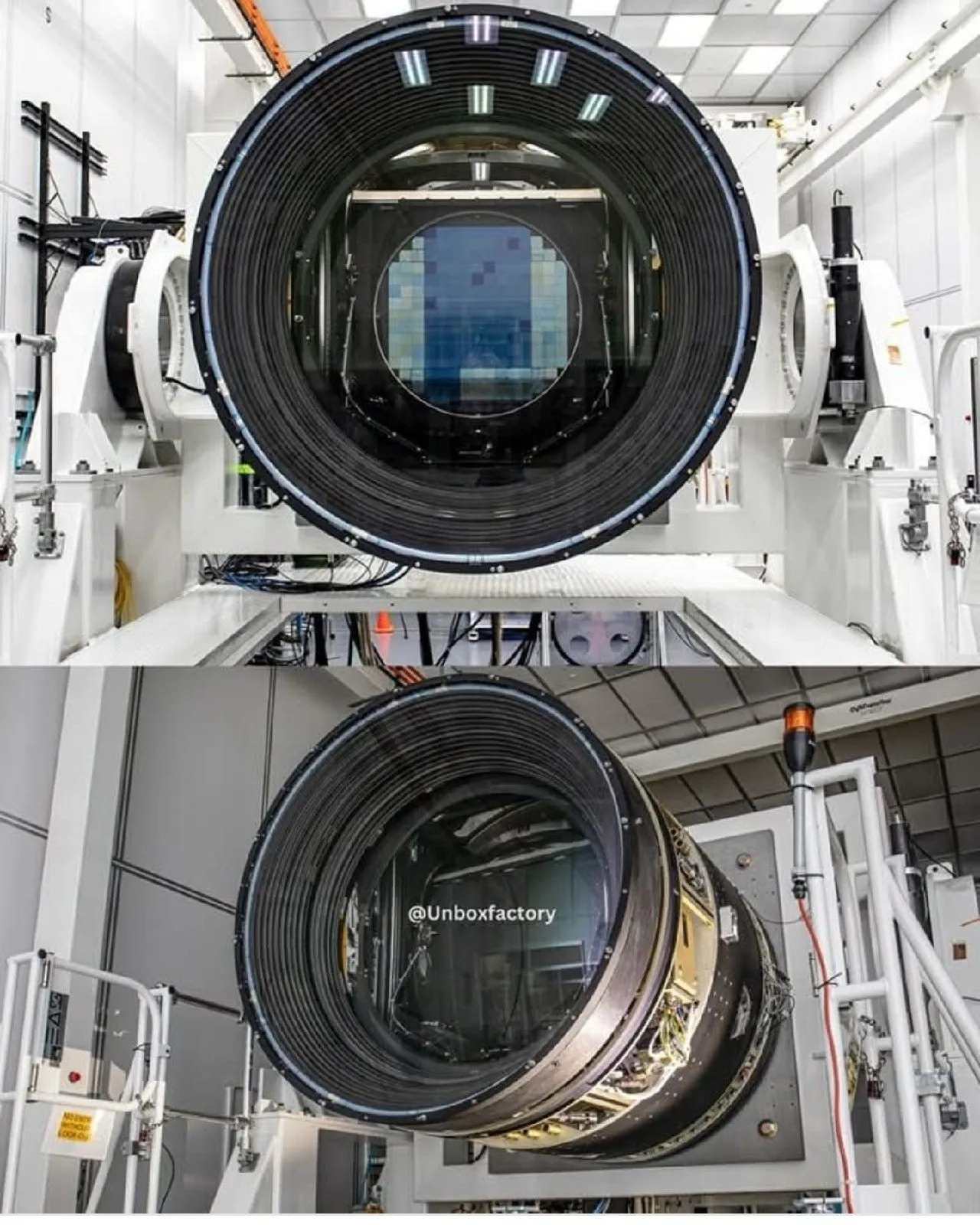
Introducing the LSST Digital Camera
Astrophysicists have engineered a staggering optical marvel: the Legacy Survey of Space and Time (LSST) digital camera. As the largest digital camera ever built, it serves as humanity’s premier sensory instrument to probe the deep mysteries of the cosmos over the coming decade.
Installation and Unmatched Data Acquisition
Installed at the Vera C. Rubin Observatory in Chile, this singular camera collects 30 terabytes of astronomical data every night. Developed at a cost of approximately $1.68 billion, its massive sensors and advanced optics will generate unprecedented data on cosmic evolution.
Observational Scope and 10-Year Survey
Starting in 2025, the camera will track asteroids and comets across our solar system, identify distant supernovae, and observe black hole dynamics continuously for ten years.
An Extraordinary 3.2-Gigapixel Sensor
While consumer smartphone cameras feature sensors under 100 megapixels, the LSST camera boasts an astounding 3,200 megapixels (3.2 gigapixels). In a single exposure, its wide field of view captures an area of sky equivalent to roughly 40 full moons.
The World’s Largest Optical Lens
The camera’s optics are equally colossal. Its front optical lens measures 1.57 meters in diameter, establishing a world record for optical astronomy. Comprising a three-lens assembly, it yields razor-sharp imaging across distant stars and galaxies.
Deep Space Big Data and Cosmic Enigmas
By capturing 30 terabytes of data nightly, the observatory enables astrophysicists to analyze variable stars, black holes, dark matter halos, and the expansion dynamics of the universe.
Massive Physical Dimensions and Engineering
Weighing approximately 3 metric tons—equivalent to a passenger automobile—the camera stands 1.65 meters high and 3 meters long, constituting a monumental engineering feat.
Core Scientific Objectives
Key goals include constraining dark energy, mapping dark matter through gravitational lensing, cataloging potentially hazardous near-Earth asteroids, and charting billions of objects across the Milky Way.
Generating a Cosmic Time-Lapse Movie
By repeatedly surveying the southern sky every few nights, the LSST will assemble the first ultra-high-definition time-lapse movie of the dynamic universe.
Open Data Policy for Global Science
The survey operates under an open-data philosophy, making its vast catalog available to the worldwide astronomical community to accelerate collaborative breakthroughs.
A Transformative Gateway to the Universe
The LSST camera opens an unprecedented observational window onto the cosmos, promising nightly discoveries that will redefine astrophysics for generations.