Origin of Water on Earth: Volcanoes or Cosmic Comets?
The Mystery of the Blue Planet
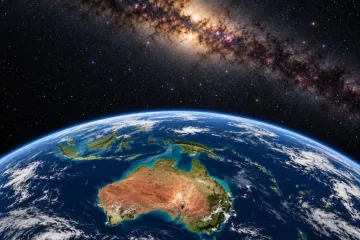
Covering over seventy percent of our planetary surface, liquid oceans make Earth unique in the solar system. Where did this vast reservoir of water come from? The search for the origin of water on Earth reveals a dramatic cosmic and geological history.
The lakes, rivers, glaciers, and oceans we see today did not appear overnight. They are the combined legacy of primordial volcanic outgassing and an ancient bombardment of icy comets and asteroids.
Volcanic Outgassing: Water from Within
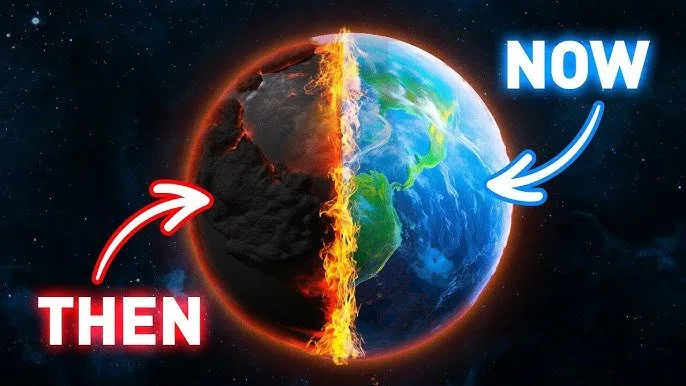
Approximately 4.5 billion years ago, during the formation of the Solar System, the infant Earth was a molten ball of magma enveloped by toxic gases. As the planet gradually cooled, molten mantle rocks released volatile compounds—principally water vapor, carbon dioxide, and nitrogen—through countless volcanic vents.
When atmospheric temperatures cooled below the boiling point of water, moisture condensed into clouds, precipitating torrents of rain for millions of years to fill oceanic basins. Geochemists call this internal process volcanic outgassing.
Cosmic Delivery: Comets and Asteroids
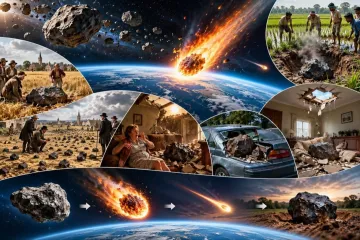
However, internal outgassing alone cannot account for Earth’s total water volume. During the violent epoch known as the Late Heavy Bombardment, millions of icy comets and water-rich carbonaceous chondrite asteroids slammed into the cooling crust, depositing enormous quantities of water ice.
By measuring the deuterium-to-hydrogen (D/H) isotopic ratio in ocean water, planetary scientists found that Earth’s water matches the isotopic signature of carbonaceous asteroids from the outer asteroid belt far more closely than cometary ice. This confirms that interplanetary asteroids delivered a substantial fraction of our oceans.
Thus, the origin of water on Earth stems from a dual heritage: volcanic steam exhaled from the interior, supplemented by icy bombardments from deep space.
The Goldilocks Zone and Liquid Water
Equally critical is Earth’s orbital location. Orbiting within the circumstellar habitable zone—the Goldilocks Zone—Earth receives the ideal amount of solar radiation:
- If Earth were closer to the Sun, like Venus, surface water would boil into steam, triggering a runaway greenhouse effect.
- If Earth were further away, like Mars, water would freeze into permanent polar ice.
Conclusion
Every glass of water we drink is an ancient cosmic heirloom, forged in volcanic infernos and carried across millions of miles of interplanetary space to give rise to living oceans.