Nuclear Fusion: The Limitless and Clean Energy Source of Tomorrow
The Primordial Power of the Universe
Since the dawn of time, nuclear fusion has fueled the cosmos. Every ray of sunshine and heat warming our planet is generated by fusion reactions blazing at the heart of the Sun. Under unimaginable temperatures and crushing pressures, hydrogen nuclei fuse together to form helium atoms. In this transformation, a tiny fraction of mass vanishes, converted into colossal energy according to Einstein’s celebrated formula, E=mc².
The Quest to Build an Artificial Sun on Earth
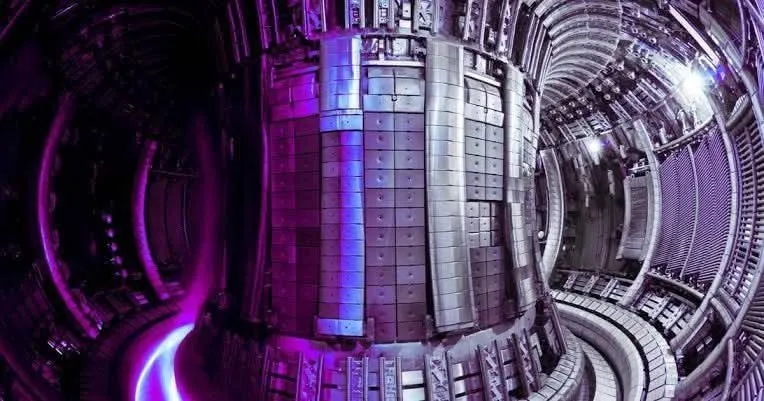
For decades, physicists and engineers have striven to replicate solar fusion on Earth. Yet taming stellar energy is extraordinarily challenging. Earth lacks the crushing gravitational confinement of the Sun, meaning scientists must artificially recreate extreme conditions inside specialized fusion reactors. Inside these machines, heavy isotopes of hydrogen—deuterium and tritium—fuse into helium, releasing enormous bursts of clean energy in the process.
The Key Conditions for Fusion Energy
Sustaining a practical fusion reactor requires meeting two fundamental conditions: heating the fuel into an ultra-hot plasma state and confining that plasma long and densely enough for continuous reactions to take place. Unlike existing commercial nuclear fission reactors, which split heavy uranium atoms, managing fusion plasma is vastly more complex due to turbulent electromagnetic instabilities.
Techniques for Plasma Confinement
To confine blazing plasma, scientists employ two primary methods: magnetic confinement (exemplified by the donut-shaped tokamak) and inertial confinement (using ultra-powerful laser compression). In a tokamak, superconducting magnetic coils generate intense magnetic fields that suspend the superheated plasma in mid-air, preventing it from touching reactor walls. In inertial confinement, powerful laser beams simultaneously strike a tiny hydrogen fuel pellet from all sides, creating extreme shock compression and ignition temperatures.
Unmatched Advantages of Fusion Power
Fusion energy holds monumental advantages over conventional power generation. It is entirely carbon-free and produces no long-lived radioactive waste like fission reactors. Furthermore, its fuel is practically inexhaustible: deuterium is easily extracted from ordinary seawater, while tritium can be bred from lithium reserves. Crucially, fusion poses zero risk of catastrophic meltdown; if any operational disturbance occurs, the plasma cools instantly and the reaction ceases automatically. The primary engineering hurdle remains net energy gain—producing substantially more energy than the massive power required to run the reactor.
Breakthrough Achievements with China’s EAST Reactor
China has made impressive strides in fusion research with the EAST (Experimental Advanced Superconducting Tokamak) facility. Recently, EAST maintained a stable high-temperature plasma loop for over 1,000 seconds (approximately 17 minutes)—a monumental milestone in fusion physics. Operating at core plasma temperatures exceeding 100 million degrees Celsius, it burned over six times hotter than the center of the Sun!
Global Projects and the ITER Flagship
Pioneering experiments at Europe’s JET tokamak and America’s National Ignition Facility (NIF) have also achieved historic milestones in plasma stability and ignition thresholds. Meanwhile, in southern France, an international consortium of 35 nations is constructing ITER—the largest magnetic confinement fusion facility in history, designed to prove the feasibility of commercial-scale fusion.
Private Capital and the Commercial Horizon
Nations worldwide, including the United States, China, Japan, South Korea, and the United Kingdom, are pouring billions into fusion initiatives. Simultaneously, private ventures like Commonwealth Fusion Systems, Helion, and Zap Energy are accelerating development. Worldwide, more than 130 fusion testbeds are in operation, under construction, or planned, all racing toward the ultimate holy grail of clean, limitless power.
A Paradigm Shift for Global Energy
The potential of commercial fusion is truly transformative. Achieving economical fusion energy would overturn global geopolitics, eliminate reliance on fossil fuels, halt carbon emissions, and satisfy humanity’s growing power needs for millennia. Experts anticipate that the first commercial fusion power plants could connect to the electrical grid by mid-century.
A Shield for Civilization’s Future
Like the discovery of fire, electricity, or the microchip, fusion energy has the potential to redefine the trajectory of human civilization. It is not merely an ambitious scientific experiment; it is an existential shield against climate catastrophe and resource depletion. The day is approaching when humanity will harness the light of the stars on Earth, securing a prosperous and boundless energy future.