Nobel Prize 2025 in Science: Winners and Discoveries
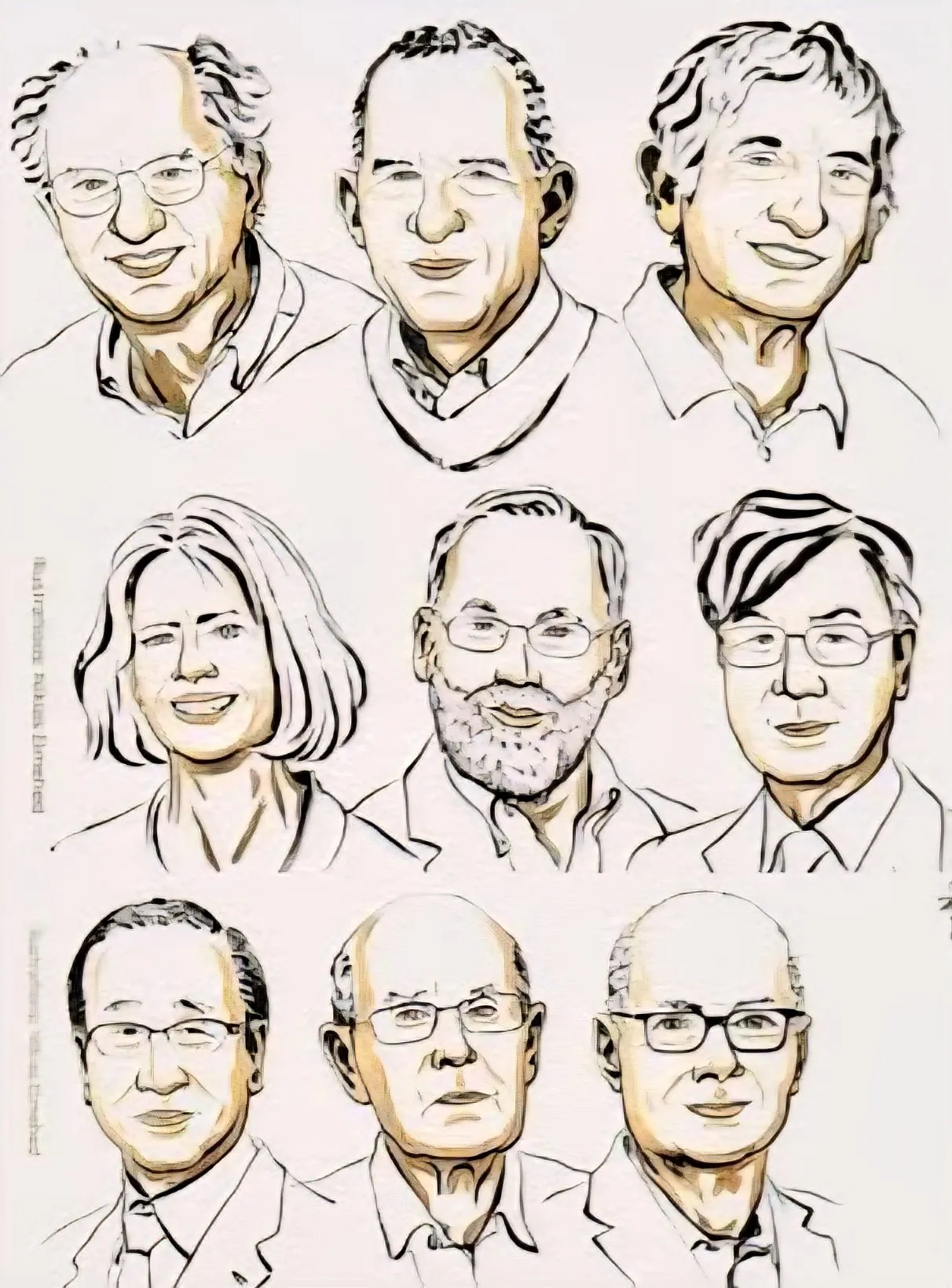
The Nobel Prize 2025 in the sciences honors foundational breakthroughs that illuminate the inner workings of nature—from cellular immunological safeguards to macroscopic quantum mechanics and sponge-like molecular architecture. Here is an overview of the laureates and their revolutionary discoveries.
1. Physiology or Medicine: Unraveling Immune Tolerance
The 2025 Nobel Prize in Physiology or Medicine was awarded jointly to three immunologists:
- Mary Brunkow (USA)
- Fred Ramsdell (USA)
- Shimon Sakaguchi (Japan)
They were recognized for uncovering the molecular mechanisms of “peripheral immune tolerance”—the process that prevents our immune defenses from attacking our own organs.
Regulatory T Cells and Foxp3
While the immune system vigorously destroys pathogenic microbes, it must maintain self-tolerance. Failures in this balance trigger autoimmune disorders like Type 1 diabetes and rheumatoid arthritis.
Shimon Sakaguchi identified a specialized immune guard: Regulatory T cells (Tregs). Subsequently, Mary Brunkow and Fred Ramsdell discovered the master regulator gene Foxp3, which governs Treg development. This discovery opened transformative avenues for precision oncology, organ transplant survival, and gene therapy.
2. Physics: Macroscopic Quantum Tunneling
The 2025 Nobel Prize in Physics was awarded to three American physicists:
- John Clarke
- Michel Devoret
- John Martinis
Their research demonstrated that quantum mechanical behavior is not confined solely to subatomic particles, but can manifest in macroscopic electronic circuits.
Quantum Superconducting Circuits
In classical mechanics, a particle cannot cross an insurmountable energy barrier. In quantum physics, however, particles can “tunnel” through barriers. Clarke, Devoret, and Martinis constructed superconducting electronic circuits containing billions of atoms that exhibited collective Macroscopic Quantum Tunneling and quantized energy levels.
This breakthrough provided the fundamental engineering bedrock for modern superconducting quantum processors, driving the future of quantum computation.
3. Chemistry: Metal-Organic Frameworks (MOFs)
The 2025 Nobel Prize in Chemistry honored three pioneers in structural chemistry:
- Susumu Kitagawa (Japan)
- Richard Robson (Australia)
- Omar Yaghi (USA)
They were awarded for the development of Metal-Organic Frameworks (MOFs)—an extraordinary class of highly porous, custom-engineered crystalline materials.
Porous Crystals for Climate and Clean Water
MOFs consist of metallic coordination centers linked by organic struts, forming cavernous nanoscale cavities. A single gram of MOF can possess an internal surface area exceeding a football field. Key applications include:
- Harvesting drinkable water directly from arid desert air.
- Capturing and sequestering industrial carbon dioxide.
- Safely storing volatile hydrogen and methane gases.
Conclusion
The Nobel Prize 2025 laureates showcase how fearless scientific inquiry drives practical solutions for global health, computational power, and environmental sustainability.