The Dark Horse Nebula: Milky Way Core and Black Hole

Our Cosmic Home: The Milky Way
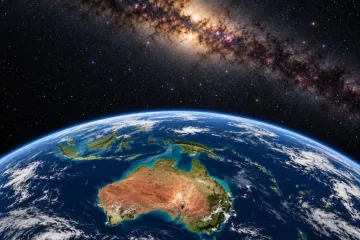
Our cosmic sanctuary is the Milky Way Galaxy—a majestic barred spiral galaxy containing hundreds of billions of stars. Our solar system resides within the Orion-Cygnus arm, located roughly 25,000 to 26,000 light-years away from the galactic center.
Light departing the galactic core tonight began its voyage across deep space over twenty-five thousand years ago, during the height of Earth’s last glacial epoch.
The Dark Horse Nebula: A Silhouette Against the Core
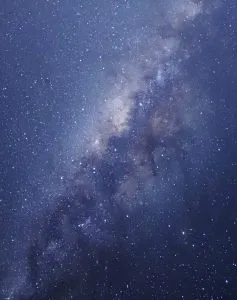
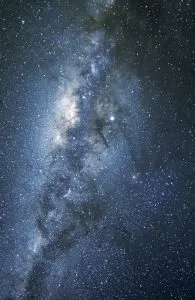
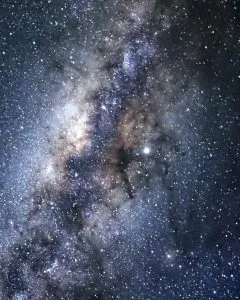
Although the galactic center radiates intense starlight, vast swathes of its luminescence are obscured by dense lanes of interstellar hydrogen and dust. Nestled near this glowing galactic bulge is an immense dark absorption nebula: the Dark Horse Nebula.
Spanning the constellations of Ophiuchus and Sagittarius, this dark molecular cloud closely resembles the silhouette of a rearing stallion. Viewed under dark, unpolluted skies, its dusky contours stand out in sharp contrast against the radiant starfields of the Milky Way.
Why the Galactic Core Shines So Powerfully
The dazzling luminosity of the galactic core arises from two primary astrophysical engines:
- Astonishing Stellar Density: Within the central parsecs of the galaxy, stars are packed together with staggering density—millions of times more crowded than our peaceful solar neighborhood.
- Supermassive Black Hole: At the gravitational vortex of the galaxy sits Sagittarius A*, a supermassive black hole containing approximately 4.3 million solar masses.
Accretion Disks and Obscuring Dust Clouds
Infalling gas swirling around Sagittarius A* forms an energetic, superheated accretion disk. Intense gravitational friction and shear heat this plasma to millions of degrees, releasing intense radiation across X-ray and radio wavelengths before crossing the event horizon.
Most of this visible radiance is screened from optical telescopes by intervening interstellar dust and gas clouds. Without this dusty cosmic screen, the galactic core of the Milky Way would blaze across our night sky with the brilliance of a full moon, turning every clear night on Earth into a luminous spectacle.
Conclusion
The juxtaposition of cold star-forming dust lanes in the Dark Horse Nebula with the energetic star clusters surrounding Sagittarius A* encapsulates the dynamic majesty of our Milky Way Galaxy.