Bose-Einstein Condensate: 30 Years of the 5th State of Matter
A Thirty-Year Milestone in Quantum Physics
The year 2025 commemorates the thirtieth anniversary of the laboratory realization of the Bose-Einstein Condensate (BEC). Created experimentally for the first time in 1995, this exotic phase of matter demonstrated the bizarre macroscopic behavior of atoms cooled to temperatures hovering just fractions of a microkelvin above absolute zero.
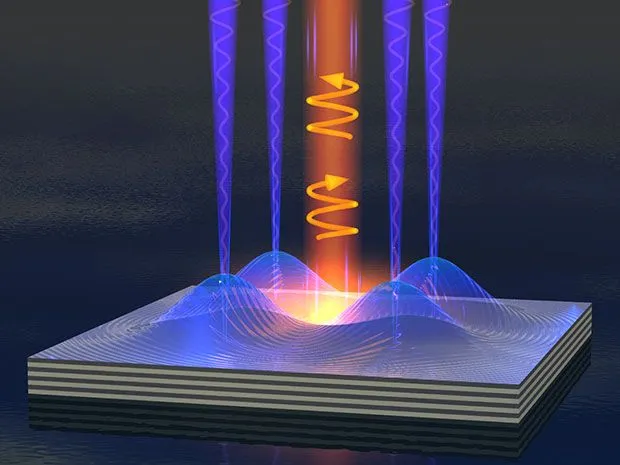
At these ultracold temperatures, thermal motion ceases and atomic wavefunctions expand and overlap. Thousands of individual atoms lose their separate identities, coalescing into a single macroscopic quantum wave—the celebrated fifth state of matter.
1924: Satyendra Nath Bose and Albert Einstein
The journey began in 1924 when Satyendra Nath Bose, a young Indian theoretical physicist at the newly established University of Dacca (now University of Dhaka), formulated a novel statistical method to derive Planck’s blackbody radiation law without invoking classical electrodynamics.
When the prestigious British journal Philosophical Magazine rejected his paper, Bose boldly mailed his manuscript directly to Albert Einstein in Berlin. Recognizing its profound significance, Einstein personally translated Bose’s paper into German, had it published in the Zeitschrift für Physik, and added his own enthusiastic recommendation.
Theoretical Prediction of the Fifth State
Einstein extended Bose’s statistics from photons to massive integer-spin particles (now known as bosons). He predicted that below a critical temperature, a collection of bosonic atoms would undergo a phase transition, collapsing into the lowest quantum ground state: a Bose-Einstein Condensate.
Because real gases typically freeze into solids when cooled, achieving a dilute gaseous condensate remained an unfulfilled theoretical dream for over seven decades.
1995: Turning Quantum Theory into Reality
In 1995, physicists Eric Cornell and Carl Wieman at JILA in Boulder, Colorado, achieved the historic breakthrough using a dilute vapor of rubidium-87 atoms:
- Laser Cooling: Using laser beams from multiple directions to slow atomic motion through radiation pressure.
- Magnetic Evaporative Cooling: Lowering the magnetic trap potential to allow the hottest atoms to escape, cooling the remaining atoms below 170 nanokelvin.
Approximately 2,000 rubidium atoms condensed into a single macroscopic quantum state. Shortly thereafter, Wolfgang Ketterle at MIT created condensates with sodium atoms, producing macroscopic interference patterns and generating the world’s first “atom lasers.”
Nobel Recognition and Modern Technologies
Cornell, Wieman, and Ketterle shared the 2001 Nobel Prize in Physics for this monumental achievement. Today, BECs are utilized across advanced physics frontiers:
- Ultra-precise atom interferometry and gravimetry
- Quantum simulation of condensed matter phenomena and superconductivity
- Probing superfluidity and dark energy analogs
- Space-based microgravity quantum research aboard the ISS Cold Atom Lab
Conclusion
Born from the theoretical collaboration of Satyendra Nath Bose and Albert Einstein, the Bose-Einstein Condensate demonstrates how the delicate wave nature of the quantum realm can be brought directly into macroscopic reality.