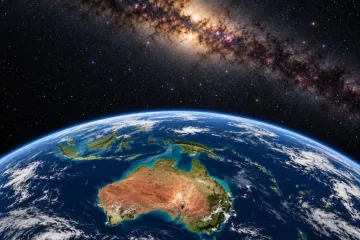
The Dark Horse Nebula: Milky Way Core and Black Hole

The Winter Sky and the Milky Way
During clear winter nights, the dazzling center of the Milky Way Galaxy presents itself to patient observers. To witness this spectacle in all its glory, one must venture far beyond city skylines and artificial light pollution, out into pristine darkness where the night sky reveals its true cosmic majesty.
A moonless night under crystal-clear skies provides the ideal canvas for capturing the galactic center. Standing beneath the open cosmos during freezing winter nights demands thoughtful planning, technical equipment, and enduring patience.
Astrophotography and the Galactic Landscape
Modern astrophotography transforms our appreciation of deep space. Utilizing tracking equatorial mounts, specialized camera sensors, and calibrated exposure times allows astronomers to gather ancient photons that have traveled across thousands of light-years.
Carefully balanced color temperatures reveal the warm, golden luminance of the galactic bulge, contrasting sharply with the deep voids of interstellar space.
The Galactic Core: A Stellar Metropolis
At the center of our galactic panorama lies the luminous Galactic Core, situated approximately 26,500 light-years away from Earth. The light striking our sensors tonight began its journey more than twenty-six thousand years ago, during the height of Earth’s last glacial epoch.
The stellar density within this core region is astonishing. In a relatively compact central volume, tens of millions of stars are tightly crowded together. The stellar concentration here is millions of times denser than in our serene solar neighborhood, creating a radiant tapestry woven with glowing hydrogen gas clouds and dark dust lanes.
Supermassive Black Hole: Sagittarius A*
At the very heart of the Milky Way lurks a supermassive black hole known as Sagittarius A* (Sgr A*). The landmark discovery and confirmation of this cosmic titan earned the 2020 Nobel Prize in Physics.
Packing an astounding 4.3 million solar masses into a region smaller than Mercury’s orbit, its immense gravity governs the galactic core. Matter pulled toward the event horizon forms a superheated accretion disk of swirling plasma. Although light cannot escape the black hole itself, energetic radiation emitted by particles just before crossing the event horizon confirms its existence—even as thick obscuring clouds of interstellar dust veil much of this glow from optical telescopes.
The Dark Horse Nebula and Mars
Silhouetted against the brilliant starfields of the galactic center is the striking Dark Horse Nebula. Resembling the dark silhouette of a rearing stallion, this massive complex of absorption nebulae spans vast reaches of deep space. Far from being empty voids, these dark clouds consist of dense molecular gas and dust where new stars and planetary systems are quietly born.
Sharing this celestial vista is our planetary neighbor, the red planet Mars—a bright, familiar beacon of light gleaming across our solar system against the unfathomable backdrop of interstellar space.
Conclusion
Every glimpse of the Milky Way’s core reveals millions of years of cosmic history: the timeless dance between radiant starlight, cold molecular dust in the Dark Horse Nebula, and the silent, invisible gravitational anchor of Sagittarius A* governing our galactic home.