Gregor Johann Mendel: The Father of Modern Genetics
Early Life and monastic Calling
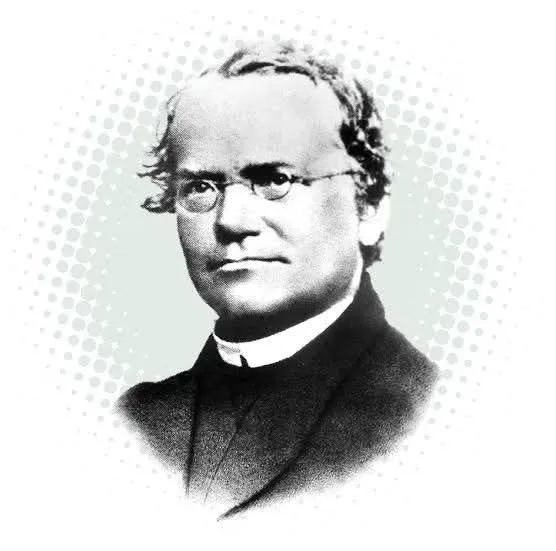
Widely revered as the father of modern genetics, Gregor Johann Mendel was an Augustinian monk and teacher whose intellectual curiosity reshaped biological science. Born in Heinzendorf within the Austrian Empire (now Hynčice in the Czech Republic), he entered St. Thomas’s Abbey in Brno, where the monastery’s rich intellectual culture nurtured his passions for botany, mathematics, and meteorology.
Historic Pea Plant Experiments
In the quiet monastery garden between 1856 and 1863, Mendel conducted rigorous, meticulously controlled hybridization experiments. Though not formally employed as an academic professor, he approached his work with mathematical precision and systematic discipline.
Cross-breeding distinct varieties of the garden pea (Pisum sativum), he uncovered astonishing patterns. When he crossed true-breeding tall pea plants with dwarf varieties, all offspring in the first filial (F1) generation were tall. The dwarf trait seemed to have vanished entirely.
The 3:1 Ratio and Inherited Traits
Mendel then allowed the F1 generation to self-pollinate. In the resulting second filial (F2) generation, the missing dwarf characteristic reappeared in a predictable mathematical proportion: for every three tall plants, there was exactly one dwarf plant.
Over eight years, cultivating nearly 30,000 pea plants, Mendel observed this consistent 3:1 ratio across seven distinct physical traits:
- Flower color (purple vs. white) and position (axial vs. terminal)
- Pod color (green vs. yellow) and form (inflated vs. constricted)
- Seed shape (round vs. wrinkled), cotyledon color (yellow vs. green), and seed coat color
From these rigorous data, Mendel deduced that traits express themselves through dominant and recessive alleles. The dominant trait masks the recessive trait in the first generation, yet the underlying genetic factor remains intact to emerge in subsequent generations.
The Concept of Particulate Factors
Mendel’s monumental insight was that inheritance is particulate rather than blending. Prevailing theories of his era assumed that parental characteristics blended like drops of colored paint. Mendel proved instead that inheritance is governed by discrete hereditary units—which he termed “factors,” and which we now call genes.
These hereditary factors segregate cleanly during gamete formation and assort independently into offspring, preserving their distinct identities across generations.
Decades of Obscurity and Posthumous Vindication
Mendel presented his groundbreaking paper, Experiments on Plant Hybridization, to the Natural History Society of Brno in 1865, and published it in 1866. Tragically, contemporary naturalists and botanists failed to comprehend the mathematical and statistical significance of his work. Mendel passed away in 1884 with his revolutionary discoveries largely unrecognized.
The Renaissance of Genetics in the Twentieth Century
In 1900—thirty-four years after Mendel’s publication—three European botanists (Hugo de Vries, Carl Correns, and Erich von Tschermak) independently conducted similar hybridization experiments and rediscovered Mendel’s pioneering laws.
Upon this mathematical foundation, the twentieth century witnessed the birth of genetics as a distinct scientific discipline, leading directly to the modern revolutions in molecular biology, gene editing, and biotechnology.
Conclusion
Working in a modest garden long before the discovery of chromosomes or DNA, Gregor Johann Mendel uncovered the universal laws governing biological inheritance. By harmonizing rigorous biology with quantitative mathematics, Mendel stood decades ahead of his time, forever changing our understanding of life itself.