Marie Curie: The Discovery of Radioactivity and Two Nobel Prizes
Early Struggles and the Quest for Knowledge
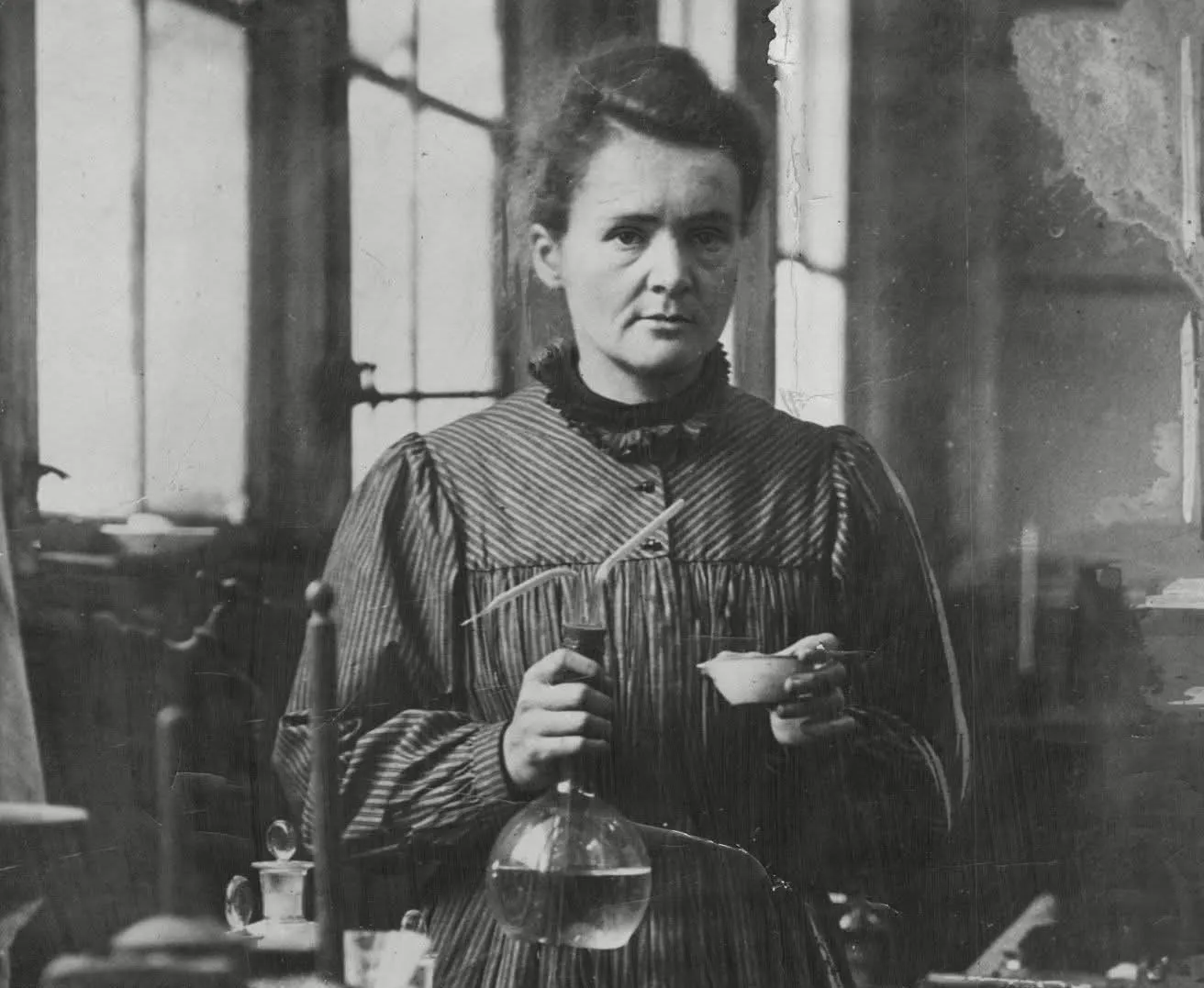
Marie Curie was born Maria Skłodowska in Warsaw, Poland, in 1867. Growing up under foreign imperial rule with limited access to higher education for women, she persevered through immense adversity. After years of clandestine study in Poland’s underground Flying University and working as a governess, she saved enough money to travel to Paris and enroll at the Sorbonne.
Surviving on meager rations in an unheated attic, she excelled through relentless dedication, graduating at the top of her class in physics and mathematical sciences.
Unraveling the Mysteries of Radioactivity
In 1896, French physicist Henri Becquerel observed that uranium salts emitted mysterious penetrating rays without external illumination. Intrigued, Marie Curie chose these mysterious emissions as the subject of her doctoral research, coining the term radioactivity.
Joined by her husband and intellectual collaborator Pierre Curie, she analyzed raw uranium pitchblende using an electrometer invented by Pierre and his brother. In 1898, after painstaking chemical fractionation, they announced the discovery of two previously unknown radioactive elements:
- Polonium: Named in honor of Marie’s native, partitioned homeland of Poland.
- Radium: Named for its intense, spontaneous radiological emissions.
Their discovery proved that radioactivity is an intrinsic atomic property rather than a molecular chemical reaction, inaugurating modern atomic physics.
Revolutionizing Medicine and Oncology
Working inside a poorly ventilated wooden shed, the Curies processed tons of pitchblende ore to isolate decigrams of radium chloride. The practical medical value of their labor quickly emerged. Radium’s destructive action on diseased cells gave birth to curietherapy (radiation therapy), establishing modern oncology.
Today, medical radioisotopes such as Cobalt-60, Iodine-131, and Technetium-99m continue saving millions of cancer patients worldwide. Modern Positron Emission Tomography (PET) scanning represents the direct technological lineage of Marie Curie’s pioneering research.
Transforming Archaeology and Energy
Beyond oncology, understanding radioactive half-lives led directly to radiometric dating—including Carbon-14 dating—revolutionizing archaeology and geology by enabling scientists to determine the precise ages of fossils, artifacts, and planetary rocks.
Furthermore, deciphering the energy trapped within the atomic nucleus unlocked the principles of nuclear fission and fusion, transforming twentieth-century electrical power generation and modern geopolitical strategy.
A Historic Legacy: Two Nobel Prizes
Marie Curie achieved scientific milestones that remain unique in history:
- 1903 Nobel Prize in Physics: Awarded jointly to Henri Becquerel, Pierre Curie, and Marie Curie for their pioneering investigations into radiation phenomena, making Marie the first woman ever to receive a Nobel Prize.
- 1911 Nobel Prize in Chemistry: Awarded to Marie Curie alone for her discovery of radium and polonium and the isolation of pure metallic radium.
To this day, Marie Curie remains the only individual in history honored with Nobel Prizes across two different scientific disciplines.
Ultimate Sacrifice and Immortal Legacy
Unaware of the cumulative biological hazards of ionizing radiation, Marie Curie handled radioactive substances for decades without protective shielding. Her laboratory notebooks and personal possessions remain so intensely radioactive that they are preserved in lead-lined containers in Paris.
In 1934, she succumbed to aplastic anemia resulting from prolonged radiation exposure. Albert Einstein famously remarked that “Marie Curie is, of all celebrated beings, the only one whom fame has not corrupted.” Her indomitable courage, intellectual brilliance, and humanitarian devotion continue to inspire generations of scientists worldwide.