Gravitational Waves: From Einstein's Prediction to LIGO's Discovery
Einstein’s Relativistic Prediction
In 1915, Albert Einstein published his general theory of relativity, revolutionizing humanity’s conception of gravity. Spacetime is not an inert backdrop, but a dynamic four-dimensional fabric warped by mass and energy.
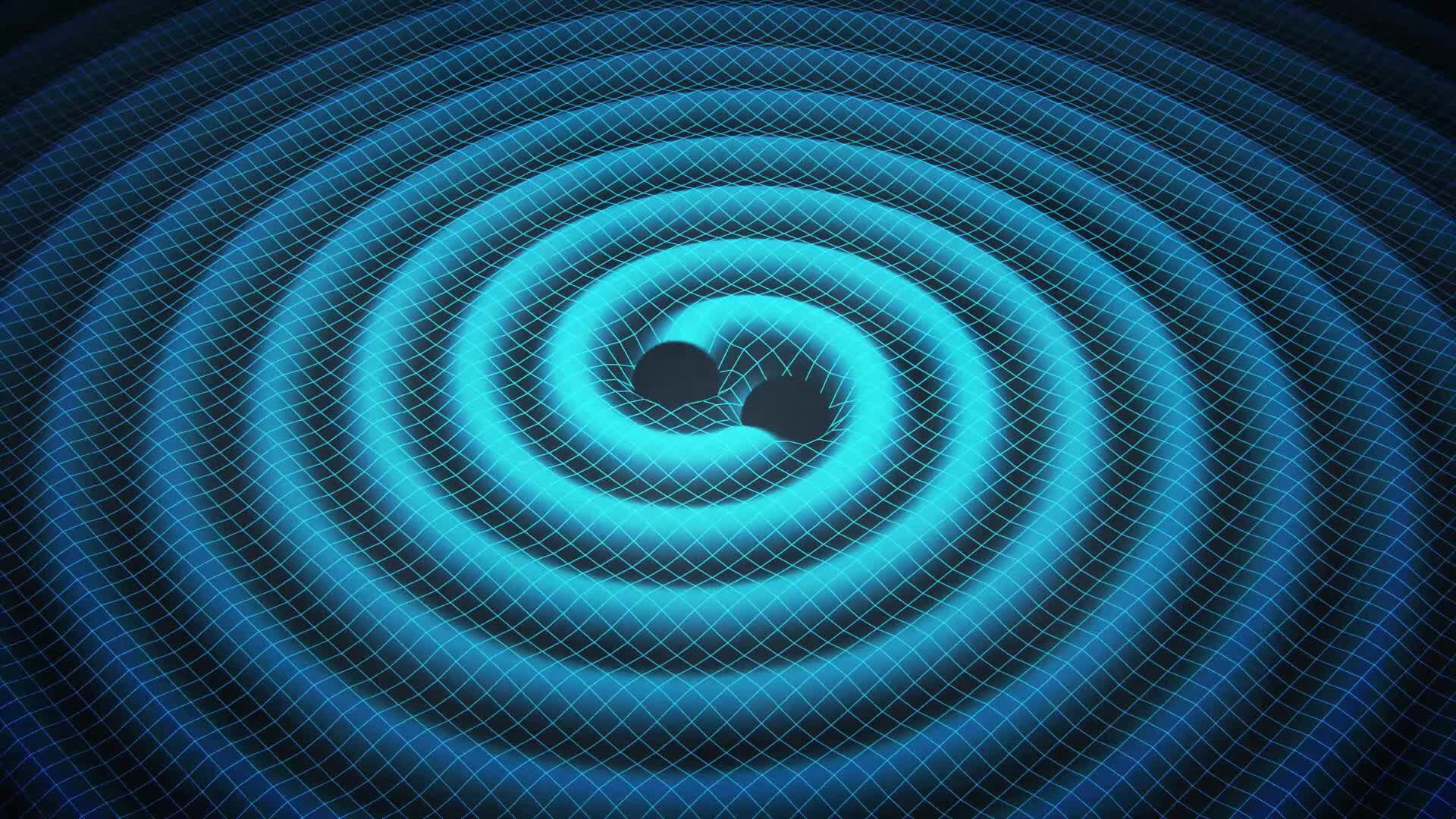
A year later, in 1916, Einstein deduced a profound consequence of his field equations: accelerating massive astrophysical objects must generate ripples in the fabric of spacetime that propagate outward across the cosmos at the speed of light. These undulating cosmic ripples are known as gravitational waves.
Yet because gravity is the weakest of the four fundamental forces, Einstein believed these spacetime distortions would be so infinitesimally faint that humanity could never detect them directly.
A Century-Long Search and the Genesis of LIGO
In the 1970s, astronomers Russell Hulse and Joseph Taylor discovered the binary pulsar PSR B1913+16. Observing the orbital decay of this neutron star system provided indirect proof that orbital energy was radiating away as gravitational waves, earning them the 1993 Nobel Prize in Physics. However, direct physical detection remained elusive.
The turning point arrived with the development of the Laser Interferometer Gravitational-Wave Observatory (LIGO) in the United States, alongside the European Virgo observatory. Utilizing state-of-the-art laser interferometry, LIGO was designed to measure differential arm length variations smaller than one ten-thousandth the diameter of a proton.
The Historic First Detection: GW150914
On September 14, 2015—exactly a century after Einstein formulated general relativity—LIGO’s twin detectors in Hanford, Washington, and Livingston, Louisiana, registered a distinct chirp signal designated GW150914.
The signal originated from the cataclysmic collision and merger of two stellar-mass black holes ($36$ and $29$ solar masses) located $1.3$ billion light-years away. In a fraction of a second, three solar masses of pure gravitational energy radiated outward as gravitational waves. In 2017, the Nobel Prize in Physics was awarded to Rainer Weiss, Barry C. Barish, and Kip S. Thorne for their decisive leadership in this triumph.
How LIGO Detects Spacetime Ripples
LIGO operates two perpendicular, four-kilometer-long vacuum arms in an L-shaped configuration. Its measurement mechanism is an engineering marvel:
- A stabilized infrared laser beam is split into two perpendicular beams traveling down the ultra-high vacuum tunnels.
- The beams reflect back and forth between suspended silica mirrors hundreds of times before recombining at a photodetector.
- When a gravitational wave passes, it stretches one arm while compressing the other, producing an optical interference pattern revealing the precise amplitude and frequency of the spacetime wave.
A Multi-Messenger Revolution in Astronomy
With more than 200 gravitational-wave events cataloged to date—including binary neutron star mergers like GW170817 that emitted both gravitational waves and gamma rays—gravitational-wave astronomy has transformed astrophysics. Observatories like LIGO, Virgo, and Japan’s KAGRA have provided unprecedented insights into black hole formation, stellar evolution, and cosmological expansion rates.
The Future: LISA in Deep Space
The future of gravitational-wave astronomy points toward space. The European Space Agency’s Laser Interferometer Space Antenna (LISA) mission will deploy three spacecraft separated by millions of kilometers in solar orbit, detecting low-frequency gravitational waves from supermassive black hole mergers at cosmic dawn.
Gravitational waves have provided humanity with a revolutionary new sensory window onto the universe, allowing us to listen to the dynamic symphonies of spacetime.