Obesity, Undernutrition, and Climate Change: The Global Syndemic Crisis
Understanding the Global Syndemic
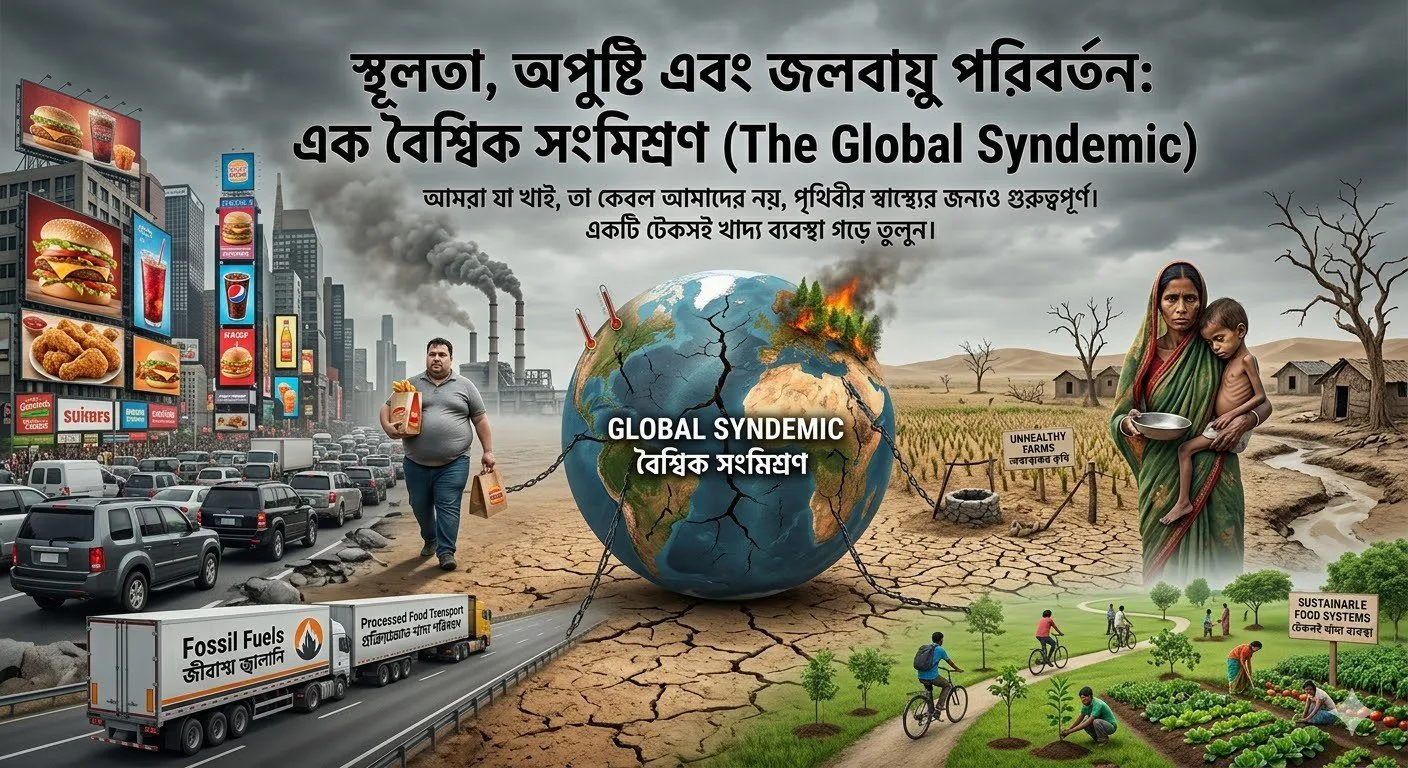
Human society faces an unprecedented multi-layered crisis. We live in an era where millions suffer from starvation while over two billion experience health complications from over-nutrition, all while global ecosystems undergo destabilization that threatens our collective future. Medical researchers and environmental scientists have unified obesity, undernutrition, and climate change under a single term: the Global Syndemic. These three crises are not isolated; they share common drivers and exacerbate one another’s devastating consequences.
Three Dimensions of the Global Crisis
First, over two billion people worldwide grapple with overweight and obesity, driven by the proliferation of ultra-processed, calorie-dense foods and sedentary lifestyles, dramatically increasing risks for cardiovascular disease, diabetes, and cancers. Second, tens of millions of people—predominantly children and mothers in developing regions—remain chronically malnourished, impairing developmental health and heightening mortality. Third, rising greenhouse gas emissions, deforestation, and environmental degradation are heating the biosphere, causing droughts, floods, and volatile weather patterns that directly undermine agricultural food security.
Industrial Food Systems and Urban Sedentary Lifestyles
Investigations reveal that contemporary food production systems and urban designs are central drivers of this syndemic. Current intensive agriculture and livestock models generate substantial environmental damage while commercial supply chains prioritize profit margins over nutritional integrity. Furthermore, car-dependent urban infrastructure discourages walking and cycling, fostering physical inactivity while combusting massive volumes of fossil fuels. Multinational conglomerates continue marketing cheap, nutrient-poor commodities while aggressively lobbying against regulatory interventions.
Systemic Policy Reforms Across Sectors
Overcoming this global crisis requires systemic, cross-cutting policies capable of tackling all three challenges concurrently. Transitioning agricultural subsidies away from fossil-intensive livestock toward diverse plant-based crops can reduce obesity, improve dietary security, and cut greenhouse gas emissions. Governments must redirect subsidies toward regenerative agriculture, implement fiscal taxes on ultra-processed goods, and invest in sustainable transport infrastructure.
Civic Engagement and Active Urban Mobility
Countering commercial influence necessitates proactive civil society mobilization. Promoting locally cultivated produce, healthy dietary choices, and urban designs centered on walking, cycling, and reliable public transit elevates physical activity while curtailing carbon emissions.
Protecting Planetary and Human Well-Being
Ultimately, human health and planetary ecology are indivisible. Treating isolated symptoms without overhauling underlying production and economic structures will prove futile. Developing sustainable, equitable food networks remains imperative to safeguard future generations from the compounded harms of obesity, undernutrition, and environmental collapse.