A New Cosmic Window: The Wonders of the Vera C. Rubin Observatory
The Dawn of the Vera C. Rubin Observatory
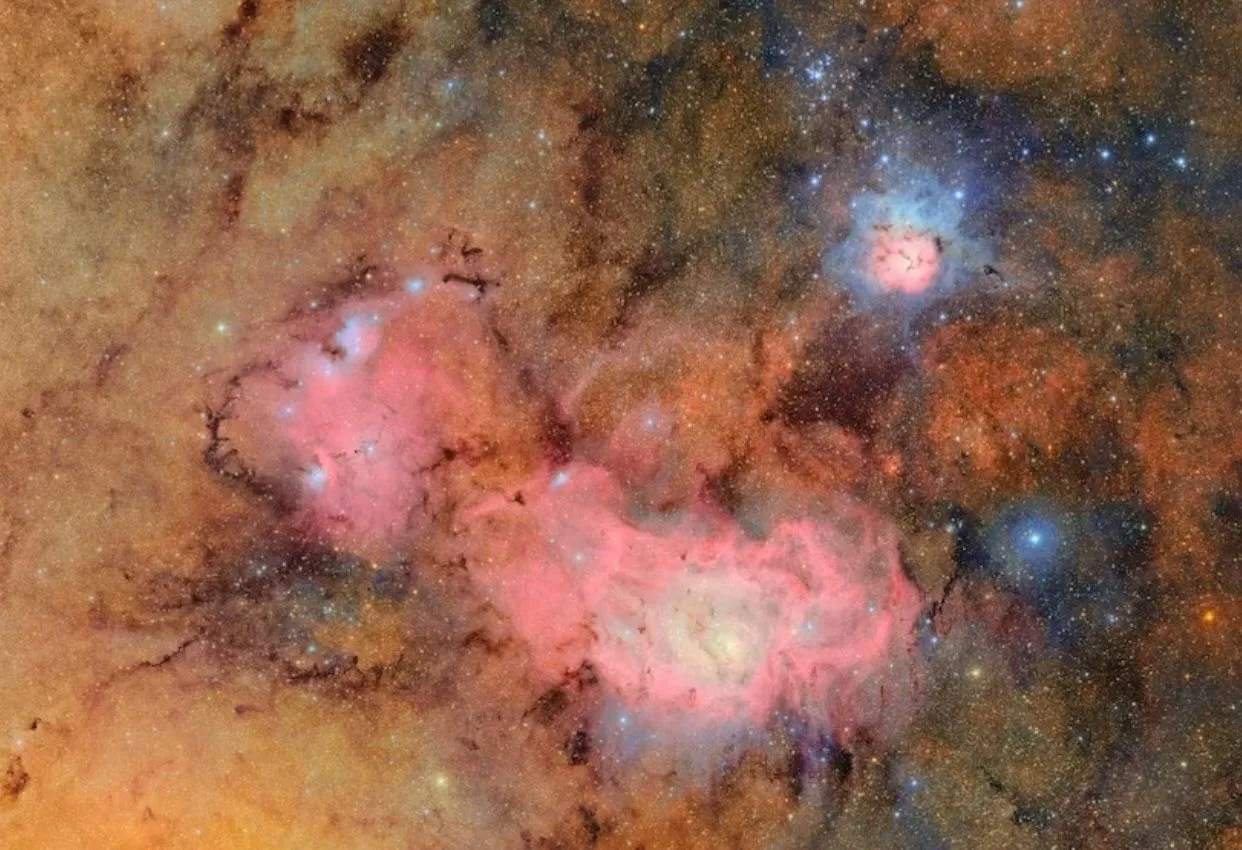
High atop an Andean peak in Chile, the Vera C. Rubin Observatory has commenced operations. This cutting-edge telescope is set to revolutionize observational astronomy. Releasing its first engineering images, the observatory revealed breathtaking views of the Trifid and Lagoon nebulae, star-forming regions roughly 9,000 light-years from Earth where churning interstellar gas and dust sculpt spectacular vistas.
The World’s Largest Digital Camera
The centerpiece of the observatory is its monumental digital camera, featuring a 3,200-megapixel (3.2 gigapixel) sensor and an optical lens spanning 5.5 feet across—the largest digital camera ever constructed.
Massive Data Acquisition and Historic Investment
This single camera gathers approximately 30 terabytes of astronomical data every night. Developed at an estimated cost of $1.68 billion, its immense optical sensors provide unprecedented clarity into deep cosmic phenomena.
Revolutionizing Sky Surveys
Snapping an exposure every 40 seconds across 8 to 12 hours each night, the telescope surveys the entire southern hemisphere sky every three to four nights over a 10-year campaign. This dynamic cadence allows astronomers to identify moving objects, transient flares, and fading astronomical events with unprecedented precision.
Incredible Pace of Asteroid Discoveries
Within its first 10 hours of operation, the observatory identified 2,104 new asteroids and seven near-Earth objects. For comparison, all ground-based telescopes worldwide typically catalog roughly 20,000 objects annually. Scientists anticipate that Rubin will deliver revolutionary insights into our solar system, distant galaxies, supermassive black holes, and the invisible architecture of dark matter. Located under Chile’s hyper-arid, light-pollution-free desert skies, the observatory enjoys optimal observing conditions.
Ten Million Cosmic Alerts Every Night
Each night, the observatory will dispatch roughly 10 million automated alerts flagging transient phenomena—from stellar variability and supernova detonations to asteroid orbital trajectories. If the hypothetical Planet Nine exists in the outer solar system, astronomers believe the Rubin Observatory possesses the sensitivity to detect it.
A Generational Triumph for Astronomers
For the multinational scientific team, this milestone marks the culmination of decades of anticipation. Some researchers spent 25 years developing the project, while early-career scientists were born after its initial conception. Together, they have delivered an instrument that redefines astrophysical research.
Peering Deep into Cosmic History
The Vera C. Rubin Observatory is far more than an imaging system; it is a time-lapse chronicle of the universe, illuminating cosmic history and refining humanity’s place within the vast timeline of spacetime.