Future Space Propulsion: Plasma Engines and Catapult Rockets

The Limitations of Chemical Rocketry
Chemical rockets successfully delivered humanity to low Earth orbit and the Moon, but their reliance on massive propellant tanks poses a bottleneck for deep-space travel. Transporting humans to Mars using chemical propulsion takes six to nine months each way, exposing astronauts to prolonged cosmic radiation and microgravity deterioration. To establish interplanetary civilization, aerospace engineers are developing future space propulsion technologies: magnetoplasma engines and kinetic launch catapults.
How Plasma Engines Operate
Unlike chemical combustion, an electric plasma engine generates thrust by heating inert gas (such as argon, xenon, or krypton) into an ultra-hot ionized plasma using high-frequency radio waves. Powerful magnetic fields then accelerate the charged ions out of the magnetic nozzle at extreme exhaust velocities, generating continuous thrust with unprecedented fuel efficiency.
VASIMR and Nuclear Electric Propulsion
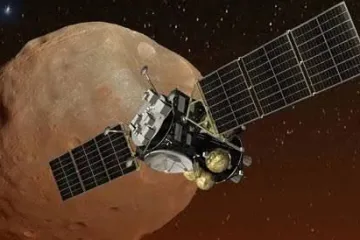
The leading design in high-power plasma rocketry is the VASIMR (Variable Specific Impulse Magnetoplasma Rocket), developed by the Ad Astra Rocket Company. Simultaneously, Russian space researchers at Rosatom are advancing nuclear-powered plasma thruster prototypes. Paired with compact space-rated nuclear reactors, VASIMR could accelerate spacecraft continuously, slashing transit times from Earth to Mars from nine months down to just 39 days.
Electromagnetic Catapults and Kinetic Launch
A complementary approach bypasses fuel-heavy first stages entirely: ground-based kinetic catapults. Systems like SpinLaunch utilize a sealed vacuum chamber and a carbon-fiber tether rotating at hypersonic speeds to catapult payloads into suborbital trajectories using rotational kinetic energy. Alternatively, electromagnetic maglev tracks could propel payloads up mountain ramps at thousands of kilometers per hour before small second-stage thrusters ignite in the upper atmosphere.
Slashing Launch Costs and Protecting Crews
Eliminating thousands of tons of initial chemical propellant drastically lowers launch costs per kilogram. Kinetic launch systems are ideal for deploying satellites, raw supplies, and lunar infrastructure where intense G-forces do not threaten biological cargo. Meanwhile, plasma-driven interplanetary transit ensures crews spend minimal time traversing hazardous radiation belts.
The Next Era of Interplanetary Travel
Integrating surface catapult launch systems with nuclear-electric plasma transit represents the future of deep-space navigation. By replacing massive chemical fireballs with clean electromagnetic acceleration, humanity takes a major step toward practical solar system commerce.