Beyond the Horizon: The Future of Space Colonization and Mars Missions
The Imperative for Human Settlements in Space
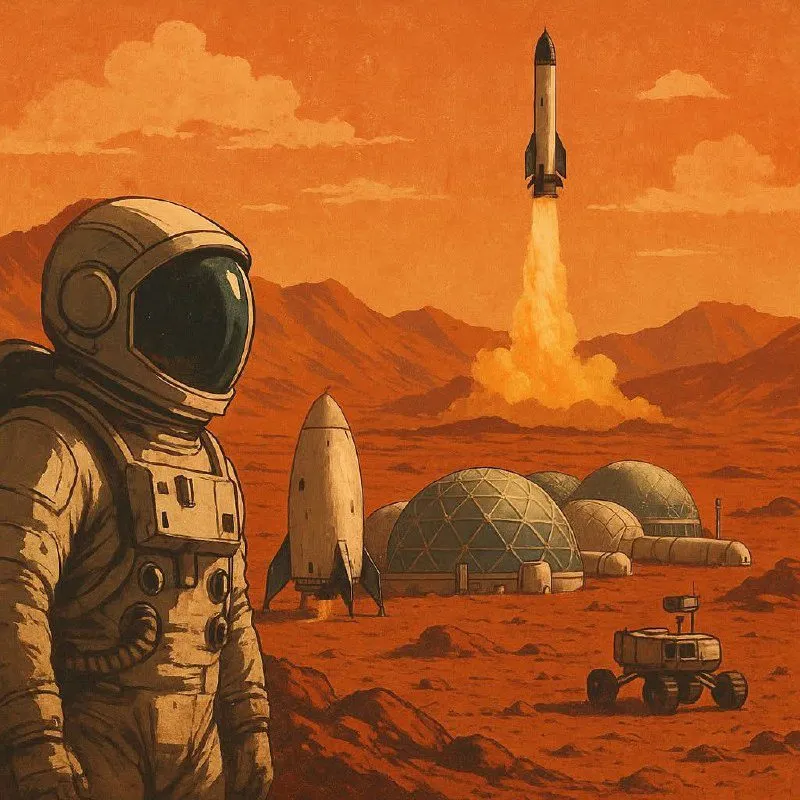
In 2005, then-NASA Administrator Michael Griffin stated that humanity’s ultimate long-term imperative is establishing permanent human settlements beyond Earth. Without multi-planetary survival, he warned, human civilization remains vulnerable to catastrophic extinction. Renowned theoretical physicist Professor Stephen Hawking echoed this sentiment, arguing that climate disruption, cosmic impacts, and technological hazards could threaten human survival within centuries unless we establish self-sustaining outposts on other worlds. Taking proactive steps today is essential for preserving the light of human consciousness.
Why Mars Is the Natural Next Destination
Yet reaching beyond our home world presents immense challenges. To date, humans have set foot only on our natural satellite, the Moon. Deep-space robotic probes sent across the solar system have confirmed that, aside from the Moon, Mars offers the most viable conditions for sustained human exploration. Multiple rovers have mapped the Martian landscape, analyzed its soil, and validated that human exploration of the Red Planet is not a question of if, but when.
From Lunar Outposts to Martian Expeditions
The Apollo Saturn V rocket took three days to reach the Moon. With current propulsion systems, transit from Earth to Mars takes roughly 250 to 260 days. However, launching spacecraft from an established lunar staging base could shorten transit times down to around 130 days. For this reason, NASA is spearheading the Artemis program to construct a sustainable lunar outpost by 2030, laying the operational groundwork for crewed missions to Mars in the 2030s.
Elon Musk and SpaceX’s Ambitious Vision
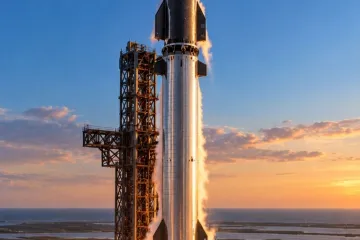
Concurrently, SpaceX founder Elon Musk pursues an even more aggressive timeline. SpaceX is developing the massive Starship rocket system with the goal of establishing lunar bases within years and landing humans on Mars soon after. If successful, our generation may witness the first human footprints on Martian red sand—a monumental milestone that will mark the dawn of an interplanetary species.
Challenges and Opportunities on the Martian Surface
Surviving on Mars is an unprecedented test of resilience. The Martian atmosphere is razor-thin, composed mostly of carbon dioxide with virtually no breathable oxygen. Surface temperatures drop severely, and radiation levels are hazardous. While liquid surface water is absent, vast reservoirs of water ice remain locked in polar caps and subsurface permafrost, offering essential resources for future colonies.
Closed-Loop Biospheres and Space Agriculture
Colonists on Mars will live inside sealed biospheres featuring life-support systems, greenhouse crops, and recycled resources. Ongoing experiments aboard orbital stations are exploring how plants grow in reduced gravity and artificial lighting—research that will prove vital for off-world agricultural self-sufficiency. Many visionaries project that functional Martian research colonies could emerge before this century concludes.
Looking Further: Europa and Titan
Beyond Mars, other celestial bodies within the outer solar system hold tantalizing potential. Jupiter’s icy moon Europa hides a vast subsurface ocean, while Saturn’s moon Titan boasts a thick atmosphere and lakes of liquid hydrocarbons. While hostile to unprotected humans, these moons represent intriguing destinations for robotic and crewed exploration in centuries to come.
Reaching Beyond Our Solar System
Yet the solar system is just our cosmic backyard. Our Milky Way galaxy alone hosts hundreds of billions of stars and trillions of exoplanets. Astronomers have already detected numerous terrestrial worlds in habitable zones. For instance, orbiting our nearest stellar neighbor Proxima Centauri lies Proxima b, an Earth-sized world just 4.2 light-years away.
The Barrier of Interstellar Distances
Traveling at the speed of light—300,000 km/s—it would take over four years to reach Proxima b. Yet under the laws of physics, no physical craft can exceed light speed. NASA’s Voyager 2 probe, cruising through interstellar space at roughly 15 km/s, would take over 70,000 years to cover that distance. Interstellar distance remains the ultimate physical frontier.
Breakthrough Starshot and Laser-Propelled Probes
To overcome this hurdle, innovative concepts like Breakthrough Starshot aim to build centimeter-scale “StarChips” attached to light sails. Propelled by powerful phased-array ground lasers, these probes could accelerate to 20 percent the speed of light, reaching Proxima b within twenty years and beaming back data four years later. Within a few decades, humanity could receive high-resolution imagery from another solar system.
Humanity’s Interstellar Destiny
What sounds like science fiction today is steadily becoming actionable science. Driven by survival, curiosity, and technological progress, future generations will transcend terrestrial boundaries and journey into the cosmic unknown—venturing far beyond the solar system to claim humanity’s place among the stars.