Asteroid Exploration Missions: Solar System Origins

Pristine Time Capsules of the Solar System
Between the orbits of Mars and Jupiter lies the vast asteroid belt, populated by millions of rocky, metallic, and carbonaceous fragments left over from the accretion disk of the early solar system 4.6 billion years ago. Gravitational perturbations from massive Jupiter prevented these building blocks from coalescing into a single planet. Because small asteroids escaped the intense thermal processing, volcanic differentiation, and tectonic remodeling that reshaped large planets, they preserve pristine records of the raw materials that formed our planetary system.
Hayabusa2: Japan’s Masterpiece of Sample Return
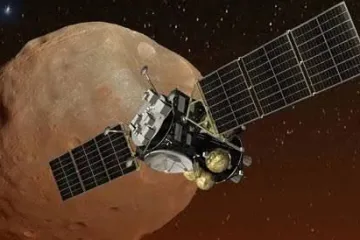
The Japan Aerospace Exploration Agency (JAXA) achieved a landmark triumph with the Hayabusa2 mission. Launched in December 2014, the robotic spacecraft journeyed three billion kilometers to reach the near-Earth carbonaceous asteroid Ryugu in 2018. Hayabusa2 performed two delicate touch-and-go sample collections on the boulder-strewn surface, including deploying an explosive kinetic impactor to blast open an artificial crater and access subsurface material unexposed to space weathering.
In December 2020, Hayabusa2 dispatched its sample return capsule back to Earth, parachuting safely onto the desert floor of Woomera, South Australia. Laboratory analysis in Japan confirmed the presence of organic molecules, water-bearing minerals, and more than 20 distinct amino acids—bolstering hypotheses that carbon-rich asteroids delivered essential prebiotic chemistry to early Earth.
OSIRIS-REx and Bennu: Probing an Impact Hazard
NASA matched this feat with the OSIRIS-REx mission to near-Earth asteroid Bennu, a rubble-pile asteroid with a modest orbital probability of impacting Earth between the years 2175 and 2199. OSIRIS-REx collected a rich cache of surface dust and pebbles using its Touch-And-Go Sample Acquisition Mechanism (TAGSAM). The capsule touched down safely in the Utah desert in September 2023, delivering carbon-rich pristine samples for international scientific study while helping orbital dynamicists refine long-term planetary defense models.
Pioneering Planetary Defense: The DART Kinetic Impactor
Beyond scientific sample return, asteroid exploration directly serves planetary survival. In September 2022, NASA’s Double Asteroid Redirection Test (DART) intentionally slammed into Dimorphos, the small moonlet orbiting the binary asteroid Didymos. The high-speed kinetic impact altered Dimorphos’s orbital period by 32 minutes—far exceeding mission thresholds—demonstrating that humanity possesses the technological capability to deflect hazardous asteroids if detected sufficiently in advance.
Expanding Horizons: Lucy and Extended Asteroid Missions
Exploration of small solar system bodies is expanding rapidly. NASA’s Lucy mission is currently on a 12-year trajectory to explore Jupiter’s Trojan asteroids—primitive swarms gravitationally trapped at Lagrange points L4 and L5 that share Jupiter’s orbit. Concurrently, Hayabusa2 has embarked on an extended mission toward fast-spinning micro-asteroids CC21 and 1998 KY26, with flybys scheduled for 2026 and 2031. These cutting-edge missions ensure that asteroids remain at the vanguard of space science and planetary security.