Asteroid Apophis: Earth's 2029 Close Encounter
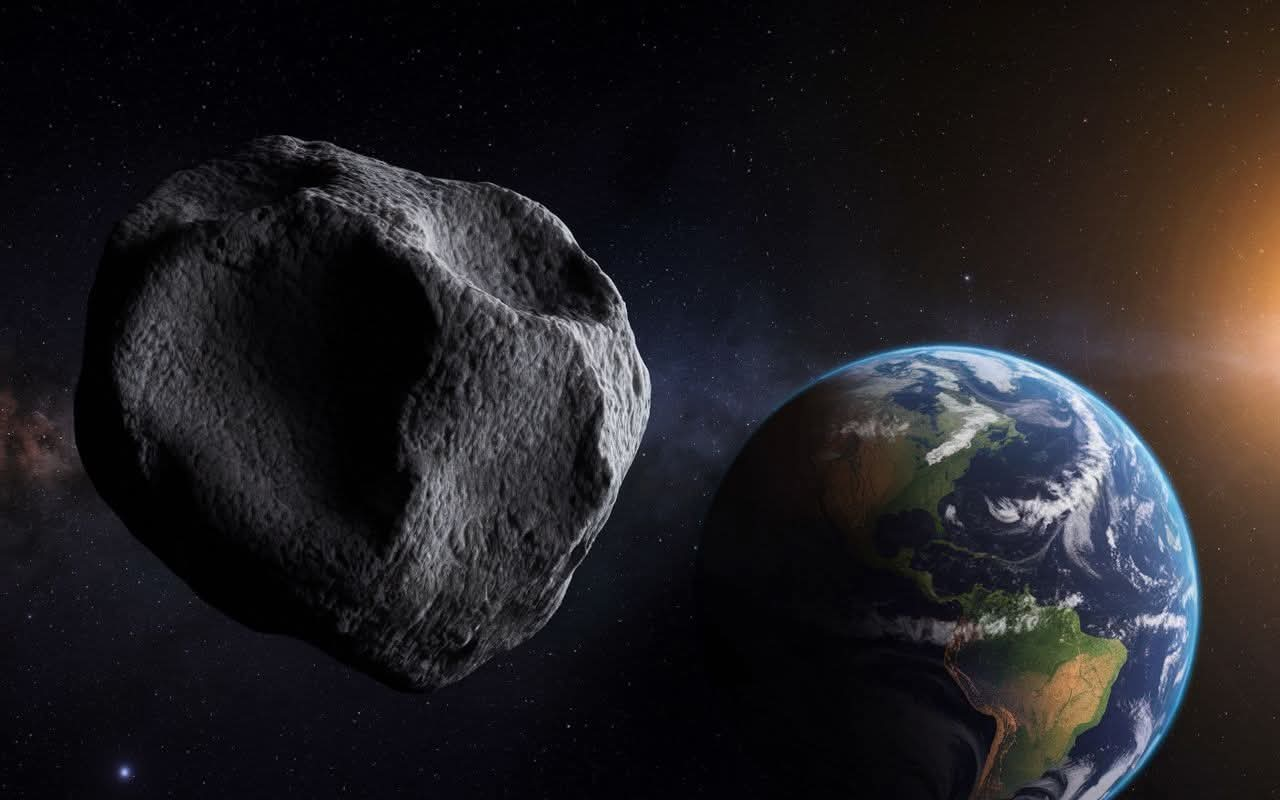
The Doomsday Asteroid
In 2004, astronomers discovered a near-Earth asteroid that sent shockwaves through the scientific community. Named 99942 Apophis after the ancient Egyptian deity of darkness and chaos, initial orbital calculations indicated a small possibility of a direct collision with Earth in 2029. Headlines dubbed it the “doomsday asteroid.”
Close Encounter Without Impact
Refined radar and optical tracking have since confirmed that Apophis will not collide with Earth in 2029, nor for at least the next century. Yet its trajectory remains extraordinary. On 13 April 2029, Apophis will make an exceptionally close flyby of Earth, skimming within approximately 32,000 kilometers of our surface—closer than geostationary telecommunications satellites, and close enough to be visible to the naked eye across millions of square kilometers.
Spanning roughly 370 meters across, this massive rocky body hurtles through space at thirty thousand kilometers per hour. While an impact would not cause an extinction event on the scale of the dinosaurs, it carries sufficient kinetic energy to devastate an entire metropolitan region.
A Rare Scientific Opportunity
Rather than terror, the close approach offers an unprecedented scientific opportunity. Never in recorded history has humanity observed a stony asteroid of this scale pass so near to Earth. Astronomers anticipate that Earth’s gravitational tidal forces will tug on Apophis, potentially triggering surface landslides, altering its rotational period, and altering its orbital trajectory in real time.
The Ramses Mission
Space agencies are preparing dedicated spacecraft missions to rendezvous with the asteroid. The European Space Agency (ESA) is developing the Ramses mission (Rapid Apophis Mission for Space Safety) to accompany Apophis before, during, and after the flyby to measure changes in its shape and structural integrity under Earth’s tidal stress.
Apophis reminds us that while Earth feels stable, the surrounding solar system is populated by wandering rocky planetesimals. By tracking these bodies and developing kinetic deflection techniques, humanity is taking its first steps toward safeguarding planetary security. What was once feared as a harbinger of doom will become an orbital natural laboratory.
Learn more about the European Space Agency’s Ramses mission: