Asteroid 2024 YR4: Assessing the Impact Risk to Earth
Detection and Orbital Path of Asteroid 2024 YR4
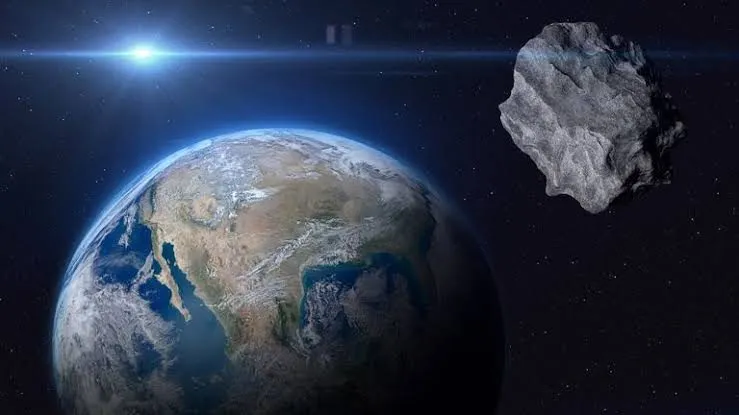
In December 2024, sky-survey telescopes detected a newly observed near-Earth object designated as asteroid 2024 YR4. Initial orbital simulations indicated a potential collision trajectory with Earth on December 22, 2032, carrying a calculated impact probability of approximately 2 percent. International planetary defense networks immediately placed the space rock under close astronomical tracking.
Estimated Dimensions and Kinetic Yield
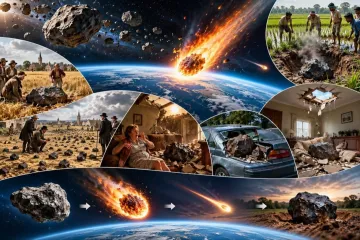
Astronomers estimate the diameter of 2024 YR4 between 40 and 90 meters across. While insufficient to trigger global catastrophe, an object of this mass entering Earth’s atmosphere would unleash explosive energy equivalent to roughly 7.7 megatons of TNT—surpassing the destructive force of both the 1908 Tunguska airburst and the 2013 Chelyabinsk meteor explosion.
Global Coordination and Space Telescopes
Space agencies including NASA and the European Space Agency (ESA) are deploying ground-based radar and optical observatories to refine the asteroid’s orbital parameters. Orbital tracking with the James Webb Space Telescope (JWST) will further constrain thermal radiation and non-gravitational Yarkovsky effects, helping scientists determine whether the asteroid will safely bypass Earth.
Planetary Defense and Deflection Strategies
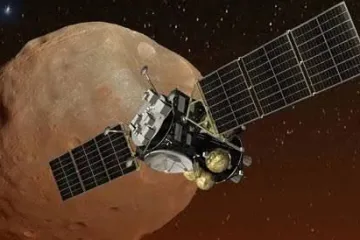
Should refined calculations confirm a high impact probability, aerospace engineers have viable mitigation options. Following the proven success of NASA’s DART (Double Asteroid Redirection Test) mission, a kinetic impactor spacecraft could collide with 2024 YR4 years in advance, imparting enough momentum to deflect its orbital path away from Earth.
Vigilance Without Panic
While the 2 percent risk warrant rigorous scientific vigilance, astronomical history demonstrates that as additional orbital arc observations accumulate, collision probabilities overwhelmingly drop to zero. The discovery of 2024 YR4 reinforces the necessity of planetary defense infrastructure to protect our civilization from cosmic hazards.