Ahmed Zewail: Father of Femtochemistry & Nobel Laureate
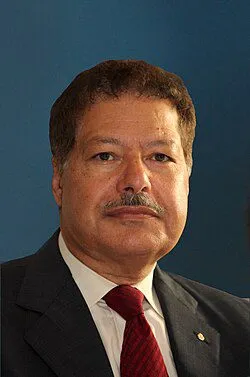
Early Life and Academic Journey
Born on February 26, 1946, in Damanhur, Egypt, Ahmed Zewail was an exceptional intellect destined to revolutionize molecular physics. After graduating with top honors from Alexandria University with bachelor’s and master’s degrees in chemistry, he moved to the United States on a fellowship to complete his PhD at the University of Pennsylvania.
Following post-doctoral research at the University of California, Berkeley, Zewail joined the faculty of the California Institute of Technology (Caltech). At Caltech, he established the pioneering research laboratory that founded femtochemistry and earned him the Nobel Prize.
The Challenge of Chemical Reaction Timescales
Chemists long understood that during chemical reactions, chemical bonds break and form at extraordinary speeds. These elementary molecular transitions unfold within femtoseconds.
One femtosecond (10-15 seconds) is one-millionth of a nanosecond (10-9 seconds). Observing molecular motion on such an infinitesimally fleeting timescale was once considered fundamentally impossible, likened to capturing a bullet in mid-air with an ordinary camera.
Femtosecond Spectroscopy: The Molecular Slow-Motion Camera
Dr. Zewail overcame this barrier by inventing femtosecond spectroscopy using ultrafast laser pulses. His methodology used a dual-pulse approach:
- A “pump” laser pulse strikes the molecule to initiate the chemical reaction.
- A delayed “probe” pulse measures optical absorption to capture the molecule’s intermediate geometry.
By varying the delay between pulses by femtoseconds, Zewail recorded the exact choreography of chemical bonds dissolving and emerging. For this groundbreaking achievement, Ahmed Zewail was awarded the unshared 1999 Nobel Prize in Chemistry.
Global Recognition and Science Diplomacy
Zewail received the highest honors internationally. In 1999, his native Egypt awarded him the Grand Collar of the Nile, the nation’s premier civilian honor. In 2006, he received the Albert Einstein World Award of Science.
Appointed by President Barack Obama as the United States Science Envoy to the Middle East, Zewail championed scientific infrastructure, educational reform, and technological modernization across Egypt, Jordan, Lebanon, and Turkey.
Enduring Legacy
When Dr. Ahmed Zewail passed away on August 2, 2016, the world lost a tireless advocate for human knowledge. His invention of femtosecond lasers transformed physical chemistry, molecular biology, and material science, proving that the swiftest secrets of nature can be brought to light.