Doubled Haploid Technology: Accelerating the Revolution in Wheat Breeding
Global Wheat Demand and Agricultural Challenges
Wheat is one of humanity’s foundational staple crops, providing roughly one-fifth of the total dietary calories and protein consumed by the global population. From bread and noodles to pasta and baked goods, modern food systems rely heavily on stable wheat yields.
In developing nations such as Bangladesh, consumer demand for wheat has expanded dramatically, rising from just 100,000 metric tons following independence in 1972 to over 7.5 million metric tons annually. With domestic production meeting only a fraction of this demand, millions of tons must be imported annually, placing heavy burdens on foreign reserves and food security. Meeting this challenge requires advanced plant biotechnology capable of producing high-yielding, climate-resilient, disease-resistant crop varieties swiftly.
Doubled Haploid Technology: A Plant Breeding Breakthrough
To overcome the lengthy timelines of conventional crop breeding, agronomists at the University of Sydney’s Plant Breeding Institute pioneered an innovative application: Doubled Haploid Technology (DHT). This biotechnology compresses breeding cycles, fundamentally reshaping how new wheat cultivars are developed.
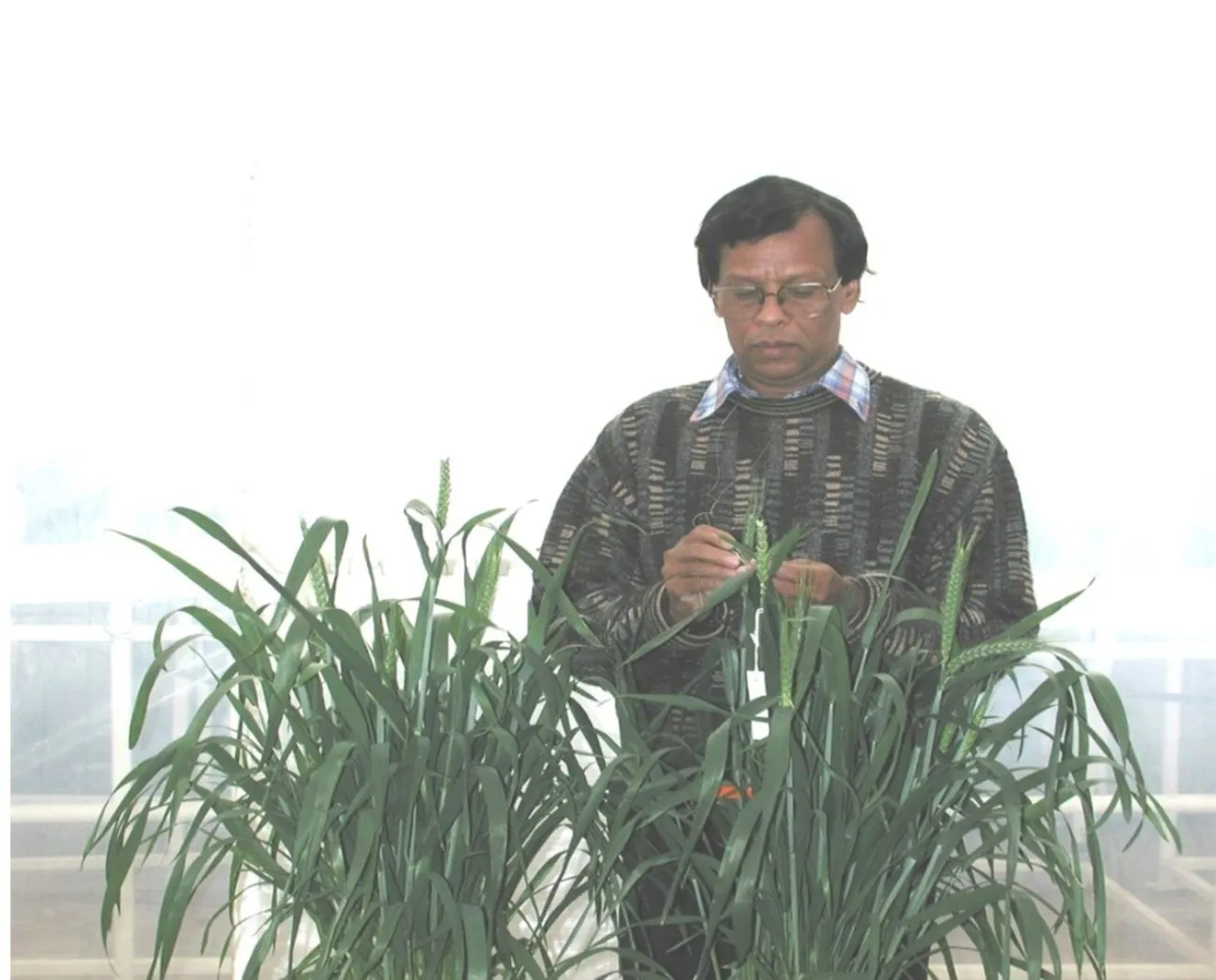
Leading this agricultural innovation is Bangladeshi-Australian agricultural scientist Dr. Nizam Ahmed, Principal Plant Breeder at the University of Sydney. Initiating research in 2002, Dr. Ahmed and his team developed protocols that cut variety development timelines from the traditional 10 to 12 years down to just 5 or 6 years—a genuine game-changer for plant breeders.
Mechanism and Strategic Advantages
Conventional breeding requires generational self-pollination over six to eight generations to achieve genetic homozygosity (pure breeding lines). In contrast, Doubled Haploid Technology generates homozygous lines in a single generation:
- Haploid Induction: Immature reproductive cells (microspores or wide crosses with maize pollen) are induced to develop into haploid embryos containing only a single set of chromosomes.
- Chromosome Doubling: Chemical agents, such as colchicine, double the chromosome complement, producing completely homozygous diploid lines instantly.
- Complete Genetic Uniformity: The resulting lines are 100% homozygous across all gene loci, eliminating genetic segregation in subsequent generations.
This precision enables breeders to evaluate stable agronomic traits, disease resistance, and baking quality years ahead of classical breeding schedules.
Commercial Success and International Adoption
Commercial deployment of this system began in Australia in 2004. In 2010, LongReach Plant Breeders commercially released “Spitfire,” the first prime hard wheat variety developed using this doubled haploid pipeline. Since then, more than 25 commercial wheat cultivars have been developed and cultivated across millions of hectares in Australia.
The University of Sydney’s protocols have since been shared internationally, training agricultural scientists and publishing methodology in peer-reviewed agronomy journals.
Opportunities for Climate Resilience in Developing Nations
For nations facing erratic monsoons, heat stress, salinity, and devastating fungal pathogens like wheat blast (Magnaporthe oryzae), Doubled Haploid Technology offers a critical path forward. Adopting DHT within national institutions, such as the Bangladesh Wheat and Maize Research Institute (BWMRI) and the Bangladesh Agricultural Research Council (BARC), could dramatically fast-track heat-tolerant and blast-resistant cultivars.
Conclusion
The pioneering breeding work led by Dr. Nizam Ahmed highlights how advanced plant biotechnology directly bridges laboratory innovation and global food security, ensuring sustainable harvests for future generations.