Gerard 't Hooft: A Nobel Laureate Questions Quantum Mechanics
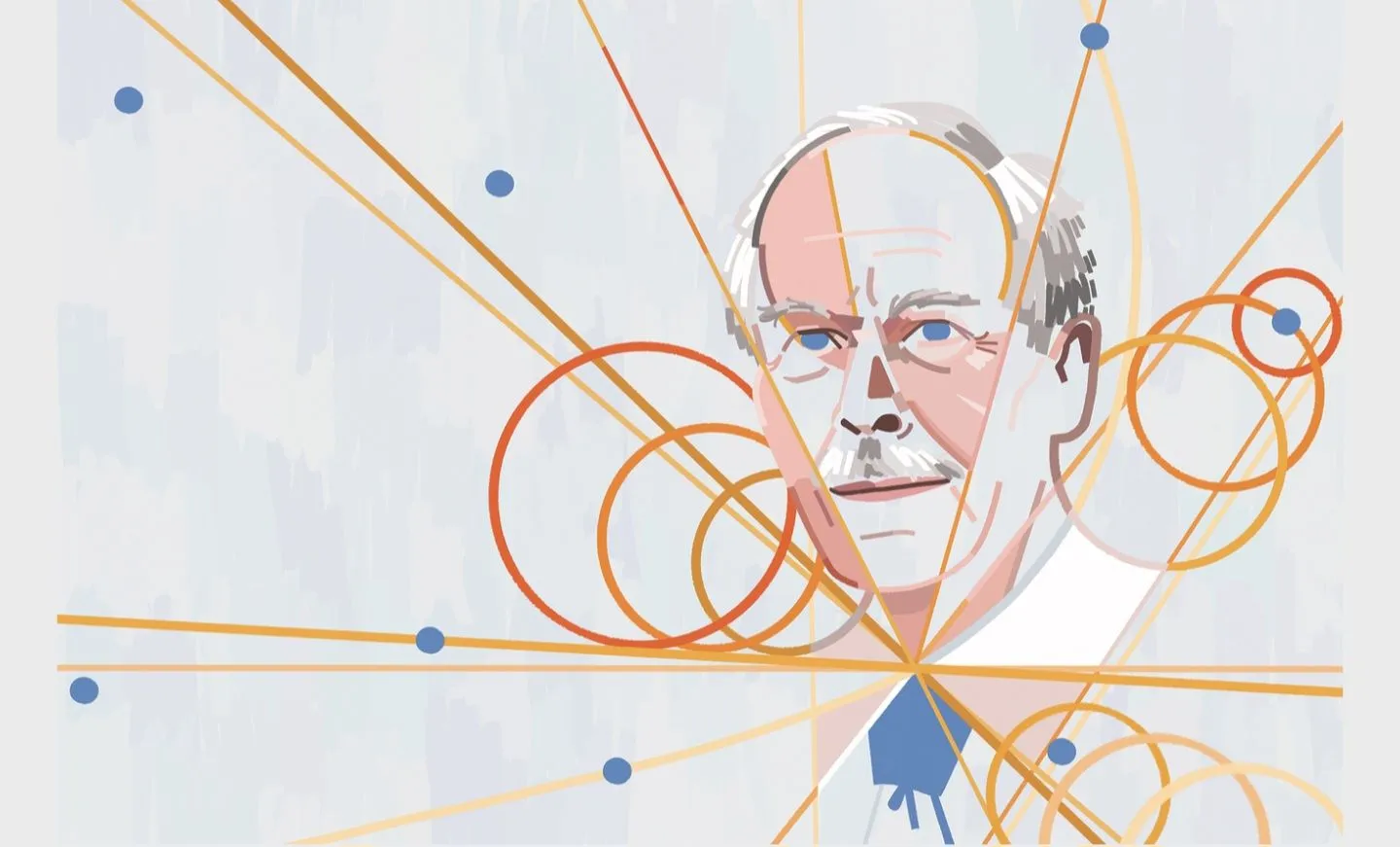
Challenging the Quantum Orthodoxy
Nobel laureate in physics Gerard ‘t Hooft has persistently questioned the prevailing consensus surrounding quantum mechanics. In his view, treating quantum indeterminacy and probability as irreducible features of physical reality risks stalling the long-term progress of fundamental physics.
Professor ‘t Hooft contends that the modern physics community has become too comfortable accepting that nature is inherently uncertain. By resigning ourselves to probabilities rather than seeking exact deterministic underpinnings, we place artificial constraints on theoretical exploration. He encourages physicists to pause, re-examine foundational assumptions, and formulate deeper questions regarding reality.
Beyond the Copenhagen and Many-Worlds Interpretations
‘t Hooft asks a provocative question: if physicists had not begun with standard quantum mechanics, what underlying deterministic laws might explain subatomic behavior? He firmly believes that nature’s mysteries are fundamentally decipherable, rejecting the idea that the universe will remain eternally opaque to human understanding.
His perspective directly challenges both the mainstream Copenhagen interpretation and the Many-Worlds interpretation. According to ‘t Hooft:
- Probabilistic wave functions represent intermediate computational tools rather than ontological reality.
- Standard quantum formulations constitute effective descriptions of deeper, cellular automaton-like deterministic processes operating at the Planck scale.
Consequently, he urges the scientific community to regard quantum theory not as a finalized answer, but as an open puzzle awaiting underlying mechanics.
A Nobel Legacy and Pillars of Modern Physics
‘t Hooft’s critique carries immense weight within theoretical physics. In 1999, he was awarded the Nobel Prize in Physics alongside his mentor Martinus J. G. Veltman for elucidating the quantum structure of electroweak interactions.
Their mathematical proof that non-Abelian gauge theories are renormalizable provided the essential mathematical foundation for the Standard Model of particle physics, which describes all known fundamental particles and interactions except gravity. Having solidified the standard framework, Gerard ‘t Hooft possesses the deep insight necessary to critique its philosophical foundations.
The Courage to Question Scientific Foundations
For ‘t Hooft, the future of theoretical physics lies not solely in manipulating increasingly complex equations within established paradigms, but in courageously probing the foundational nature of spacetime, information, and quantum reality.
His unorthodox perspective reminds scientists that true breakthroughs frequently require revisiting basic assumptions, demonstrating that intellectual courage is the true driving force of scientific discovery.