Poetry and Science: Jagadish Chandra Bose on Truth and Beauty
The Harmonious Convergence of Two Disciplines
In the traditional taxonomy of human knowledge, art and science are often viewed as opposite extremes. Science is seen as rigorous, quantitative, and objective; poetry is embraced as emotional, intuitive, and subjective. Yet throughout intellectual history, visionary thinkers have recognized that both creative pursuits spring from the same fundamental impulse: the desire to decipher the hidden harmonies of the universe.
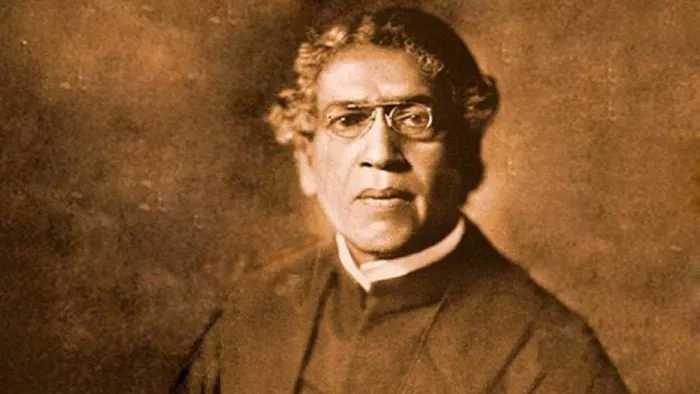
Among the most eloquent champions of this philosophical synthesis was the polymath Sir Jagadish Chandra Bose. Renowned globally as a pioneer of millimetre radio waves and plant physiology, Bose was equally celebrated for his philosophical writings on nature, culminating in his famous Bengali essay Kobita o Biggan (“Poetry and Science”).
Jagadish Chandra Bose: Polymath and Visionary
Bose was an extraordinary figure whose scientific accomplishments defied contemporary boundaries. In Kolkata during the 1890s, he developed microwave transmission circuits using spark transmitters and invented semiconductor galena crystal detectors, preceding Guglielmo Marconi’s transatlantic transmissions.
Later, shifting his gaze to plant biology, Bose designed the crescograph—an instrument capable of magnifying plant tissue movements up to $10,000$ times. Through rigorous laboratory experimentation, he demonstrated that plant tissues respond to mechanical electrical stimuli, fatigue, anesthetics, and toxins in patterns remarkably analogous to animal neural systems. Bose was convinced that a single, unified life-force animates both living flora and inorganic crystalline matter.
The Shared Search for Truth and Beauty
In his philosophical reflections, Bose argued that the poet and the scientist are fellow pilgrims pursuing the same objective through complementary methodologies:
- The Poet’s Intuition: Sees the formless spirit behind material existence with the inner eye of the imagination, translating intuitive visions into lyrical rhythm and metaphor.
- The Scientist’s Inquiry: Follows the trail of physical evidence beyond sensory limits, constructing instruments to make the invisible visible and translating natural laws into precise language.
Bose’s Vision in His Own Words
Nowhere is this philosophical insight expressed more movingly than in Bose’s famous formulation from his essay:
“The poet perceives the formless spirit of the universe through the vision of the heart, striving to embody it in artistic form. Where the vision of others falters, the poet’s insight remains unhindered, weaving the echoes of that unseen realm into the rhythm of verse. The path of the scientist may differ, but their spiritual striving is one with that of the poet. Where the light of ordinary sight ends, the scientist continues to pursue the illumination; where the capacity of hearing reaches the outer edge of sound, from thence too the scientist gathers trembling melodies. The mystery that sits behind the veil of appearance, toiling day and night—to that very mystery the scientist directs inquiries, extracting profound truths and striving to articulate them faithfully in human tongue.”
Conclusion
The philosophical reflections of Sir Jagadish Chandra Bose offer a timeless antidote to the fragmentation of human knowledge. By reminding us that the analytical rigor of science and the lyrical beauty of poetry are twin facets of human wonder, Bose illuminated a worldview where intellect and artistic imagination join in celebrating universal truth.