Equinox: Equal Day and Night and the Science of Seasons
The Autumnal Equinox and Equal Day and Night
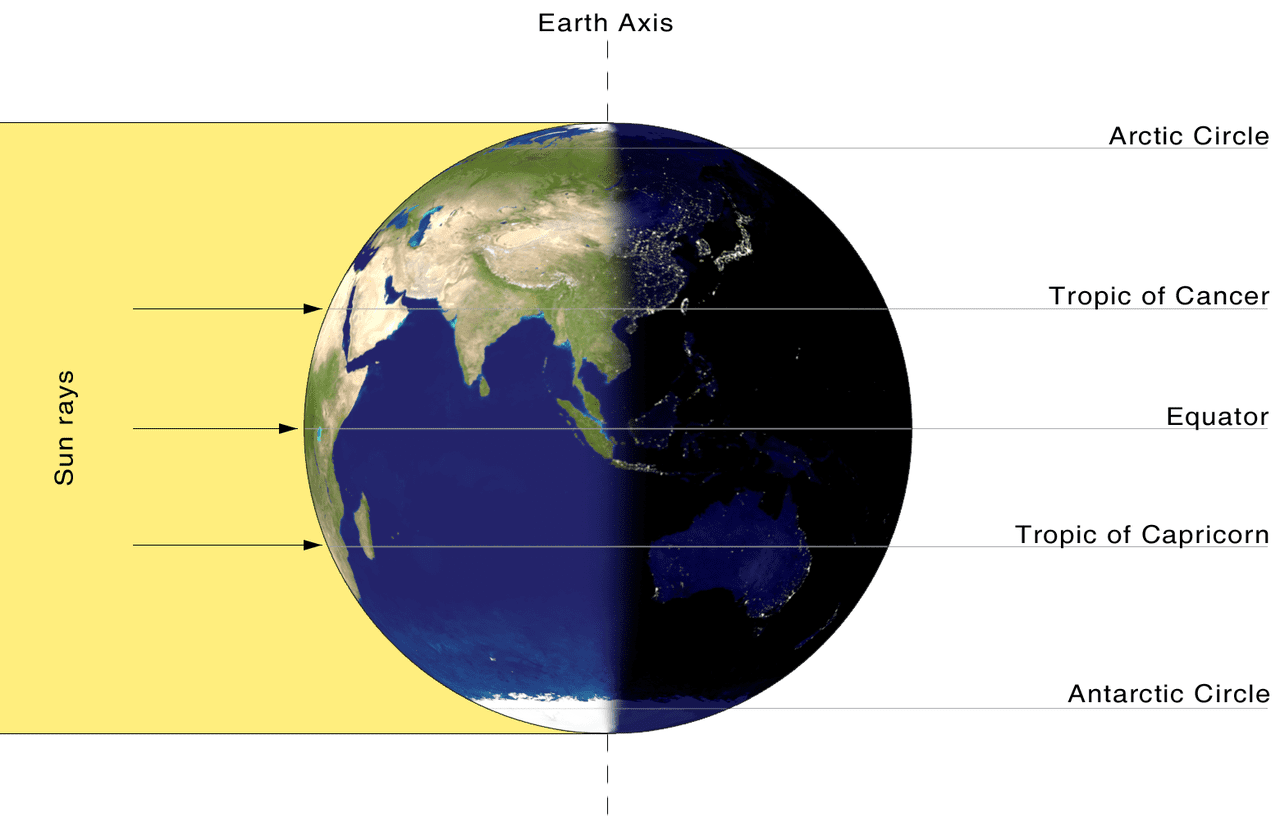
Each year on September 22 or 23, the astronomical calendar marks a celestial milestone: the equinox. On this date, the Sun crosses the celestial equator and shines directly overhead at Earth’s equator ($0^\circ$ latitude). Consequently, day and night achieve nearly equal duration across the globe.
The term equinox derives from the Latin words aequus (equal) and nox (night). This geometric alignment occurs precisely twice each year, orchestrating the transitions between seasons.
The Science Behind Earth’s Seasonal Changes
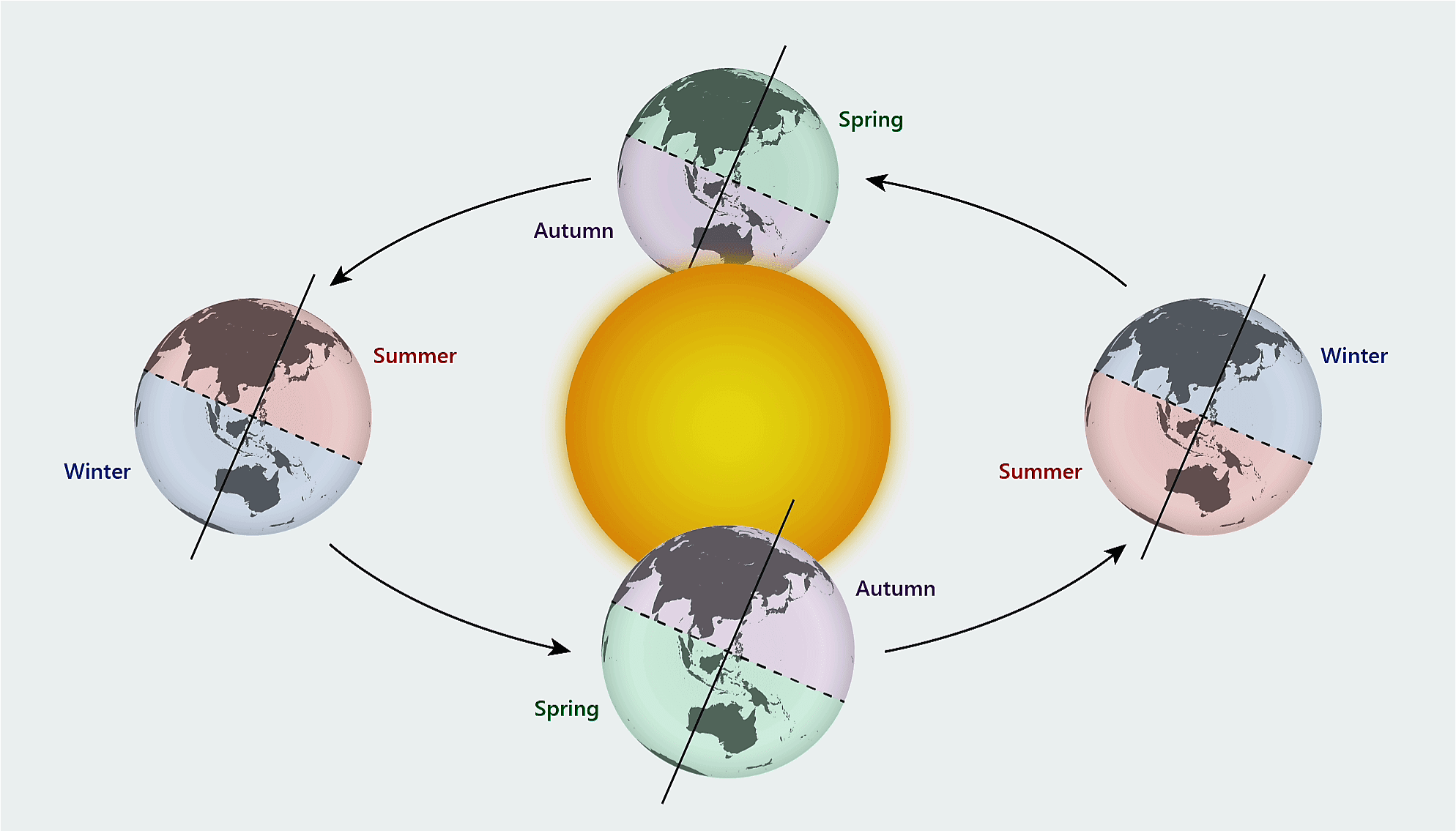
Why do seasons change? Earth revolves around the Sun while tilted on its rotational axis by approximately $23.44^\circ$ relative to its orbital plane (the ecliptic). Because of this persistent axial tilt, the Northern and Southern Hemispheres receive varying angles and durations of solar irradiance throughout the year, governing global climates and seasonal shifts.
Hemispheric Divergence: Autumn in the North, Spring in the South
Following the September equinox, the Sun’s subsolar point drifts southward across the equator, initiating distinct seasonal transformations in both hemispheres:
- Southern Hemisphere: Winter concludes and astronomical spring begins. Trees burgeon into bloom, daylight hours lengthen, and temperatures rise across regions such as Australia, South Africa, and South America.
- Northern Hemisphere: Summer draws to a close, inaugurating autumn. Deciduous forests transition into vibrant shades of amber, gold, and crimson before shedding their foliage in anticipation of winter.
The Winter Solstice and the Tropic of Capricorn
As the Sun continues its apparent southward migration, summer intensifies in the Southern Hemisphere while winter approaches the North. This trajectory culminates on December 21 or 22 at the winter solstice, when the Sun reaches its southernmost declination directly over the Tropic of Capricorn ($23.5^\circ$ S).
On this day, the Southern Hemisphere experiences its longest day of the year, while the Northern Hemisphere experiences its shortest day and longest night. Following the solstice, the Sun begins its northward journey.
Vernal Equinox and the Summer Solstice
By March 20 or 21, the Sun returns to the celestial equator, creating the vernal (spring) equinox in the Northern Hemisphere and the autumnal equinox in the Southern Hemisphere, once again delivering equal day and night across the globe.
The Sun’s northern progression reaches its zenith on June 20 or 21 at the summer solstice, standing directly overhead at the Tropic of Cancer ($23.5^\circ$ N). This produces the longest day in the Northern Hemisphere and the shortest in the Southern Hemisphere.
Earth’s Cosmic Clockwork and Geographic Significance
For billions of years, Earth’s axial tilt and orbital dynamics have maintained this cosmic cycle, driving planetary ecology, agricultural rhythms, and weather patterns. Notably, the Tropic of Cancer traverses Bangladesh directly through the city of Cumilla, providing a compelling geographic landmark for educational tourism and scientific appreciation.
Understanding the interplay between the equinox and seasons connects us deeply to the celestial rhythms governing our home planet.