General Relativity: From the 1919 Solar Eclipse to Gravitational Lensing
Curvature of Spacetime and Einstein’s Revolution
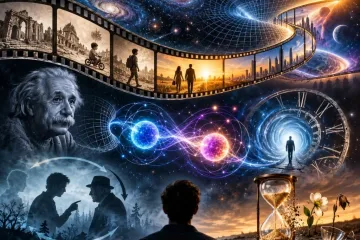
In 1915, Albert Einstein revolutionized physics with his theory of general relativity. Rather than treating gravity as an invisible pulling force acting across empty space—as Sir Isaac Newton had posited for over two centuries—Einstein revealed that gravity is fundamentally geometric. Massive bodies warp and curve the fabric of four-dimensional spacetime, and objects follow curved paths called geodesics within that warped geometry.
The greater an object’s mass and energy density, the more severe the surrounding spacetime curvature. Light itself, traveling along these geodesics, must inevitably bend when passing through the gravitational field of a massive body.
The 1919 Solar Eclipse: Arthur Eddington’s Landmark Proof
In science, a groundbreaking hypothesis requires rigorous empirical verification. That verification arrived on May 29, 1919, during a total solar eclipse. British astrophysicist Sir Arthur Eddington led expeditions to the island of Príncipe off West Africa and Sobral in northern Brazil to measure the gravitational deflection of starlight.
During the darkness of totality, stars in the Hyades cluster near the Sun’s limb became visible. Photographed star positions were compared with nighttime baseline plates taken months earlier. The observed deflection closely matched Einstein’s theoretical prediction of approximately $1.75$ arcseconds—twice the deflection predicted by Newtonian corpuscular gravity. Eddington’s confirmation made Einstein an international sensation, marking the definitive validation of general relativity.
Gravitational Lensing: Nature’s Cosmic Telescopes
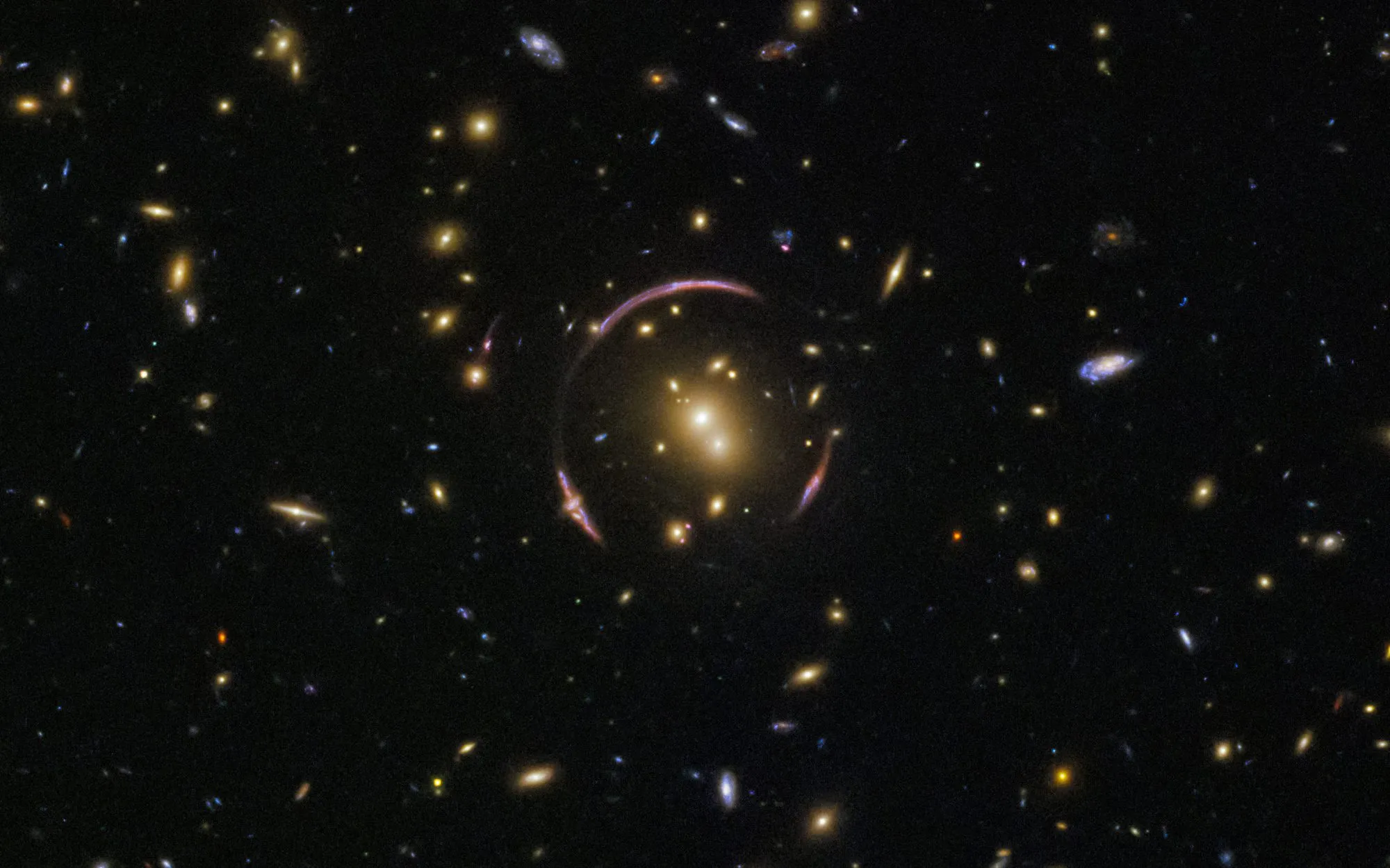
The deflection of light by mass gave birth to an indispensable observational technique in modern astrophysics: gravitational lensing. When light from an extremely distant background galaxy passes near an intervening massive galaxy cluster, the cluster’s intense gravitational field bends and focuses the light rays like a colossal cosmic magnifying glass.
Gravitational lensing magnifies faint background radiation, producing multiple distorted images, arcs, and magnified panoramas of young galaxies that would otherwise remain undetectable by modern instrumentation.
Einstein Rings and the James Webb Space Telescope
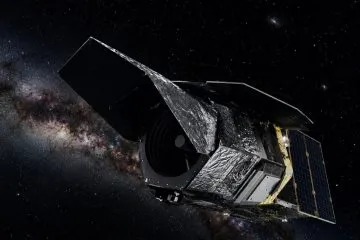
When the background light source, the foreground gravitational lens, and the observer align in precise collinear geometry, the deflected light forms a luminous circular ring known as an Einstein ring. Instruments such as the Hubble Space Telescope and the James Webb Space Telescope (JWST) have discovered numerous spectacular Einstein rings, including the celebrated “Molten Ring” (GAL-CLUS-022058-38303).
Modern deep-field observatories leverage gravitational lenses to peer billions of light-years across cosmic time, observing the earliest stars and proto-galaxies formed shortly after the Big Bang.
Mapping the Invisible Cosmos
Beyond magnifying distant sources, gravitational lensing serves as astrophysics’ most powerful tool for mapping dark matter. Because dark matter does not emit or absorb electromagnetic radiation, its spatial distribution can only be deduced by observing how its gravitational mass bends passing starlight.
From a historic solar eclipse in 1919 to deep-space surveys conducted by the James Webb Space Telescope, Einstein’s geometric insight continues to unlock the deepest mysteries of cosmic architecture.