The Wollemi Pine: Discovering a Jurassic Living Fossil in Australia
Echoes of the Age of Dinosaurs
Two hundred million years ago, during the Jurassic period, vast prehistoric conifer forests blanketed the ancient supercontinent of Gondwana. In these primeval woodlands, towering araucarian trees formed the canopy under which dinosaurs roamed.
For centuries, paleobotanists believed that these ancient conifer lineages had succumbed to extinction alongside the dinosaurs millions of years ago. Their existence was known only through fossilized leaves and petrified wood preserved in sedimentary rock strata.
The Astonishing 1994 Discovery
On September 10, 1994, botanical history was rewritten. David Noble, a field officer with the New South Wales National Parks and Wildlife Service, was canyoning through a remote, deep rainforest gorge within Wollemi National Park, just 150 kilometers northwest of Sydney.
Inside an isolated, fire-sheltered canyon, Noble encountered a grove of bizarre, unfamiliar conifer trees with distinctive bubbly, chocolate-brown bark and unusual fern-like foliage. Returning with botanical specimens, taxonomic analysis confirmed an incredible reality: the trees were not merely an undiscovered species, but members of an ancient genus thought to have gone extinct millions of years ago. The discovery was christened the Wollemi pine (Wollemia nobilis).
A Genuine Botanical Living Fossil
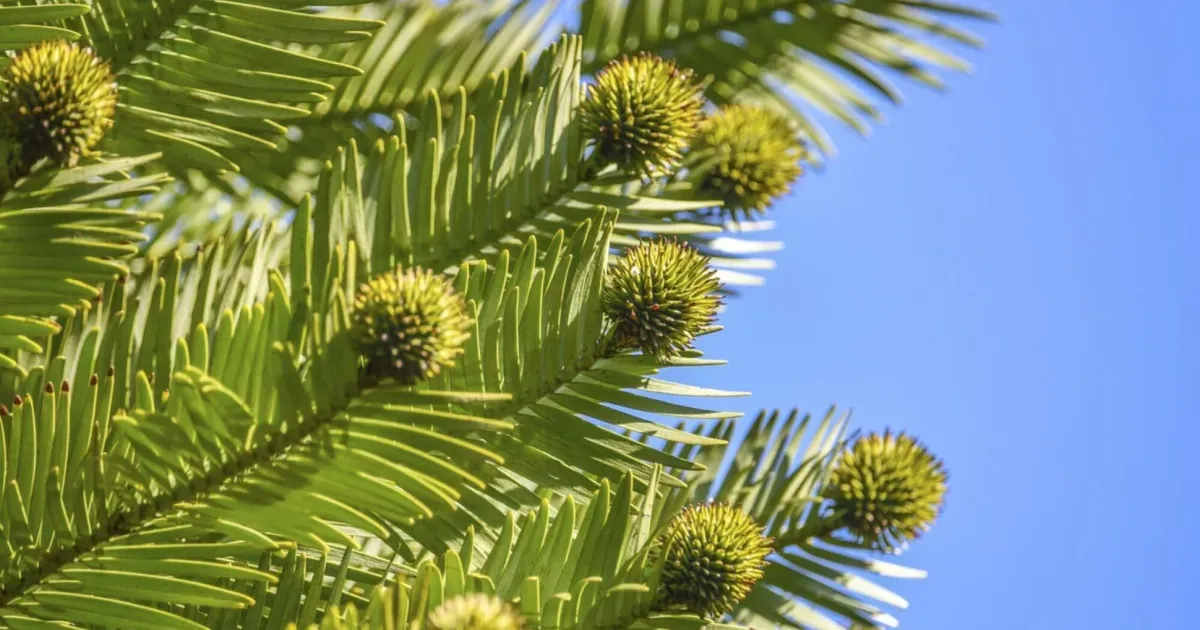
Despite its vernacular name, the Wollemi pine is not a true pine (genus Pinus), but a member of the Araucariaceae family, closely allied with the Norfolk Island pine and the monkey puzzle tree. Its physical characteristics are unique:
- Bark Texture: Mottled, dark brown bark resembling boiling chocolate or crunchy breakfast cereal.
- Coppicing Habit: Trunks produce multiple basal suckers, allowing a single root system to generate fresh replacement trunks over centuries.
- Foliage Architecture: Feathery, lime-green sprays of leaves arranged in two distinct rows along twigs.
Conservation and Global Propagation
With fewer than one hundred mature wild trees surviving in the remote gorge, the wild population faced extreme vulnerability to bushfires and pathogen introduction (such as Phytophthora cinnamomi root rot). To protect the wild grove, authorities kept the canyon’s exact geographic coordinates strictly confidential.
In a visionary conservation strategy, botanists at the Royal Botanic Garden Sydney and the Blue Mountains Botanic Garden Mount Tomah developed tissue culture and cutting propagation protocols. Commercial propagation allowed potted Wollemi pines to be distributed to botanic gardens, universities, and private collections worldwide, safeguarding the species against catastrophic extinction.
Conclusion
The survival and rediscovery of the Wollemi pine illustrates that Earth still harbors ancient natural secrets, serving as a living link to the prehistoric age of dinosaurs.