Universe 25: The Rodent Experiment and the Future of Overpopulation
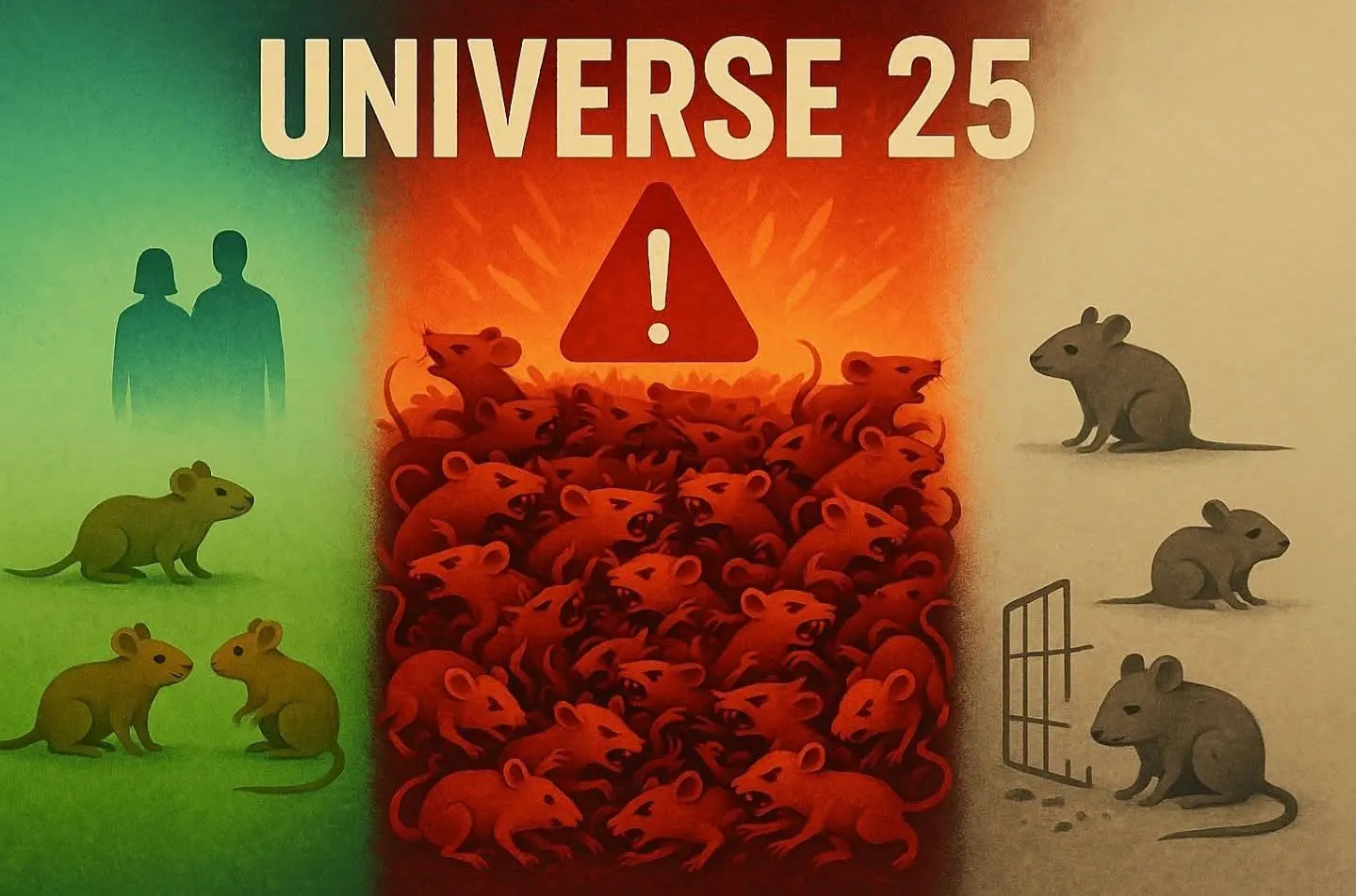
A Rodent Utopia: John B. Calhoun’s Experiment
In the late 1960s, American ethologist John B. Calhoun initiated one of the most provocative and disturbing behavioral experiments in behavioral biology. Designed to investigate the consequences of overcrowding, Calhoun constructed an enclosed experimental habitat measuring nine square feet: a rodent utopia equipped with an infinite supply of food, clean water, nesting material, and immunity from predators and infectious pathogens.
The experiment commenced with four pairs of healthy albino mice. In this paradise of absolute abundance, the rodent population expanded rapidly, doubling every 55 days. Yet as density reached astronomical levels, this manufactured paradise transformed into a dystopian nightmare known as Universe 25.
The Behavioral Sink: Societal Collapse Amidst Abundance
When the population climbed beyond 600 individuals, social architecture disintegrated. As physical crowding peaked at 2,200 mice—well below the habitat’s absolute physical capacity of 3,840—social behaviors broke down completely. Calhoun termed this psychological collapse the behavioral sink:
- Dominant males abandoned territorial defense, succumbing to random violent hyperactivity.
- Nursing females exhibited pathological maternal neglect, abandoning and attacking their own litters.
- A sub-population of non-breeding males emerged, dubbed “The Beautiful Ones.” These individuals spent their entire existence grooming, eating, and sleeping, completely devoid of social or reproductive engagement.
Birth rates plummeted to zero, infant mortality spiked past $90\%$, and the colony inexorably aged and died out. Replicating the experiment 25 separate times yielded the same grim conclusion: excessive crowding induced irreversible extinction even amidst material abundance.
Critiques and Historical Parallels
While contemporary psychologists emphasize that rodents possess vastly different cognitive and emotional architectures than humans—critiquing Calhoun’s methodological extrapolations—historians and sociologists drew striking parallels with human civilizational decline.
In 1798, Thomas Robert Malthus warned that demographic expansion inevitably outpaces resource production. Throughout history, ecological overshoot and social strain contributed to the dissolution of ancient societies, including the Classic Maya civilization and Easter Island (Rapa Nui), where resource depletion compounded social breakdown.
Megacities and Modern Urban Loneliness
Today, as global human population surpasses 8 billion and clusters into hyper-dense megacities like Tokyo, Dhaka, Delhi, and São Paulo, Calhoun’s observations evoke modern anxieties. Dense urban high-rises, relentless traffic congestion, and cutthroat economic competition have given rise to urban loneliness and social alienation.
In several developed countries, plummeting fertility rates, social withdrawal (such as the hikikomori phenomenon), and rising rates of mental health crises resemble aspects of Calhoun’s behavioral sink, sparking renewed discussion about urban architecture and social well-being.
Human Adaptability and Collective Agency
Unlike rodents, humans possess linguistic consciousness, strategic foresight, and cultural innovation. Through urban planning, green public infrastructure, remote work paradigms, social safety nets, and ethical governance, human communities can mitigate environmental stress and foster social resilience.
Ultimately, Universe 25 serves as a cautionary tale. It reminds us that sustainable societies require not only material abundance, but meaningful community bonds, emotional well-being, and thoughtful design of our living spaces.