Super El Nino Is Coming
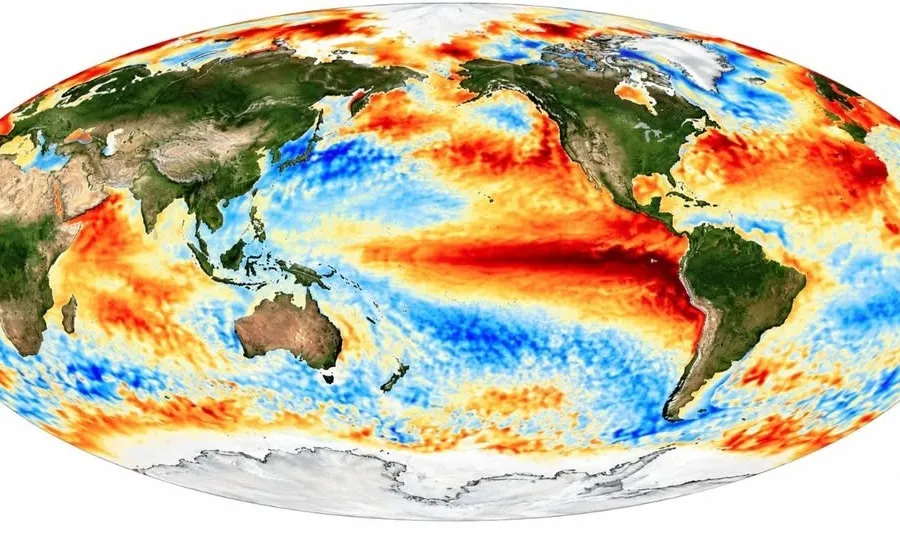
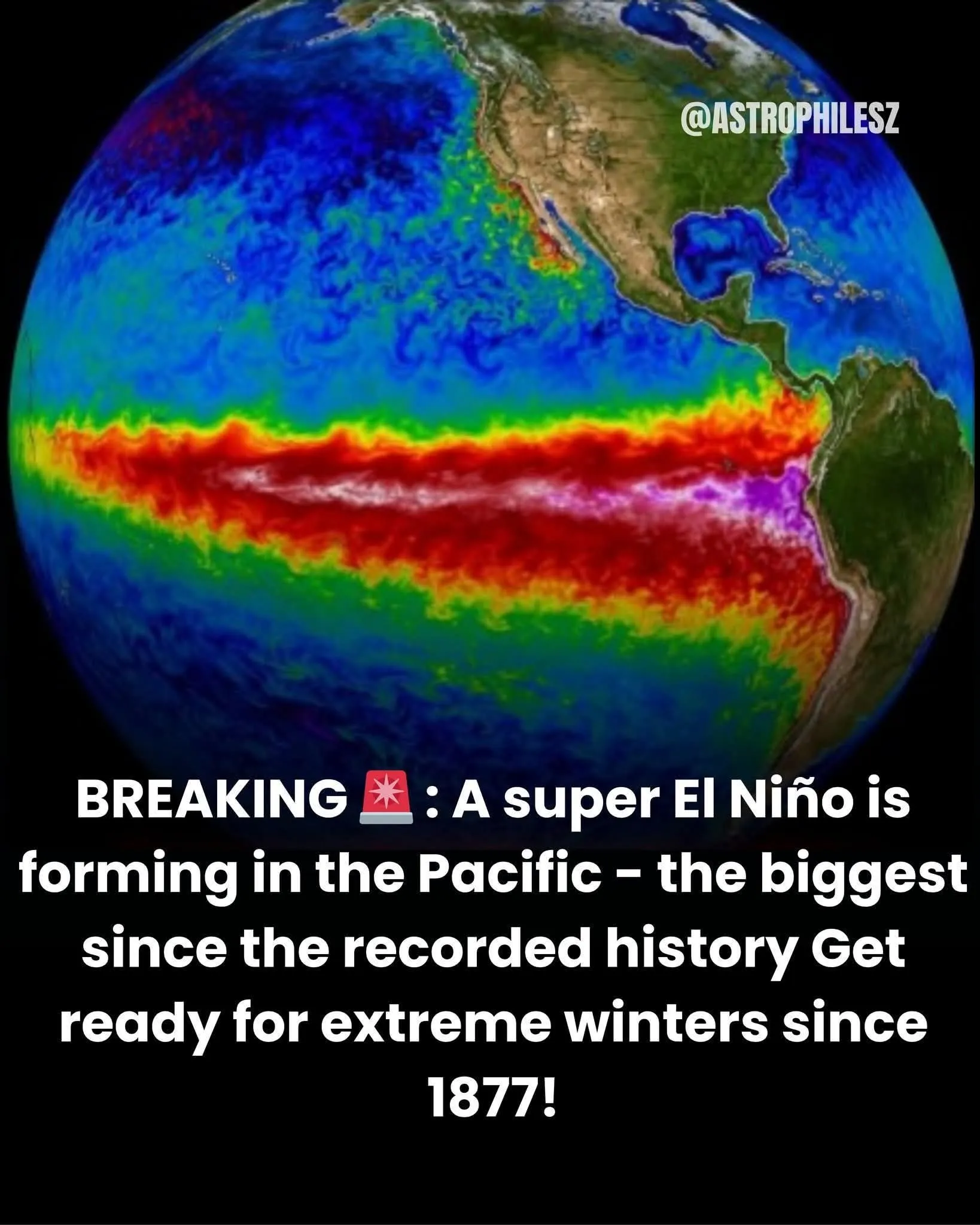
A massive atmospheric and oceanic reorganization is underway across the Pacific basin. Waters spanning the equatorial central and eastern Pacific have warmed substantially above climatological norms, setting the stage for what meteorologists describe as Super El Nino weather.
While “Super El Niño” is an informal term rather than a rigid scientific classification, it designates an exceptionally potent iteration of the El Niño phenomenon capable of destabilizing weather patterns worldwide.
What Exactly Is El Niño?
Under normal conditions, equatorial trade winds blow steadily from east to west across the Pacific. These persistent winds pile warm surface waters against Indonesia and northern Australia, sustaining deep oceanic heat in the western Pacific.
During an El Niño event, these trade winds weaken or reverse. The reservoir of warm water banked in the west surges eastward, elevating sea surface temperatures across thousands of kilometers of the central and eastern Pacific Ocean.
A rise of a few degrees Celsius might sound trivial at first glance. Yet one must remember that this thermal anomaly involves a colossal volume of water across the largest ocean on Earth.
That oceanic heat alters the overlying atmosphere. Atmospheric pressure fields, jet streams, and storm tracks shift dramatically, cascading weather extremes across distant continents.
How Severe Are Current Temperature Anomaly Readings?
In August 2026, sea surface temperatures in the central equatorial Pacific hovered roughly 1.8 degrees Celsius above the historical baseline. Further east, adjacent to the coasts of Peru and Ecuador, regional anomalies reached an astonishing 3.4 degrees Celsius. Accumulating such vast excess thermal energy in the tropical Pacific invariably reshapes global jet streams and precipitation regimes.
Potential Impacts Across Asia
Historically, El Niño correlates with suppressed rainfall across Indonesia, the Philippines, and mainland Southeast Asia, elevating the risks of prolonged drought, reservoir depletion, and uncontrolled wildfires.
South Asia feels the ripple effects as well. Severe El Niño episodes frequently coincide with weakened summer monsoon circulation, raising concerns about erratic rainfall across agricultural heartlands.
Nonetheless, local outcomes in countries like Bangladesh and India depend on complex regional interactions, including Indian Ocean sea surface temperatures and the Indian Ocean Dipole (IOD).
Drying Out Australia
Australia typically experiences some of the clearest signatures of El Niño. Eastern and southeastern Australia face reduced winter and spring rainfall, unseasonably high temperatures, and drying topsoil that stresses agriculture and heightens wildfire hazards ahead of summer.
A Contrasting Picture in the Americas
The Americas experience the inverse consequence of this oceanic shift.
Warm equatorial water washing against Peru and Ecuador fuels intense atmospheric convection, unleashing torrential downpours, flash floods, and mudslides along normally arid coastal zones.
North America also sees its standard winter patterns overturned. The southern United States typically trends wetter and cooler, whereas the northern states and parts of Canada experience milder, drier winters.
Interestingly, El Niño elevates vertical wind shear across the tropical Atlantic, often inhibiting the development and intensification of Atlantic hurricanes.
One Ocean Event, Two Opposite Extremes
This duality represents the most striking aspect of El Niño: the very same oceanic shift that plunges Southeast Asia and eastern Australia into drought can inundate coastal regions in the Americas with historic deluges thousands of miles away.
El Niño is an ancient natural climate cycle that has operated for millennia. What distinguishes the present event, however, is that it is occurring on an already warming planet that has stored unprecedented thermal energy in its oceans.
When an intense El Niño overlays background global warming, droughts and heatwaves become more punishing, while atmospheric moisture increases the severity of torrential floods.
A few degrees of warmth in the equatorial Pacific is sufficient to bend jet streams, desiccate farmlands on one side of the globe, and submerge entire towns on the other. That is the awe-inspiring, disruptive power of El Niño.