Star Trails and Meteors: Two Cosmic Wonders in One Frame
Witnessing Cosmic Motion
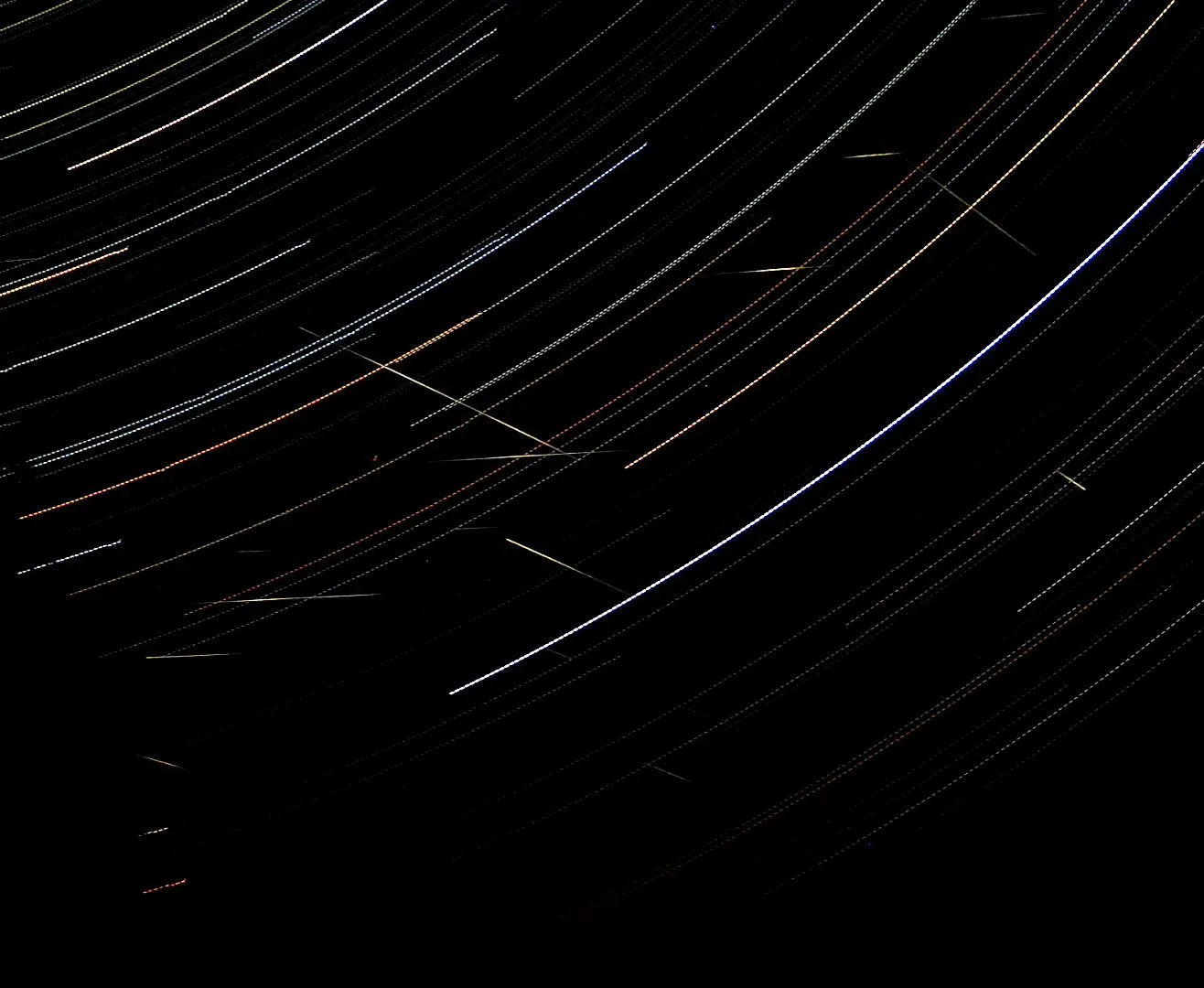
Aiming a camera at the night sky for three uninterrupted hours is both a test of patience and a meditation on cosmic motion. When a time-lapse captures concentric curves of starlight punctuated by ten brilliant meteors, two contrasting astronomical phenomena unite in a single composition.
One is born of our planet’s steady rotation; the other is the fiery finale of interplanetary dust.
Star Trails: Does the Sky Truly Rotate?
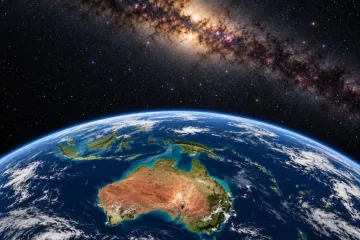
To our eyes, the night sky appears tranquil and stationary. However, the apparent movement of the stars is the direct consequence of Earth spinning on its axis once every twenty-four hours. Because our vantage point is rotating through space, the stars appear to wheel in majestic circles overhead.
When a camera shutter remains open for extended periods, or hundreds of short exposures are digitally stacked, each pinpoint of light traces an elegant arc. These are star trails.
In the Northern Hemisphere, these celestial paths revolve around Polaris, the North Star; in the Southern Hemisphere, they encircle the South Celestial Pole. The night sky becomes a giant spinning clock.
Meteors: The Fiery Sprint of Cosmic Debris
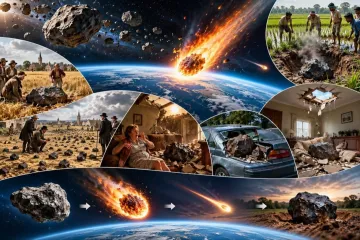
While star trails are orderly, continuous, and predictable, meteors are abrupt, transient, and chaotic. A shooting star is not a star at all, but a microscopic grain of cosmic dust or rocky debris shedding from comets or asteroids.
Entering Earth’s upper atmosphere at velocities exceeding tens of kilometers per second, atmospheric compression superheats the air in front of the particle. The vaporizing trail of ionized plasma creates the brief, luminous streak we call a meteor.
Unlike curving star trails, a meteor cuts through the frame in a sharp, straight line—a momentary stroke of celestial fire across the dark canvas of space.
Two Timescales in a Single Video
Capturing star trails alongside sporadic meteors records two profoundly different cosmic rhythms in harmony:
- Star trails reflect the enduring, unceasing rotation of Earth that has persisted for billions of years.
- Meteors remind us that space is populated by restless debris encountering our planet in sudden, fleeting moments.
Conclusion
Astrophotography is more than capturing pictures; it is the art of translating deep time and cosmic mechanics into visual poetry. A three-hour sequence documenting star arcs and flashing meteors reveals the dynamic beauty of our celestial environment.
Your browser does not support the video tag.