Psychoanalysis and the Subconscious Mind: Freud
Mysterious Patients and Freud’s Breakthrough
Vienna, Austria. The late nineteenth century. A young woman sits before a neurologist. Her limbs grow numb and paralyzed, and at times she loses the power of speech. Yet physical examinations reveal no bodily lesions or pathology. The physician is baffled: physically sound, yet genuinely ill. Where did the disorder originate?
Working with such enigmatic patients compelled Viennese neurologist Sigmund Freud to reconsider the nature of the human psyche. Working closely with his patients, he realized that many suffering individuals harbor distress not in physiological tissue, but deep within the psyche—in a realm beyond the reach of conscious thought.
The Subconscious Mind: The Unseen Iceberg
Today, psychology, counseling, and mental health discussions are part of daily life. But in Freud’s era, the idea of an unseen realm governing conscious thoughts was radical. Freud posited that what we consciously know of our minds is only a fraction of mental reality.
He famously compared the human mind to an iceberg. The small tip visible above the ocean waves represents the conscious mind—our active thoughts, perceptions, and feelings. Yet the vast bulk of the iceberg lies submerged beneath the surface. This hidden expanse is the subconscious, or unconscious, mind.
According to Freud, our forgotten memories, unfulfilled desires, primitive fears, guilt, and emotional conflicts are stored here. We may consciously forget them, but they do not forget us. Instead, they silently steer our daily behavior, emotional reactions, and life decisions.
From this insight, Freud developed psychoanalysis: both a comprehensive theory of the human mind and a therapeutic method for treating psychological disorders.
Id, Ego, and Superego: Three Internal Forces
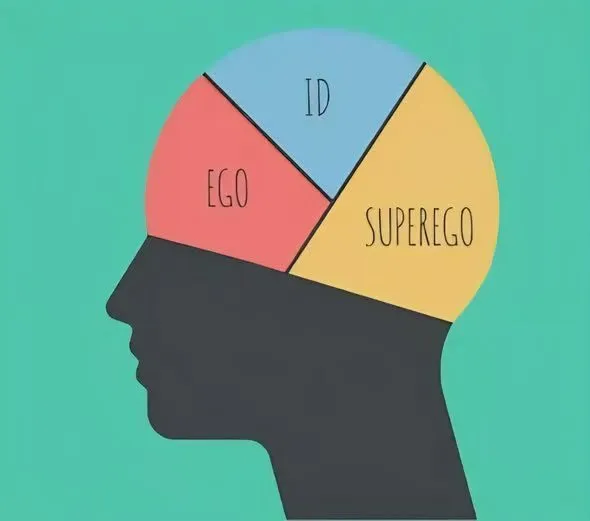
Freud proposed that the human psyche is continually shaped by three competing forces: the Id, the Ego, and the Superego.
The Id represents primal biological drives. It demands instant gratification, operating on the pleasure principle. The Superego, by contrast, embodies internalized conscience, moral standards, and societal rules.
Caught between them is the Ego, tasked with mediating between primal urges and moral constraints. Freud argued that much of human anxiety and neurosis springs from this ceaseless internal struggle.
Repression, Dreams, and Free Association
Another cornerstone of his work was repression. When a memory or desire proves too painful to face, the mind locks it away in an unconscious chamber. But closing that door does not eliminate the tension.
Freud observed that repressed material returns through indirect avenues—manifesting as anxiety, nightmares, phobias, or compulsive actions. To uncover these buried conflicts, he invited patients to speak without filter or censorship—a breakthrough technique called free association.
Dreams offered another vital portal. Freud described dreams as the “royal road to the unconscious,” believing dream symbolism encoded masked wishes and repressed emotions.
Freud’s Legacy and Modern Science
In the early twentieth century, these concepts sparked an intellectual revolution across literature, art, cinema, and the social sciences. The unseen landscape of inner human experience moved to the forefront of cultural consciousness.
Yet modern empirical neuroscience and psychology do not validate all of Freud’s conjectures.
Many of his hypotheses are difficult to test rigorously under laboratory conditions, and some lack empirical support. Today, psychoanalysis is viewed less as a definitive scientific framework and more as a foundational, historic chapter in the evolution of psychology.
Nevertheless, Freud’s historical legacy remains undeniable. While he may not have answered every question correctly, he opened the door to the hidden terrain of the human psyche.
Humanity has measured ocean depths, probed the interior of atoms, and photographed distant galaxies. Yet the mystery of our own consciousness remains unplumbed. Perhaps the most profound puzzle in the cosmos is located not among distant stars, but within our own minds.