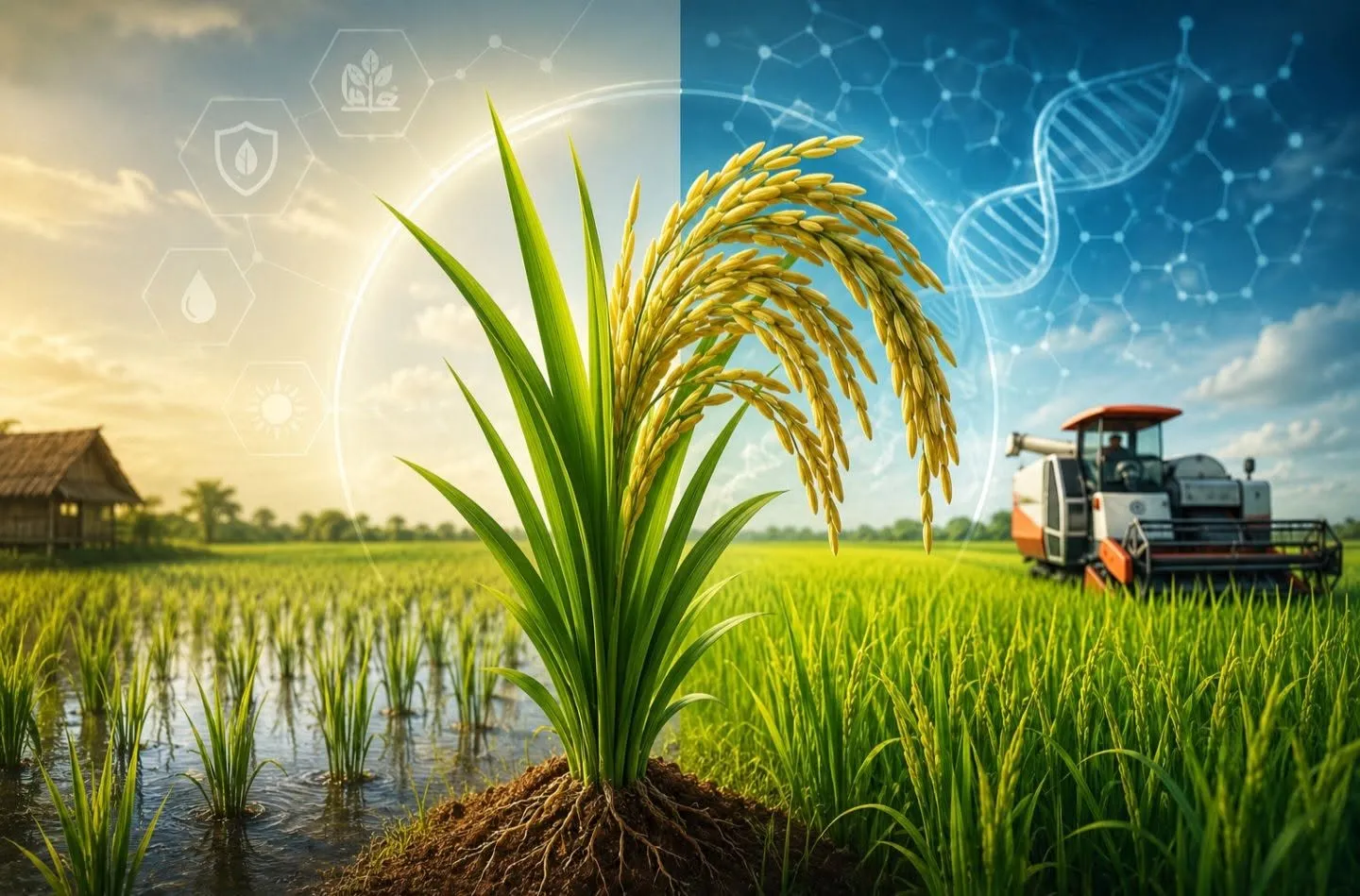
Plant Breeding: The Science and Art of Feeding the World
The Agricultural Dawn of Human Civilization
Approximately twelve thousand years ago, ancient hunter-gatherers transitioned from nomadic foraging to settled agrarian cultivation. Cultivating crops granted humanity food security, enabling permanent settlements, labor specialization, and the rise of complex civilizations. Culture and agriculture have walked hand in hand across millennia.
Domesticating Wild Flora
Early farmers gathered wild seeds and sowed them in fertile river valleys. Season after season, observant growers selected seeds from the most robust, high-yielding, and pest-resistant plants while discarding stunted or diseased specimens. Through millennia of artificial selection, ancient agrarians transformed scrubby wild ancestors into nutritious, domesticated staples such as wheat, rice, maize, and legumes.
Farmers as the Original Plant Breeders
Centuries before formal genetics emerged, peasant farmers operated as humanity’s original plant breeders. In Bengal, agrarian communities selected and refined thousands of indigenous rice varieties tailored to varied topographies, monsoon flood depths, and coastal salinity. This generational stewardship forged irreplaceable agricultural biodiversity.
Mendel’s Laws and the Birth of Scientific Genetics
During the nineteenth century, plant breeding attained mathematical rigor through the pioneering pea experiments of Gregor Johann Mendel. Mendel identified the fundamental laws of hereditary transmission, proving that inherited traits are governed by discrete biological factors—now known as genes. In the twentieth century, the discovery of the DNA double helix revealed the molecular architecture underlying hereditary variation.
Pedigree Breeding and Modern Crop Resilience
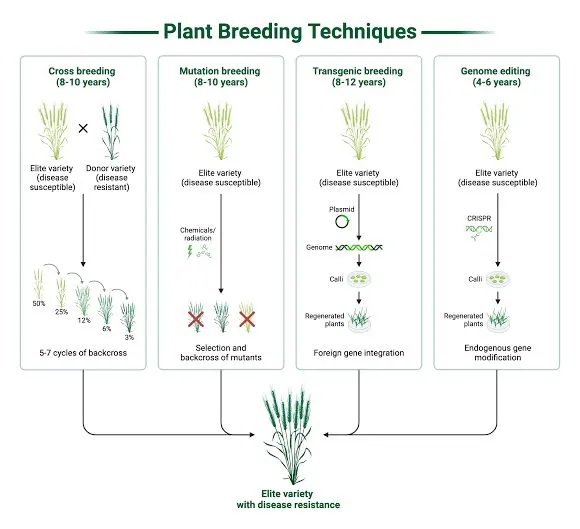
Contemporary agronomists employ sophisticated breeding methodologies to engineer resilient cultivars. In pedigree breeding, breeders cross parents possessing complementary traits—such as high yield and salinity tolerance. Through successive filial generations (F2 to F6), breeders systematically select superior lines until genetic traits stabilize. Institutions like the Bangladesh Rice Research Institute (BRRI) have developed over one hundred modern high-yielding rice varieties using these techniques, bolstering national food security.
Hybrid Vigor and Commercial Agriculture
Another widely adopted approach is hybrid breeding. Crossing two distinct, highly inbred parental lines produces an F1 generation displaying remarkable vigor, stature, and yield—a genetic phenomenon known as heterosis or hybrid vigor. While hybrid seeds deliver exceptional yields, their genetic superiority segregates in subsequent generations, requiring farmers to purchase certified seed annually from commercial seed producers.
Mutation Breeding and Biotechnology
When natural variation is insufficient, breeders induce mutations using gamma irradiation or chemical mutagens to unlock novel traits. The Bangladesh Institute of Nuclear Agriculture (BINA) has successfully bred numerous drought- and salinity-tolerant cultivars through mutation breeding. Furthermore, modern genetic engineering and CRISPR-Cas9 gene editing enable precise insertion, deletion, or regulation of specific genes, expediting crop improvement without lengthy multi-generational crossing.
An Art Form Anchored in Science
While modern plant breeding relies on molecular genetics, bioinformatics, and genomics, it remains an artistic craft. A breeder must possess an intuitive vision to foresee the ideal plant architecture and the dedication to shepherd that vision through years of field trials. In Jonathan Swift’s immortal words from Gulliver’s Travels: “Whoever could make two ears of corn, or two blades of grass, to grow upon a spot of ground where only one grew before, would deserve better of mankind, and do more essential service to his country, than the whole race of politicians put together.”