The Alphabet of Life on Asteroid Ryugu

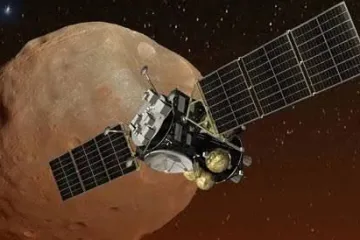
When Japan’s Hayabusa2 spacecraft returned pristine samples from asteroid Ryugu, it delivered an extraordinary cosmic treasure. Analyzing these undisturbed grains, scientists confirmed the presence of all five primary genetic nucleobases: adenine, guanine, cytosine, thymine, and uracil. These five chemical letters constitute the fundamental molecular alphabet of all DNA and RNA on Earth.
The milestone study was published in Nature Astronomy on 16 March 2026.
Pristine Sample Preservation
To prevent terrestrial contamination, the Ryugu grains were sealed in ultra-clean nitrogen chambers before ever contacting Earth’s atmosphere. Researchers are confident that these nucleobases originated natively within the asteroid’s ancient carbonaceous matrix rather than through terrestrial exposure.
Comparing Solar System Materials
The researchers compared the Ryugu data with samples retrieved from asteroid Bennu by NASA’s OSIRIS-REx mission, alongside carbonaceous chondrites like the Murchison and Orgueil meteorites. All four cosmic bodies harbor prebiotic building blocks, proving that the chemical ingredients of biology were broadly dispersed throughout the protoplanetary disc of the early Solar System.
Has Life Been Discovered in Space?
Does the detection of nucleobases prove the existence of extraterrestrial life?
The definitive answer is no.
Nucleobases are chemical precursors, not living organisms. Just as possessing letters does not constitute an authored book, prebiotic molecules do not equate to autonomous metabolic life. Nonetheless, just as letters are essential for literature, nucleobases are indispensable for biological architecture.
Seeding the Primordial Earth
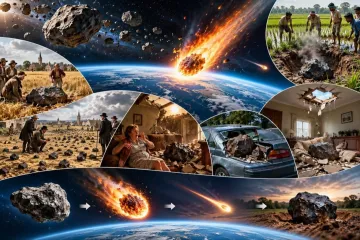
During the Late Heavy Bombardment, millions of asteroids and comets impacted the prebiotic Earth, delivering organic molecules and water. In Earth’s primordial seas, volcanic vents, and electrical storms, these cosmic precursors underwent billions of years of chemical evolution, culminating in the first self-replicating cells.
The genetic alphabet operating within every cell of our bodies traces its roots to primordial planetesimals orbiting the newborn Sun billions of years ago. Ryugu’s dust offers an awe-inspiring reminder of our profound cosmic heritage.