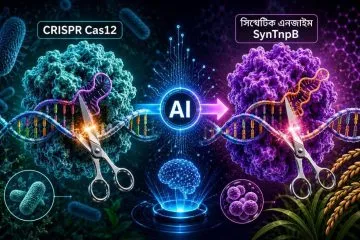
Nobel Prize in Chemistry 2020: The CRISPR-Cas9 Genetic Scissors

A Historical Milestone in Molecular Genetics
In October 2020, the Royal Swedish Academy of Sciences awarded the Nobel Prize in Chemistry 2020 jointly to French microbiologist Emmanuelle Charpentier and American biochemist Jennifer A. Doudna for their revolutionary development of a method for genome editing: the CRISPR-Cas9 genetic scissors. This marked the first time in Nobel history that two women jointly shared a science Nobel Prize.
Widely hailed as one of the most transformative biotechnological discoveries of the twenty-first century, the CRISPR-Cas9 platform has democratized molecular biology, allowing researchers to alter the DNA of animals, plants, and microorganisms with unprecedented precision, speed, and affordability.
The Natural Mechanism: Bacterial Adaptive Immunity
The origins of CRISPR technology trace back to a primitive immune defense mechanism evolved by bacteria and archaea. The acronym CRISPR stands for Clustered Regularly Interspaced Short Palindromic Repeats.
When a bacteriophage virus infects a bacterium, the bacterium incorporates short fragments of viral DNA into its own CRISPR genomic archive. Upon subsequent viral re-infection, the bacterium transcribes these sequences into guide RNA (gRNA), which forms a ribonucleoprotein surveillance complex with a specialized molecular endonuclease enzyme known as Cas9. Guiding the Cas9 enzyme directly to the matching foreign DNA sequence, the bacterium cuts both strands of the viral genome, neutralizing the invader.
Reprogramming Cas9 as a Universal Molecular Scalpel
In their seminal 2012 paper published in Science, Charpentier and Doudna demonstrated that this bacterial defense mechanism could be simplified and reprogrammed. By engineering a synthetic single-guide RNA (sgRNA) containing roughly twenty targeted nucleotide bases, they proved that Cas9 could be directed to cleave any specific locus in any genome in vitro.
Once Cas9 introduces a site-specific double-strand break (DSB), cellular repair pathways take over:
- Non-Homologous End Joining (NHEJ): Often introduces small insertions or deletions (indels) that knock out a dysfunctional or pathogenic gene.
- Homology-Directed Repair (HDR): Enables researchers to supply a synthetic DNA repair template, seamlessly inserting new therapeutic genetic sequences or correcting deleterious point mutations.
Applications and Future Horizons
The implications of CRISPR-Cas9 span diverse scientific domains:
- Therapeutic Medicine: Direct clinical trials are curing inherited genetic disorders such as sickle cell disease, beta-thalassemia, and congenital blindness, while empowering engineered CAR-T cell cancer immunotherapies.
- Agricultural Biotechnology: Plant breeders are generating drought-tolerant, disease-resistant, and high-yield crop cultivars without introducing foreign transgenes.
Conclusion
The recognition of the Nobel Prize in Chemistry 2020 reflects the profound impact of CRISPR-Cas9 on modern science. By transforming an arcane bacterial defense mechanism into an elegant tool for precision genetic engineering, Emmanuelle Charpentier and Jennifer Doudna ushered humanity into a new era of life sciences.