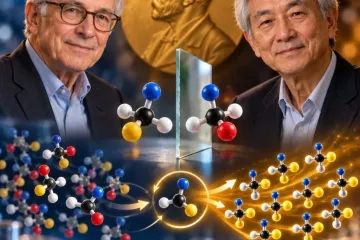
The 2025 Nobel Prizes: Breakthroughs in Medicine, Physics, and Chemistry

Celebrating Historic Scientific Achievements
The 2025 Nobel Prizes in the natural sciences honor groundbreaking discoveries that illuminate fundamental mechanisms of biological self-defense, bridge the quantum-classical divide, and engineer molecular frameworks to solve global environmental crises.
1. Physiology or Medicine: Peripheral Immune Tolerance and Regulatory T Cells
The 2025 Nobel Prize in Physiology or Medicine was awarded jointly to Mary E. Brunkow (United States), Fred Ramsdell (United States), and Shimon Sakaguchi (Japan) for their discovery of peripheral immune tolerance mediated by regulatory T cells (Tregs).
The adaptive immune system protects against microbial pathogens while rigorously avoiding attacks on the body’s own tissues. While “central tolerance” eliminates self-reactive immune cells within the thymus and bone marrow, autoreactive cells inevitably escape into the bloodstream.
Shimon Sakaguchi discovered a distinct lineage of immunosuppressive lymphocytes—regulatory T cells (Tregs)—that actively suppress rogue immune cells in peripheral tissues. Subsequently, Mary Brunkow and Fred Ramsdell identified the master transcription factor gene, Foxp3, that orchestrates Treg development. Mutations in Foxp3 cause fatal multi-organ autoimmune disease. This discovery provides transformative blueprints for treating rheumatoid arthritis, type-1 diabetes, organ transplant rejection, and cancer immunotherapy.
2. Physics: Macroscopic Quantum Tunneling in Superconducting Circuits
The 2025 Nobel Prize in Physics was conferred upon John Clarke, Michel H. Devoret, and John M. Martinis for demonstrating macroscopic quantum tunneling and energy level quantization in superconducting electric circuits.
Historically, quantum behaviors—such as quantum tunneling and discrete energy levels—were observed exclusively in microscopic subatomic particles. Clarke, Devoret, and Martinis constructed macroscopic superconducting electronic circuits incorporating Josephson junctions where billions of paired electrons (Cooper pairs) act collectively as a single quantum entity.
The laureates proved that this macroscopic circuit could tunnel through an electrical energy barrier and absorb discrete energy quanta, demonstrating that the laws of quantum mechanics govern engineered macroscopic devices. Their foundational experiments provided the direct hardware architecture for today’s superconducting quantum processors.
3. Chemistry: Metal-Organic Frameworks (MOFs)
The 2025 Nobel Prize in Chemistry recognized Susumu Kitagawa (Japan), Richard Robson (Australia), and Omar M. Yaghi (United States) for the pioneer development of Metal-Organic Frameworks (MOFs).
The laureates designed ultra-porous crystalline materials synthesized by linking metallic node clusters with rigid organic linker molecules. These frameworks harbor vast internal surface areas—a single gram of an optimized MOF can possess an internal surface area exceeding the size of a football field.
Engineers can tailor MOF pore geometries and chemical affinities to capture greenhouse gases directly from industrial flues, harvest drinking water from low-humidity desert air, store volatile hydrogen fuel, and catalyze specialized chemical reactions.
Conclusion
The laureates of the 2025 Nobel Prizes demonstrate how fundamental curiosity across biology, physics, and chemistry delivers profound practical solutions for medicine, quantum computing, and environmental sustainability.