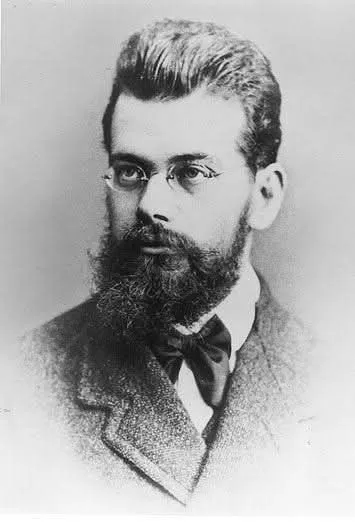
Ludwig Boltzmann: The Tragic Pioneer of Entropy
The Visionary in an Age of Skepticism
On February 20, 1844, in Vienna, Austria, Ludwig Boltzmann was born—a brilliant mind whose groundbreaking work would establish the foundation of modern statistical physics. Entering the University of Vienna, Boltzmann studied under the renowned physicist Josef Stefan, rapidly establishing himself as one of Europe’s keenest theoretical talents. Yet Boltzmann lived and researched in an era when the atomic hypothesis was viewed by leading European academies not as physical reality, but as an unprovable mathematical fiction.
The Battle for the Reality of Atoms
During the late nineteenth century, influential positivist philosophers and physicists, led by Ernst Mach and Wilhelm Ostwald, vehemently rejected the concept of atoms, arguing that science should concern itself only with directly observable macroscopic phenomena. Boltzmann stood virtually alone in championing the atomic hypothesis. He recognized that macroscopic thermodynamics—temperature, pressure, and volume—was the aggregate macroscopic result of countless submicroscopic particles colliding in chaotic motion.
Statistical Mechanics and the Definition of Entropy
Boltzmann’s intellectual masterpiece was the creation of statistical mechanics. By applying probability theory to particle kinetics, he connected the microscopic realm of atoms to the macroscopic laws of thermodynamics. In particular, Boltzmann revolutionized our understanding of the Second Law of Thermodynamics and entropy ((S)).
Rather than viewing heat purely as an abstract fluid or bulk energy, Boltzmann demonstrated that natural thermodynamic systems spontaneously evolve from highly organized, low-probability states toward disorganized, high-probability states. He crystallized this relationship in his celebrated equation:
(S = k cdot ln W)
where (k) is Boltzmann’s constant and (W) represents the number of microscopic configurations (microstates) corresponding to a given thermodynamic macrostate. Entropy, Boltzmann revealed, is a direct measure of disorder and statistical probability.
Vitriolic Backlash and Tragic Martyrdom
Despite the elegance of his theory, Boltzmann faced relentless hostility and professional derision from established academic rivals. Mach dismissed atoms as metaphysical illusions, while others attacked Boltzmann’s irreversible H-theorem. Exhausted by bitter debates, declining eyesight, and severe clinical depression, Boltzmann took his own life on September 5, 1906, in the coastal resort of Duino, Italy.
Posthumous Vindication and Modern Immortality
In one of science’s greatest tragedies, Boltzmann’s atomic framework was decisively proven mere years after his death. In 1905, Albert Einstein’s quantitative analysis of Brownian motion—subsequently validated experimentally by Jean Perrin—conclusively proved the physical existence of atoms using Boltzmann’s kinetic principles.
Today, Boltzmann’s fame is universally celebrated. His famous entropy formula is carved on his gravestone at Vienna’s Central Cemetery. His conceptual breakthroughs underpin quantum mechanics, chemical thermodynamics, information theory, and astrophysics. The visionary who was mocked in life stands immortalized as one of history’s greatest architects of physics.