Dark Matter and Dark Energy: Secrets of the Hidden Universe
The Modest Slice of the Visible Universe
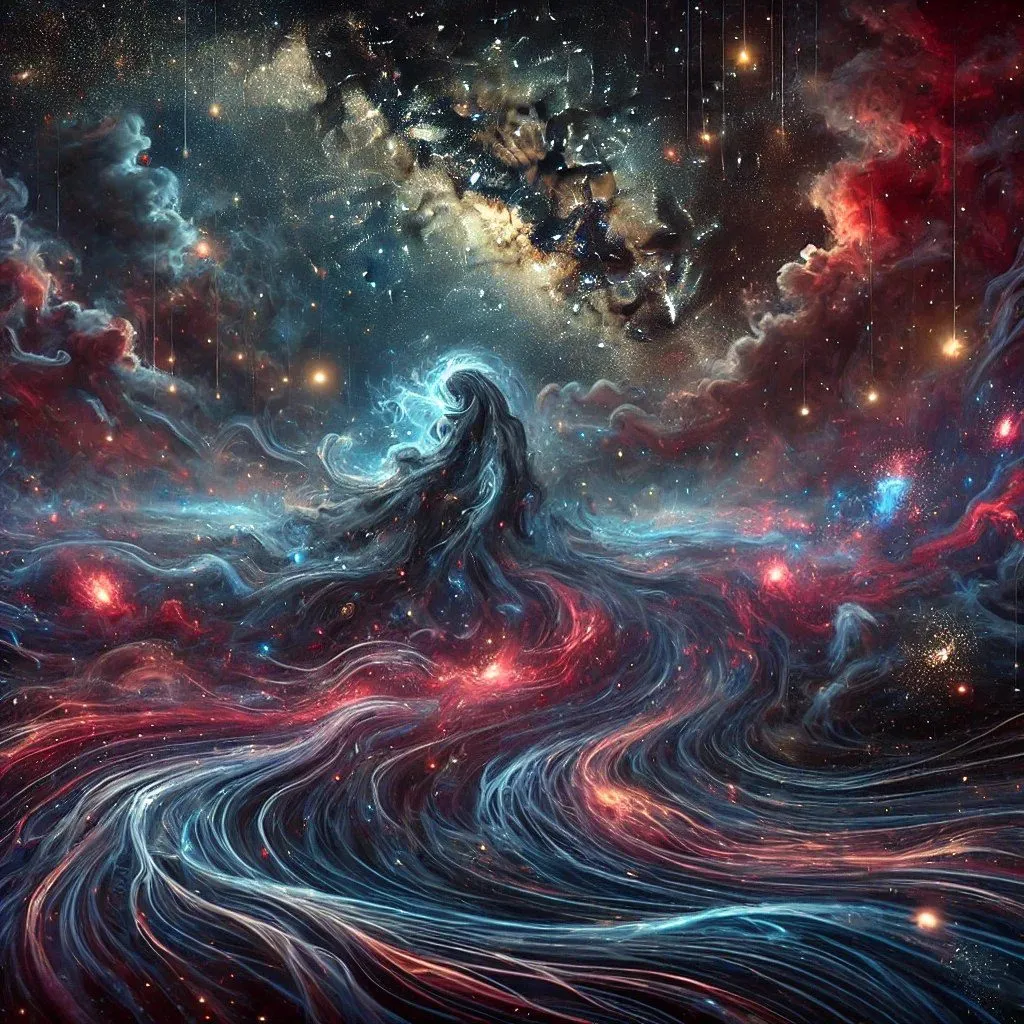
Looking up at the night sky, we are captivated by thousands of stars, nebulae, and distant galaxies. It is easy to assume that this glittering spectacle represents the vast entirety of our universe. Yet modern astrophysics reveals a humbling reality: everything we can see with our eyes and telescopes—all the planets, stars, gas clouds, and galaxies—accounts for a mere 5 percent of the cosmos. Where is the remaining 95 percent?
The Invisible Realms: Dark Matter and Dark Energy
Cosmologists have discovered that the overwhelming bulk of the universe is completely dark and invisible to electromagnetic radiation. Of that hidden 95 percent, roughly 27 percent consists of dark matter, while an astonishing 68 percent is composed of dark energy.
The Opposing Cosmic Forces
Dark matter acts as a cosmic scaffolding. While invisible, its immense gravitational pull binds stars into galaxies and galaxies into gargantuan galactic clusters. Dark energy, by contrast, behaves in the opposite manner: it is a mysterious repulsive force driving the accelerated expansion of the entire universe, pushing galaxies farther and faster apart.
The Nature of the Invisible Cosmos
Despite decades of research, we do not yet know the fundamental composition of dark matter or dark energy. Nevertheless, unravelling these two cosmic enigmas holds the definitive key to understanding the ultimate origin, geometry, and fate of the universe.
Fritz Zwicky and the Discovery of Missing Mass
Because dark matter neither absorbs, reflects, nor emits light, it cannot be directly seen. However, its gravitational footprint is unmistakable. In 1933, Swiss astronomer Fritz Zwicky measured the orbital velocities of galaxies within the Coma Cluster. According to the visible mass of the stars, the galaxies should have flown apart into deep space; their speeds were far too high for visible matter alone to hold them gravitationally bound. Zwicky inferred that a massive, invisible “dunkle Materie” (dark matter) must provide the gravitational glue keeping the cluster intact.
Vera Rubin’s Flat Rotation Curves
In the 1970s, American astronomer Vera Rubin and her colleague Kent Ford provided incontrovertible evidence of dark matter by analyzing the rotation curves of spiral galaxies. Expected Newtonian mechanics dictated that stars at a galaxy’s outer edge should orbit slower than those near the dense core, just as outer planets orbit slower around the Sun. Instead, Rubin observed flat rotation curves: outer stars moved just as swiftly as inner stars. This proved that galaxies are embedded inside vast spherical halos of invisible dark matter.
Candidate Particles and Gravitational Lensing
What constitutes dark matter? Leading theories propose Weakly Interacting Massive Particles (WIMPs), hypothetical axions, or sterile neutrinos. While particle physicists have not yet detected dark matter particles in the laboratory, its macroscopic reality is mapped through gravitational lensing—where dark matter’s gravitational field bends and magnifies light coming from background galaxies, creating visible cosmic mirages.
Modern Particle Detection Efforts
Researchers today pursue dark matter through ultra-sensitive detectors buried kilometers underground in abandoned mines (such as Xenon-nT and LUX-ZEPLIN), space telescopes, and particle collisions at CERN’s Large Hadron Collider (LHC).
Surprises from the Milky Way Center
Our understanding continues to evolve. In recent studies, astrophysicists examining the center of the Milky Way detected an unexpected ionization signature in positive hydrogen gas. Researchers such as Shyam Balaji from King’s College London have suggested this ionization could stem from light dark matter particles colliding and annihilating, producing energetic charged particles.
The Gateway to New Physics
Unraveling dark matter is not merely an academic puzzle; discovering its particle identity will revolutionize quantum physics, bridging the Standard Model of particle physics with cosmic gravity.
Dark Energy and the Accelerating Universe
In 1998, two independent teams of astrophysicists studying Type Ia supernovae—often termed “standard candles” because of their uniform intrinsic brightness—made a paradigm-shattering discovery. Instead of slowing down under the collective gravity of matter as long believed, the expansion of the universe was accelerating. In 2011, Saul Perlmutter, Brian Schmidt, and Adam Riess were awarded the Nobel Prize in Physics for this profound revelation.
The Energy of Empty Space
Cosmologists named this repulsive driver dark energy. Unlike matter, which dilutes as space expands, dark energy appears to be an intrinsic property of space itself, maintaining a constant energy density across the cosmos. As the universe grows, dark energy becomes increasingly dominant, steadily overpowering gravitational attraction.
Black Holes and Vacuum Energy
One prominent candidate for dark energy is Einstein’s cosmological constant, associated with the quantum vacuum energy of fluctuating space. However, theoretical calculations from quantum mechanics overestimate the observed value by 120 orders of magnitude—the famous “vacuum catastrophe”. In 2023, astrophysical observations suggested a provocative alternative: supermassive black holes at galactic centers might be cosmologically coupled to the expansion of the universe, generating vacuum energy that manifests as dark energy. While debated, it underscores the vibrancy of current theoretical cosmology.
Future Frontiers and Global Scientific Gatherings
International observatories and dedicated summits, such as the Dark Matter 2025 conference hosted by UCLA, are uniting astrophysicists to decipher these mysteries. Through space missions like the Euclid telescope and the Nancy Grace Roman Space Telescope, humanity draws closer to illuminating the hidden 95 percent of the cosmos.