Jagadish Chandra Bose: Pioneer of Microwaves and Plant Physiology
The Town Hall Demonstration of 1894
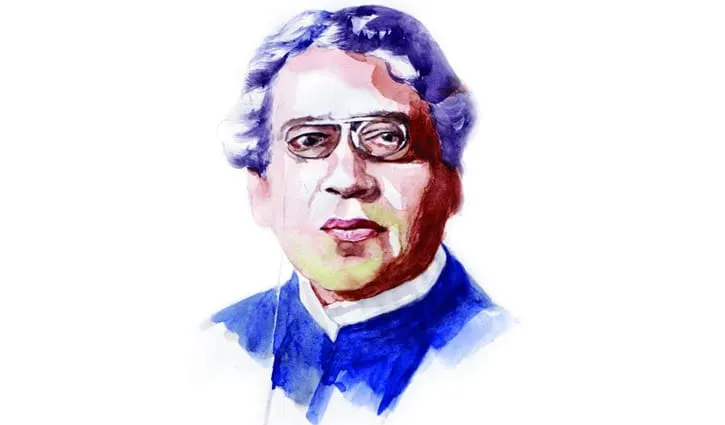
In November 1894, inside the Town Hall of Kolkata, a brilliant young physicist stood before an astonished audience including the Lieutenant-Governor of Bengal. Without any physical wires, an invisible electrical signal traveled through three closed rooms and intervening brick walls, struck a receiver, detonated a packet of gunpowder, and rang a heavy bell. That visionary scientist was Sir Jagadish Chandra Bose, executing one of the earliest public demonstrations of millimeter-wave wireless communication.
Working with extraordinarily limited laboratory resources at Presidency College, Bose fabricated his own state-of-the-art transmitters and receivers. He pioneered the use of extremely high-frequency electromagnetic radiation—operating in the millimeter and microwave bands between $5$ mm and $2.5$ cm—decades before microwaves became standard in global telecommunications.
An Ethos of Open Science
Bose was a passionate advocate for the open dissemination of scientific knowledge. While commercial inventors rushed to secure patents, Bose declined to monetize his groundbreaking radio inventions, believing that the discoveries of natural science belonged freely to all humanity. His revolutionary galena crystal detector—a fundamental forerunner of modern semiconductor diodes—was later patented only after persuasive insistence from scientific peers in Britain and the United States.
His wireless instruments and spark-gap horn antennas directly influenced subsequent pioneers of radio telegraphy, cementing his status as a founding father of wireless physics.
Crossing into Botany: The Living and Non-Living
Around the turn of the twentieth century, Bose redirected his inquisitive mind toward plant physiology. Observing electrical fatigue in inorganic metals similar to tired muscle tissue, he hypothesized that plants possess subtle electrical responses analogous to animal nervous systems.
To investigate this boundary between the living and the non-living, Bose engineered the Crescograph—a magnificent opto-mechanical instrument capable of magnifying plant tissue movements and growth by up to ten thousand times. Using the crescograph, Bose systematically demonstrated that plants react dynamically to environmental stimuli:
- They generate distinct electrical action potentials when injured, stimulated, or exposed to temperature swings.
- They experience fatigue under continuous electrical stimulation, requiring periods of rest to recover baseline responsiveness.
- They react predictably to chemical anesthetics (such as chloroform and ether), slowing their internal sap circulation before recovering when ventilated.
Enduring Legacy in Science and Literature
Initially met with skepticism by the conservative Royal Society of London, Bose’s investigations into plant electrophysiology were eventually hailed as visionary. In 1917, he founded the Bose Institute in Kolkata, dedicated to multidisciplinary scientific inquiry.
Beyond his physical and biological triumphs, Bose was also a celebrated pioneer of Bengali science fiction, penning the visionary 1896 short story Niruddesher Kahini. Today, in tribute to his monumental contributions to global astrophysics and wireless telecommunications, the International Astronomical Union named an impact crater on the far side of the Moon the Bose Crater—an immortal monument to Bengal’s immortal polymath.