The TLR7 Gene and COVID-19: Why the Coronavirus Hits Men Harder
The Clinical Mystery of Young COVID-19 Patients
During the onset of the global pandemic, clinical epidemiology established that advanced age and pre-existing cardiovascular conditions were primary risk factors for severe SARS-CoV-2 disease. Yet clinical teams worldwide observed an alarming anomaly: previously robust, healthy young patients occasionally deteriorated rapidly into acute respiratory distress syndrome (ARDS), requiring mechanical ventilation.
In the Netherlands, geneticists and clinical researchers investigated two unrelated pairs of young brothers—aged thirty-one, twenty-nine, twenty-three, and twenty-one—who were hospitalized with life-threatening coronavirus infections despite having no prior medical conditions. Tragically, one brother succumbed to the infection, while the other three endured prolonged intensive care. Suspecting an inborn error of immunity, Dutch medical scientists initiated deep genomic sequencing, uncovering a profound genetic link between the TLR7 gene and COVID-19 severity.
Toll-Like Receptor 7: The Viral Sentinel
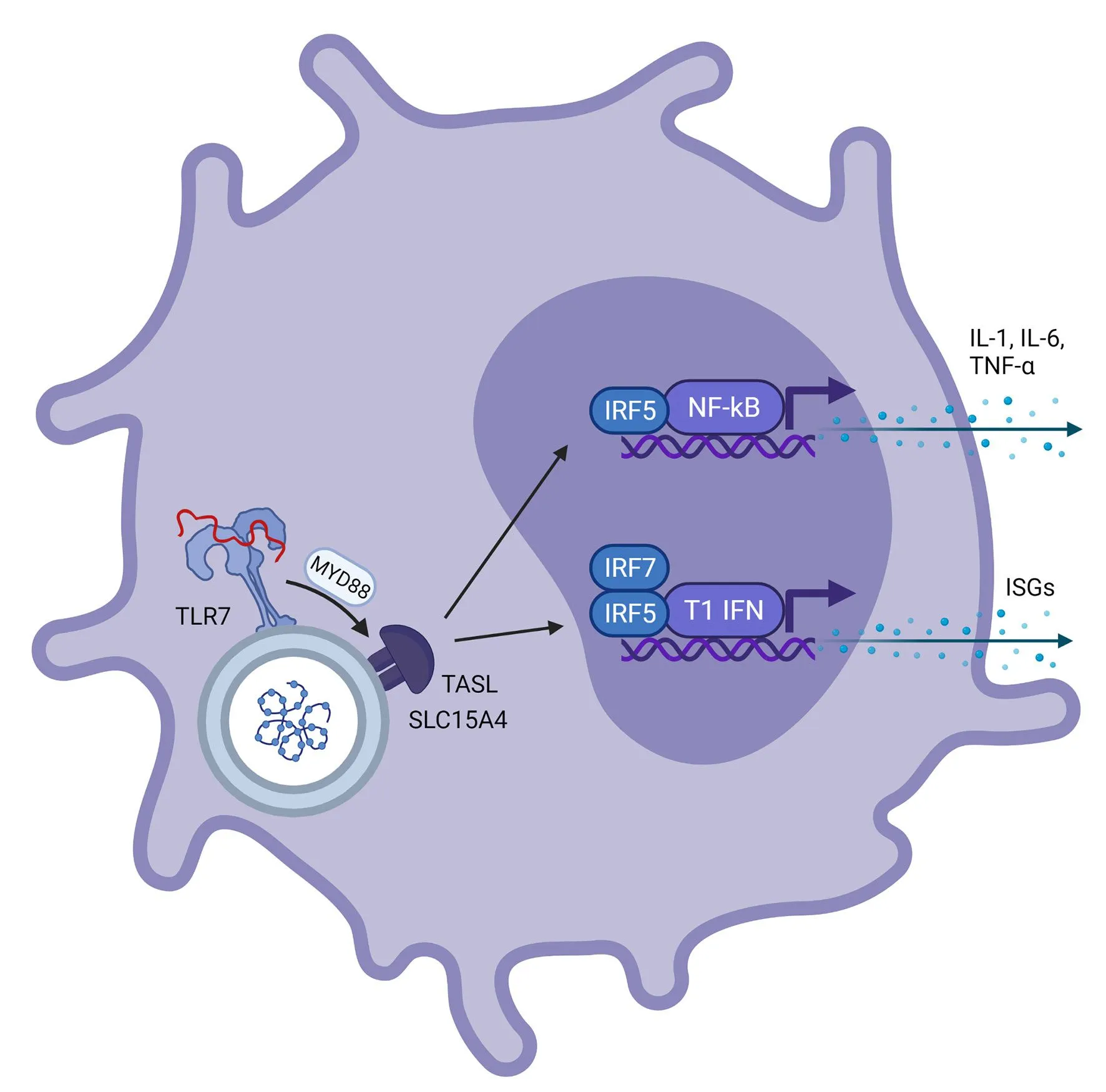
Genomic sequencing revealed that all four afflicted young men harbored rare loss-of-function mutations in the TLR7 (Toll-Like Receptor 7) gene. Located on the X chromosome, this critical gene encodes an endosomal pattern recognition receptor responsible for detecting single-stranded viral RNA.
When SARS-CoV-2 enters immune cells such as plasmacytoid dendritic cells, TLR7 recognizes the viral genetic sequence and triggers an immediate antiviral signaling cascade. This pathway produces Type I and Type III interferons—vital signaling proteins that alert neighboring cells, inhibit viral replication, and mobilize cellular defense mechanisms before the pathogen can inflict extensive pulmonary tissue damage.
Why Males Are Genetically More Vulnerable
Because the TLR7 gene is localized on the X chromosome, its clinical genetics explain why severe disease disproportionality strikes male patients:
- Hemizygous Males (XY): Biological men inherit a single X chromosome from their mother. If their sole copy of the TLR7 gene carries a deleterious loss-of-function mutation, they have no functional backup, causing an absence of interferon production upon coronavirus infection.
- Heterozygous Females (XX): Biological women inherit two X chromosomes. Even if one X chromosome carries a defective TLR7 allele, the healthy gene copy on the second X chromosome produces sufficient TLR7 protein to preserve immune competence. Furthermore, because certain immune genes escape X-chromosome inactivation, females naturally express higher baseline levels of Toll-like receptors, conferring stronger innate viral defenses.
Therapeutic Implications for Antiviral Medicine
Uncovering the role of the TLR7 gene and COVID-19 provided crucial biological insight for clinical intervention. Identifying defective interferon pathways explained why standard immune responses failed in these patients, paving the way for targeted clinical trials using recombinant interferon therapies administered during the early stages of viral infection.
Furthermore, this research underscored that severe infectious vulnerability often stems from subtle inborn genetic defects rather than bad luck alone, driving precision medicine approaches in infectious disease epidemiology.
Conclusion
The discovery of the link between the TLR7 gene and COVID-19 solved a major immunological puzzle of the pandemic. By revealing how single-gene mutations on the X chromosome impair viral detection, medical genetics demonstrated the indispensable role of innate interferon signaling in safeguarding human health.