Time Travel: Is It Possible According to Modern Physics?

Stepping into the Distant Past
Imagine waking up one morning, walking out your front door, and discovering that the entire world has changed. Horse-drawn carriages clatter along quiet streets, a paperboy shouts headlines announcing historic political events, modern high-rises have vanished, and people draw water from public wells. What feels like a dream turns out to be real: you have stepped decades into the past.
Science Fiction versus Empirical Physics
In cinematic masterpieces like Back to the Future, Interstellar, or H.G. Wells’ classic The Time Machine, protagonists manipulate dials to explore ancient eras and distant futures. But does physical reality permit such journeys? Is stepping into another century purely imaginative storytelling, or could the laws of physics one day make temporal journeys viable? Let us examine what modern science reveals.
The Irreversible Flow of Time
In everyday experience, time behaves like a relentless one-way river, carrying everything steadily from past to present and into the future. Yet modern physics reveals that time is far more complex and malleable than our common sense suggests.
Einstein’s Relativity and Time Dilation
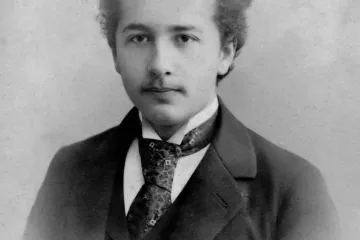
In 1905, Albert Einstein demonstrated in his special theory of relativity that time is not absolute; it is relative to the observer’s motion. As an object’s speed increases, time slows down relative to a stationary observer. Consider the famous twin paradox: suppose one identical twin boards a rocket traveling at 99 percent the speed of light for five years of onboard time before returning to Earth. Upon arrival, the traveler discovers that thirty-six years have elapsed on Earth. The spacefaring twin is thirty-one years younger than the sibling who remained behind. In essence, the traveler has leaped thirty-six years into Earth’s future. This phenomenon is called relativistic time dilation, and it is a verified reality of modern physics.
Time Dilation in Daily GPS Technology
Time dilation is not just a theoretical curiosity; we account for it daily in Global Positioning System (GPS) satellites orbiting 20,000 kilometers above Earth. Traveling at roughly 3.9 kilometers per second, special relativistic motion makes satellite atomic clocks run approximately 7 microseconds slower per day compared to clocks on Earth. Simultaneously, Einstein’s general relativity dictates that clocks in weaker gravitational fields tick faster. Being far above Earth’s gravitational well, satellite clocks run roughly 45 microseconds faster per day due to gravitational time dilation. Combining these effects (+45 minus 7), GPS clocks tick approximately 38 microseconds faster each day. Without precise relativistic corrections programmed into satellite software, GPS navigation errors would accumulate by over ten kilometers daily, rendering satellite navigation useless within hours.
The Challenge of Traveling to the Future
While moving into the future is theoretically straightforward via high-speed travel or strong gravitational fields, our current engineering is far from reaching velocities anywhere near the speed of light. Forward time travel is physically proven, but executing it on human scales requires monumental propulsion breakthroughs.
Cosmic Bridges: Wormholes
Traveling backward into the past presents a much greater scientific hurdle. Theoretical physics suggests that bridging different points in spacetime might be achieved through wormholes. In regions of extreme curvature near a black hole, spacetime curves so intensely that it may form a tunnel. Two distant regions separated by millions of light-years could theoretically be linked through an internal spacetime bridge: a wormhole.
The Einstein-Rosen Bridge
The concept of wormholes originated in 1935 when Albert Einstein and Nathan Rosen formulated the “Einstein-Rosen bridge” as a mathematical solution to the general relativity equations. These bridges describe topological tunnels connecting disparate points in the cosmos.
Cosmic Shortcuts and Closed Timelike Curves
Picture spacetime as a flat sheet of paper. Moving normally between two distant dots requires traversing the entire distance across the surface. If you fold the paper so the dots touch and punch a pencil through, you create an instantaneous passage. If one mouth of a traversable wormhole is accelerated to near-light speed or placed near a black hole, relativistic time dilation creates a temporal offset between its two ends, turning the wormhole into a theoretical time machine known as a closed timelike curve. However, keeping a wormhole open would require exotic matter with negative mass-energy, and no traversable wormholes have ever been observed.
The Tipler Cylinder Mechanism
Another theoretical past-travel mechanism was proposed by physicist Frank Tipler in 1974. A Tipler cylinder involves an infinitely long, extremely dense cylinder spinning near the speed of light. The intense frame-dragging of spacetime around the rotating mass would warp closed timelike curves, allowing a spacecraft circling the cylinder to return to an earlier moment in time. Like wormholes, constructing an infinitely long cylinder with astronomical density remains far beyond practical engineering.
Artificial Gravitational Fields and Time Travel
Some theoretical physicists explore whether intense, locally generated gravitational fields could create micro-tunnels through spacetime. However, the energy densities required are on stellar scales, far exceeding our current or near-future technological capabilities.
The Grandfather Paradox and Causality
Past time travel introduces profound causal dilemmas, the most famous being the grandfather paradox. If a traveler journeys into the past and inadvertently prevents their grandparents from meeting, the traveler’s parent—and consequently the traveler—would never be born. But if the traveler never existed, who traveled back to alter history? Physicists have proposed solutions such as the Novikov self-consistency principle (which asserts that the laws of physics forbid self-contradictory causal loops) and the Many-Worlds interpretation of quantum mechanics (where altering the past branches off into an alternate parallel timeline). Furthermore, physicist Stephen Hawking formulated the “chronology protection conjecture”, suggesting that the laws of physics conspire to prevent closed timelike curves from forming.
Perspectives from Modern Theoretical Physics
While time machines remain confined to science fiction for now, renowned theoretical physicist Dr. Michio Kaku notes that time travel does not inherently violate known fundamental laws of physics; rather, it is primarily an engineering and energy challenge of cosmic magnitude.
Cherishing the Present Moment
Until spacetime manipulation becomes reality, the most vital lesson physics teaches us is to value the present. Whether technology unlocks the secrets of time travel in distant centuries or not, every passing second in our everyday lives is precious and irreplaceable.