Black Hole Rotation: Supermassive Monster M87* Spins Near the Speed of Light
The First Direct Image and the Event Horizon Telescope
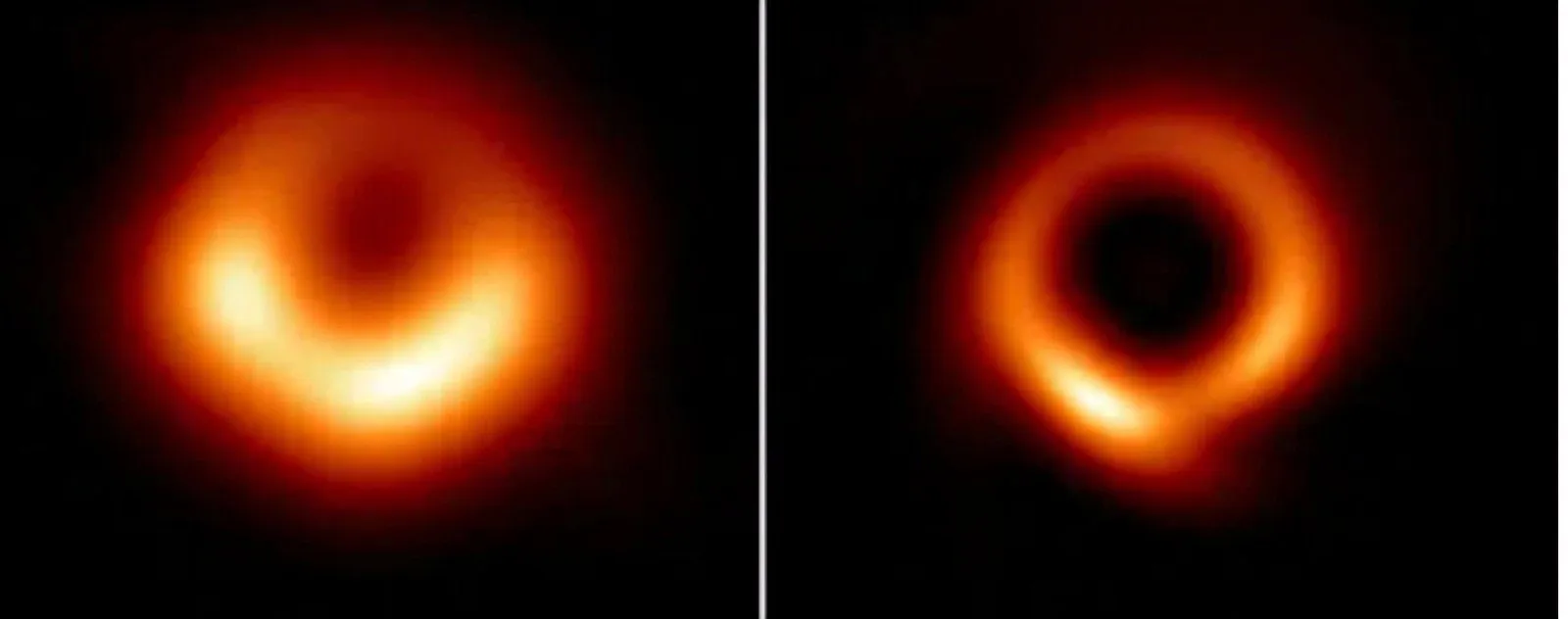
In 2019, humanity witnessed an extraordinary historic milestone: the first direct image of a black hole’s shadow. Captured using eight radio observatories synchronized across the globe as the Event Horizon Telescope, this achievement opened a new observational epoch in astrophysics.
The Supermassive Giant M87* at the Galaxy’s Core
The target was the supermassive black hole situated at the heart of elliptical galaxy Messier 87, designated M87*. Containing a staggering mass roughly 6.5 billion times greater than our Sun and located 55 million light-years away, its sheer magnitude boggles the human imagination.
Incredible Spin Rate Approaching Light Speed
Following that pioneering photograph, astronomers continued monitoring M87* with heightened scrutiny, uncovering startling dynamics: this behemoth is spinning at dizzying speeds. Researchers have calculated that its rotational velocity reaches near the relativistic threshold, spinning at approximately 20 percent of the speed of light—a profound fraction of nature’s ultimate cosmic speed limit.
The Accretion Disk and Swirling Cosmic Debris
This rapid rotation dramatically shapes the surrounding accretion disk of superheated gas and plasma, which itself whirls around the event horizon at approximately 14 percent of the speed of light. Analyzing the subtle oscillations in brightness, polarization, and shadow profiles enabled scientists to decode the black hole’s spin parameters.
Cosmic Appetite and Matter Ingestion
M87* is not merely spinning; it is actively devouring surrounding matter. Every year, it swallows between 0.00004 and 0.4 solar masses of gas and interstellar dust—a modest snack on astronomical scales, yet accompanied by tremendous energy release.
Colossal Relativistic Jets Across Deep Space
As matter plunges toward the abyss, intense magnetic fields channel charged particles into twin relativistic jets launched from the poles. These blazing jets blast outward across thousands of light-years, penetrating deep into the surrounding intergalactic space.
New Horizons in Understanding the Universe
These findings provide unprecedented insights into rotational mechanics, accretion processes, and jet dynamics applicable to black holes throughout the universe. Black holes have transformed from theoretical enigmas into clear observational windows onto the fundamental structure of space and time.