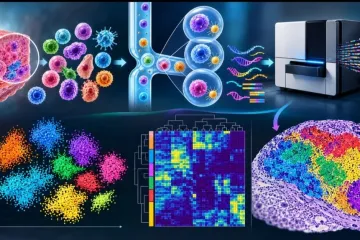
Small RNA: Silent Regulators of the Genome and Gene Therapy

The Cellular Factory and Its Messengers
Within every living cell operates a highly coordinated molecular metropolis. Structural proteins are manufactured, metabolic waste is processed, and continuous chemical signals coordinate cellular function. For decades, the central dogma of molecular biology dictated that DNA stores the master blueprint, which is transcribed into messenger RNA (mRNA) and translated into proteins.
However, molecular biologists have uncovered an intricate regulatory layer that directs cellular operations behind the scenes: small RNA (sRNA). These non-coding regulatory molecules prove that cellular power does not depend on physical size.
The Silent Directors of the Genome
Small RNAs are non-coding ribonucleic acid molecules typically between 20 and 30 nucleotides in length. Too small to be resolved by standard microscopy, they serve as the master switches of gene expression, determining which genes are activated, when they are translated, and in what precise quantities.
In 1998, American geneticists Andrew Fire and Craig Mello discovered that introducing double-stranded RNA into cells triggered targeted gene silencing, a phenomenon known as RNA interference (RNAi). Their breakthrough, which earned the 2006 Nobel Prize in Physiology or Medicine, revealed a universal mechanism of genetic regulation.
Major Classes of Small RNAs
The small RNA family comprises several distinct specialized classes:
- MicroRNAs (miRNAs): Endogenously synthesized molecules that bind partially complementary sequences in mRNA transcripts, repressing translation or accelerating mRNA decay.
- Small Interfering RNAs (siRNAs): Fully complementary double-stranded sequences derived from viral genomes or synthetic constructs that cleave target mRNA with exquisite sequence specificity.
- PIWI-Interacting RNAs (piRNAs): Specialized small RNAs that partner with PIWI proteins in germline cells to silence mobile genetic elements (transposons), safeguarding genomic integrity.
Therapeutic Frontiers and Modern Medicine
Because aberrant small RNA regulation is directly linked to oncogenesis, neurodegenerative diseases, and cardiovascular disorders, synthetic sRNA therapeutics represent a booming frontier in biotechnology. By designing synthetic siRNAs, clinicians can selectively turn off disease-causing genes—such as mutant oncogenes or viral transcripts—without altering the host organism’s permanent DNA sequence.
Furthermore, circulating miRNAs detectable in liquid biopsies (blood, saliva, and cerebrospinal fluid) serve as non-invasive early diagnostic biomarkers for various cancers and organ pathologies.
Agricultural Defense and Genomic Immunity
In plants, small RNA networks operate as an adaptive immune system. When plant viruses infect host tissue, host enzymes dice viral RNA into small interfering fragments that target and destroy viral replication complexes, providing a vital shield against pathogens.
Conclusion
Where biologists once believed that genetic inheritance was dictated entirely by protein-coding DNA sequences, we now recognize that tiny non-coding RNAs coordinate the cellular symphony, offering revolutionary tools for therapeutic intervention and molecular medicine.