The Science of Eye Contact: How Gaze Syncs Our Brains
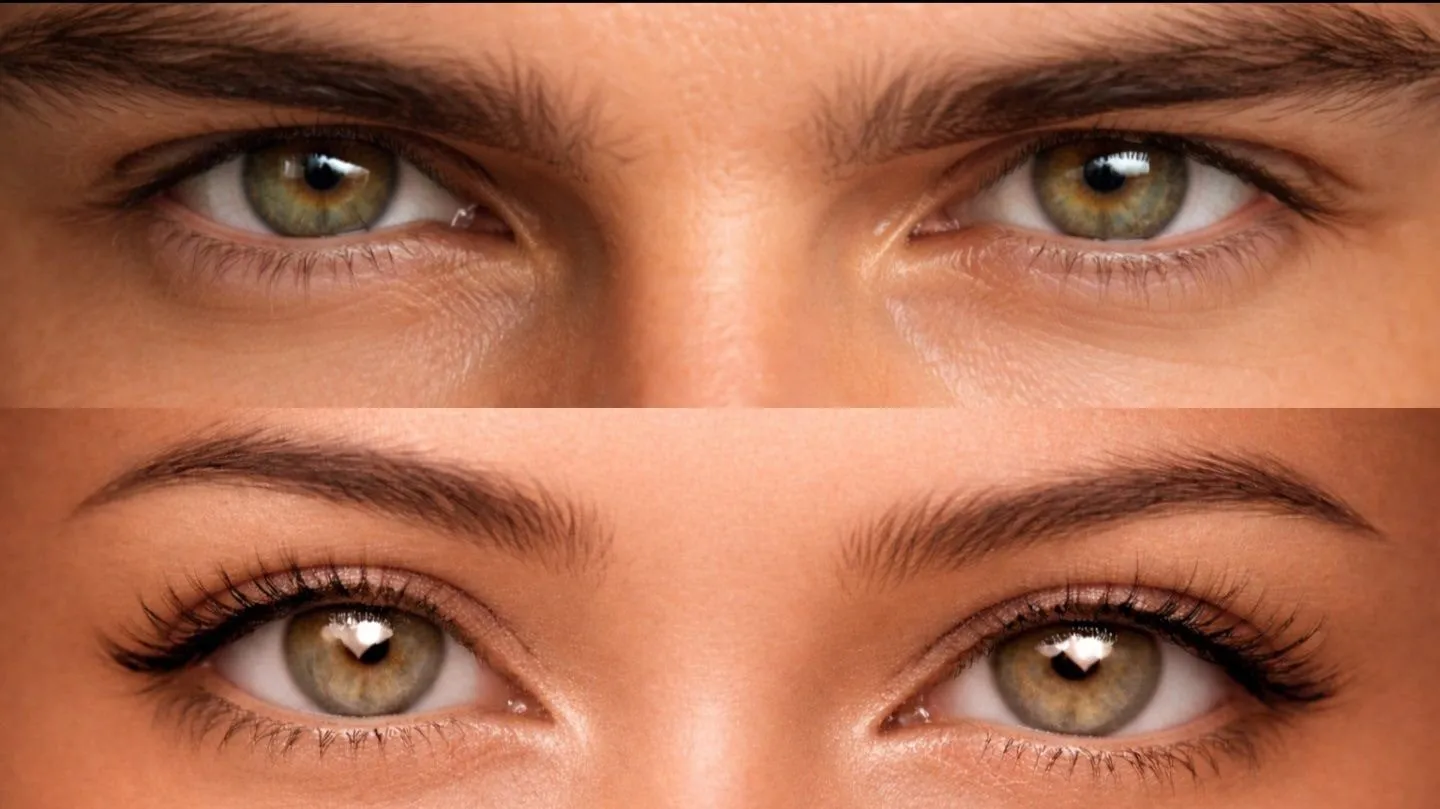
Human eyes do far more than merely perceive the physical world; they speak an eloquent, silent language. That unspoken dialogue is so rapid, nuanced, and profound that it shapes our emotional reality before our conscious minds even register the interaction. Across millions of years of hominin evolution, the human gaze evolved into one of the most powerful communicative bridges on Earth.
The Distinctive Human Sclera
Unlike most primates whose eyes possess pigmented, dark sclerae to conceal gaze direction from competitors or predators, humans possess a brightly visible white sclera. Evolutionary anthropologists emphasize that this unique anatomical adaptation evolved specifically to facilitate cooperative social signaling, allowing fellow humans to effortlessly track the direction, intent, and subtle focus of another’s gaze across social space.
Lightning-Fast Neural Processing
Recent advances in social neuroscience have illuminated the extraordinary neural circuitry activated during direct eye contact. The moment our gaze locks with another person’s eyes, the brain categorizes the glance within a few hundred milliseconds—discerning whether it conveys warmth, affection, inquiry, or potential threat. Visual inputs travel from the retina to the visual cortex, almost instantaneously firing up the amygdala—the emotional sentinel of the brain. Long before deliberate rational analysis occurs, subcortical pathways determine whether the encounter is safe, welcoming, or hazardous.
When mutual gaze is established, widespread neural networks illuminate across the brain, including the prefrontal cortex, the fusiform face area, and the superior temporal sulcus—a region exquisitely tuned to interpreting biological motion, facial expressions, and communicative intent.
Pupil Mimicry and Emotional Resonance
The subtle dynamics of gaze—pupil dilation, fleeting micro-expressions, and microscopic fixation shifts—form an intricate non-verbal lexicon. Remarkably, cognitive neuroscientists have discovered that humans subconsciously synchronize their pupil sizes with their conversation partners: a phenomenon termed pupil mimicry or pupil mirroring. This autonomic synchronization fosters interpersonal trust, empathy, and emotional bonding.
This rapid emotional resonance relies on a subcortical shortcut: signals route directly from the thalamus to the amygdala, bypassing slower cortical deliberations. Consequently, looking into the eyes of someone we love triggers a surge of oxytocin—the celebrated neurohormone of trust and social bonding—instilling a deep sense of serenity and security. Conversely, an unbroken, predatory stare from a stranger activates the threat-detection circuits of the amygdala, evoking instinctive alertness.
Inter-Brain Coupling: Harmonizing Neural Waves
Perhaps the most extraordinary discovery in social neuroscience is that eye contact does not merely affect individuals in isolation: it synchronizes them together. Using hyperscanning electroencephalography (EEG), researchers have recorded the brain activity of two interacting humans simultaneously. When two people share sustained eye contact, their brainwave oscillations lock into phase synchronization—a phenomenon known as inter-brain coupling. In essence, mutual gaze functions as a direct neural bridge, allowing two distinct minds to operate in communicative harmony.
This reveals that looking into another person’s eyes is far more than a social pleasantry; it is a genuine neural handshake. Millions of years before spoken language or written script emerged, the language of the gaze served as humanity’s most ancient, honest, and foundational channel of communication.
Reclaiming Real Human Connection
In our modern digital landscape saturated with glowing screens and virtual interfaces, genuine eye contact is increasingly supplanted by pixels. Yet neuroscience reminds us that profound emotional connection remains simple and accessible: it begins with the courage to look deeply and openly into another person’s eyes. A single gaze may be silent, yet its message resonates in the deepest chambers of the human mind.