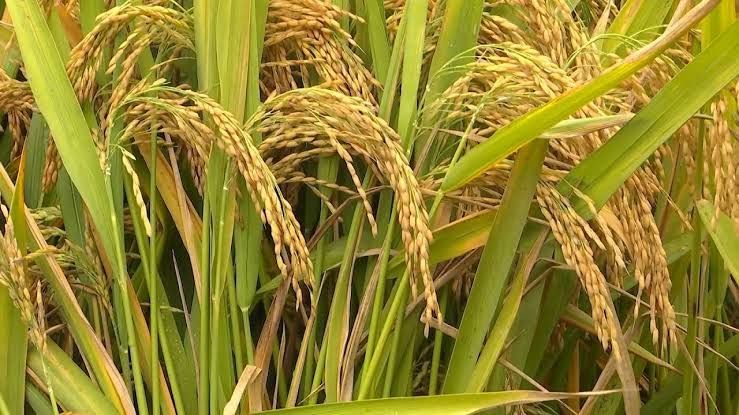
Rice Production Without Pollination: The Breakthrough of Apomixis
New Horizons in Rice Cultivation
An international team of geneticists from Australia and China has developed a pioneering method for producing rice seeds without pollination. Among the prominent researchers leading this breakthrough is renowned geneticist Dr. Abed Chaudhury, whose foundational work has propelled the field of asexual seed reproduction.
Apomixis and the Pioneering Research of Dr. Abed Chaudhury
In nature, certain wild grasses can produce viable seeds without sexual fertilization. In botanical science, this reproductive phenomenon is termed apomixis. However, the overwhelming majority of flowering crops require pollination to set seed. For decades, plant biologists worldwide have sought to engineer apomixis in rice and other cereal crops to preserve valuable hybrid traits across successive generations.
In the 1990s, Dr. Abed Chaudhury initiated landmark investigations using the model plant Arabidopsis thaliana. He successfully triggered seed development without pollination by isolating and characterizing fis (fertilisation-independent seed) gene mutants. By identifying three distinct fis genes and mapping their chromosomal loci, Dr. Chaudhury demonstrated that seed formation could be uncoupled from fertilization. His seminal findings were published in the prestigious journal PNAS in 1997, laying the genetic groundwork for synthetic asexual reproduction in agriculture.
Early Milestones by the California Research Group
Following this foundational work, researchers worldwide endeavored to reproduce asexual seed development in major food grains. A research team at the University of California, Davis, led by Dr. Venkatesan Sundaresan, achieved an important early milestone. Utilizing CRISPR-Cas9 genome editing, the researchers disabled meiotic recombination in rice, preserving diploid unreduced gametes so that maternal genetic traits remained intact.
They subsequently introduced the BBM1 (Baby Boom 1) gene directly into unfertilized egg cells. Under normal biological conditions, BBM1 is delivered via pollen during fertilization to initiate embryogenesis. By artificially triggering this developmental signal, the California team successfully induced unfertilized rice ovules to develop into viable clonal seeds. However, the efficiency of this initial approach hovered around $30$ percent, falling short of the commercial thresholds required by production agriculture.
Advanced Gene-Knockout Strategy from Australia and China
A recent collaborative effort by Australian and Chinese scientists has overcome these earlier efficiency bottlenecks through an elegant, direct gene-editing strategy. Rather than inserting transgenes, the team targeted Polycomb Repressive Complex 2 (PRC2) genes in rice ovules—specifically Osfie1 and Osfie2.
Led by Dr. Ming Luo of Australia’s Commonwealth Scientific and Industrial Research Organisation (CSIRO)—who previously collaborated with Dr. Abed Chaudhury on fis mutant biology—the researchers deployed CRISPR technology to simultaneously knock out both Osfie1 and Osfie2. Remarkably, disabling these two repressors triggered spontaneous embryonic and endosperm development within the unfertilized ovule. Notably, Osfie1 and Osfie2 are direct orthologs of the original fis genes discovered over twenty-five years earlier, completing a long-standing quest in cereal genetics.
Agricultural Security and Climate Resilience
This synthetic apomixis pathway offers transformative possibilities for global agriculture:
- Perpetuating Hybrid Vigor: Elite hybrid rice yields up to $20\%$ to $30\%$ more grain than conventional inbred lines, but hybrid seeds segregation currently forces farmers to repurchase expensive F1 seeds every growing season. Commercial apomixis allows farmers to save and replant their own high-yielding hybrid seeds year after year.
- Overcoming Thermal Sterility: Atmospheric temperatures exceeding $39^\circ\text{C}$ during the flowering stage degrade rice pollen grains, causing widespread floral sterility and catastrophic harvest collapse. By bypassing temperature-sensitive pollination entirely, apomictic rice provides vital food-security insurance against heatwaves driven by global warming.
Conclusion
The successful induction of apomixis in rice marks a monumental stride in synthetic biology and agricultural genetics. Published in Nature Plants, this breakthrough demonstrates how deciphering fundamental plant developmental pathways can provide durable solutions for global food security in an era of climatic volatility.