Quantum Gravity: Bridging General Relativity and the Quantum World
The Twin Pillars of Modern Physics
During the opening decades of the twentieth century, theoretical physics experienced two monumental revolutions: quantum mechanics and Albert Einstein’s general theory of relativity. Together, these frameworks overturned classical Newtonian determinism and redefined our fundamental comprehension of natural laws. Today, they constitute the twin pillars supporting modern physics.
The Incompatibility of General Relativity and Quantum Mechanics
Quantum mechanics governs the microscopic realm of subatomic particles, atomic nuclei, and fundamental interactions. Encapsulated in the Standard Model, it successfully accounts for three of nature’s four fundamental forces: electromagnetism, the weak nuclear force, and the strong nuclear force. However, it fails completely when applied to the fourth force—gravity.
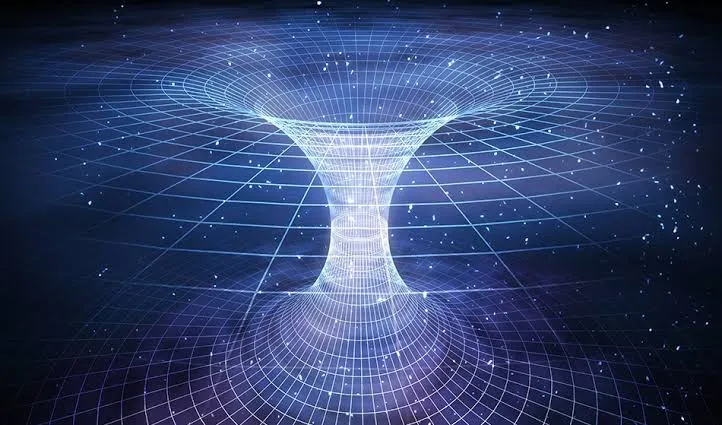
In Einstein’s general relativity, gravity is not a conventional force propagated by interacting particles across a static background. Instead, gravity represents the dynamical curvature of four-dimensional spacetime induced by mass and energy. Massive bodies warp the metric tensor of spacetime, and objects follow geodesic trajectories through this curved manifold. While general relativity makes flawless predictions for planetary orbits, gravitational lensing, and cosmic expansion, applying standard quantum field theory to gravitational geometry produces unmanageable mathematical infinities. Discovering a unified framework of quantum gravity has thus become the premier open problem in fundamental physics.
String Theory Versus Loop Quantum Gravity
Over past decades, two predominant paradigms have attempted to bridge this theoretical schism:
- String Theory: Replaces zero-dimensional point particles with vibrating one-dimensional strings embedded in higher-dimensional spacetime, predicting a massless spin-2 boson known as the graviton to mediate gravitational interactions.
- Loop Quantum Gravity (LQG): Retains background independence, positing that spacetime geometry itself is quantized at the Planck scale ($10^{-35}\text{ m}$) into discrete spin networks.
Despite deep mathematical elegance, both approaches have faced severe observational impasses. Probing the Planck scale requires particle accelerator energies far beyond current technological capabilities, leaving these hypotheses untested by direct empirical measurement.
Jonathan Oppenheim and the Post-Quantum Theory of Classical Gravity
Challenging the entrenched dogma that spacetime itself must be quantized, Professor Jonathan Oppenheim of University College London (UCL) proposed a radical alternative: the “Post-Quantum Theory of Classical Gravity,” published in Physical Review X.
Rather than quantizing spacetime, Oppenheim’s model treats spacetime as fundamentally smooth and classical, while allowing it to interact dynamically with quantum matter fields. To prevent mathematical contradictions, this hybrid interaction requires spacetime to exhibit intrinsic stochastic fluctuations—introducing fundamental randomness into the gravitational metric itself. Spacetime curvature wobbles and fluctuates unpredictably when coupled to quantum particles, resolving the quantum measurement dilemma while preserving classical geometric continuity.
Empirical Tests: Weighing the Kilogram
Crucially, Oppenheim’s post-quantum hypothesis makes testable, real-world predictions. In an accompanying paper published in Nature Communications, researchers outlined a rigorous experimental test: ultra-precise mass metrology.
If spacetime is fundamentally stochastic, a test mass isolated under extreme vacuum should experience minute, continuous weight fluctuations over time due to gravitational decoherence. By monitoring standard primary kilogram artifacts—such as those maintained at the International Bureau of Weights and Measures (BIPM) in France—physicists can establish precise upper bounds on spacetime noise. If observed mass variations remain below predicted thresholds over a twenty-year monitoring period, the hypothesis can be decisively ruled out.
Conclusion
Whether gravity is quantized into discrete quanta or remains a classical, stochastic fabric as Oppenheim suggests, empirical precision tests are finally entering the debate. The search for a complete theory of quantum gravity is shifting from abstract mathematical speculation to precision laboratory physics.