Quantum Biology: How Quantum Mechanics Powers Life
The Emergence of Quantum Biology
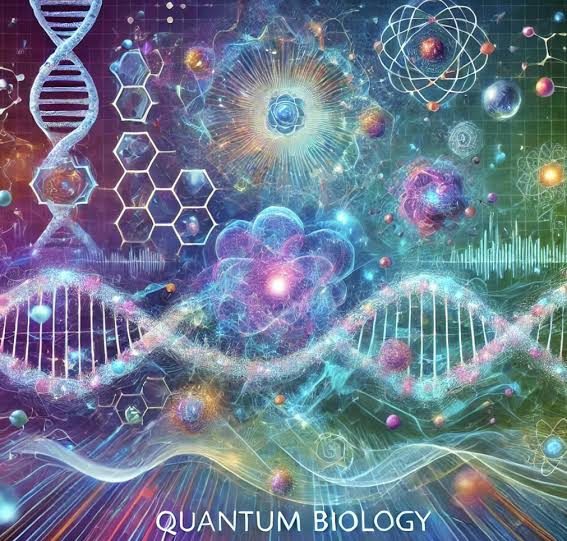
The subatomic realm is governed by the counterintuitive laws of quantum mechanics—a strange physics dramatically different from our macroscopic everyday world. For decades, classical biology treated living cells as warm, wet environments where delicate quantum superpositions could not survive. Yet a pioneering scientific discipline, quantum biology, is revealing that nature has systematically engineered quantum phenomena to power life’s most fundamental mechanisms.
Niels Bohr and the Quantum Spark of Life
Danish physicist Niels Bohr, who received the 1922 Nobel Prize in Physics for explaining atomic structure, was among the first to contemplate the role of quantum principles in biology. In a landmark 1932 Copenhagen lecture entitled Light and Life, Bohr proposed that quantum mechanics held profound implications for deciphering living systems. His visionary address captivated a young German theoretical physicist named Max Delbrück. Inspired by Bohr, Delbrück transitioned from theoretical physics to biology, co-founding modern molecular biology and later earning the 1969 Nobel Prize in Physiology or Medicine.
Erwin Schrödinger and ‘What Is Life?’
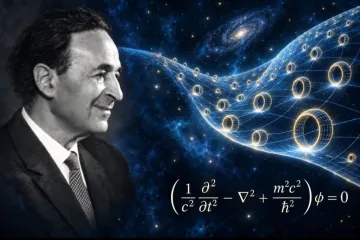
In 1944, Austrian Nobel laureate Erwin Schrödinger—famed for the foundational Schrödinger wave equation—published an influential treatise titled What Is Life?. In this work, Schrödinger boldly predicted the existence of an “aperiodic crystal” encoding hereditary information within covalent chemical bonds. He theorized that transitions of electrons within this macromolecule could drive biological mutations. A decade before the discovery of the DNA double helix, Schrödinger laid the conceptual groundwork uniting quantum physics with the hereditary code of life.
The Great Divide Between Physics and Biology
When James Watson and Francis Crick unraveled the double-helix structure of DNA in 1953, molecular biology and genetics exploded. For half a century, biologists decoded cellular replication, transcription, and protein synthesis using classical biochemistry without invoking quantum weirdness. Simultaneously, physicists focused on solid-state physics and particle colliders. The two branches evolved separately until 21st-century bio-imaging reunited them.
Quantum Superposition in Photosynthesis
Photosynthesis is nature’s most essential biochemical reaction, converting sunlight, water, and carbon dioxide into sugars and oxygen to sustain planetary life. At the reaction center of chlorophyll, incoming solar photons excite electrons, creating quasi-particles called excitons. These excitons navigate toward the reaction center with nearly 100 percent quantum efficiency, losing almost no energy to thermal friction. Advanced ultrafast spectroscopy revealed why: the exciton exploits quantum superposition, simultaneously sampling multiple molecular pathways through the photosynthetic antenna complex to identify the fastest route.
DNA Mutation and Quantum Tunneling
Quantum tunneling—where a subatomic particle passes directly through an otherwise impenetrable energy barrier—also appears to drive genetic variations. The rungs of the DNA double helix are joined by hydrogen bonds pairing adenine with thymine and cytosine with guanine. Under certain conditions, hydrogen protons can quantum-tunnel across these energy barriers into adjacent tautomeric positions, causing replication mismatches during DNA synthesis. Experimental trials using heavier deuterium isotopes significantly diminished mutation rates, confirming the role of proton tunneling in spontaneous genetic mutation.
Enzymatic Catalysis and Proton Transfer
Enzymes are essential biological catalysts that accelerate vital chemical reactions inside living cells by orders of magnitude. For decades, classical lock-and-key models could not fully account for the extraordinary speeds of enzymatic catalysis. Modern biophysics indicates that enzymes utilize quantum tunneling to rapidly shuffle electrons and hydrogen ions between active sites, bypassing classical thermodynamic resistance.
Avian Navigation and Quantum Consciousness
Nature’s quantum repertoire extends across sensory biology. Migratory European robins navigate thousands of miles across continents using specialized cryptochrome proteins in their retinas, which detect Earth’s subtle geomagnetic field through entangled radical-pair quantum states. Furthermore, theoretical physicists like Sir Roger Penrose propose that quantum superposition within neuronal microtubules may provide the physical substrate for subjective consciousness.
The Future of Quantum Biology
While still in its youth, quantum biology is redefining the boundary between physical matter and living organisms. Deciphering how living cells maintain room-temperature quantum coherence will inspire breakthroughs in room-temperature quantum computers, biomimetic solar energy cells, and advanced medicine.