Paradox-Free Time Travel: A New Mathematical Solution
The Enigma and Determinism of Time Travel
Time travel has perpetually fascinated physicists and dreamers alike. Yet exploring the temporal landscape inevitably provokes a thorny conundrum: can the trajectory of history truly be altered? Two physicists have proposed that even though the overarching arc of time operates deterministically, local physical processes retain freedom of action. Their groundbreaking findings suggest that if a traveler ventured into the past to alter a historical event, nature would recalibrate itself to ensure no catastrophic temporal paradoxes emerge.
A Mathematical Breakthrough in Classical and Quantum Gravity
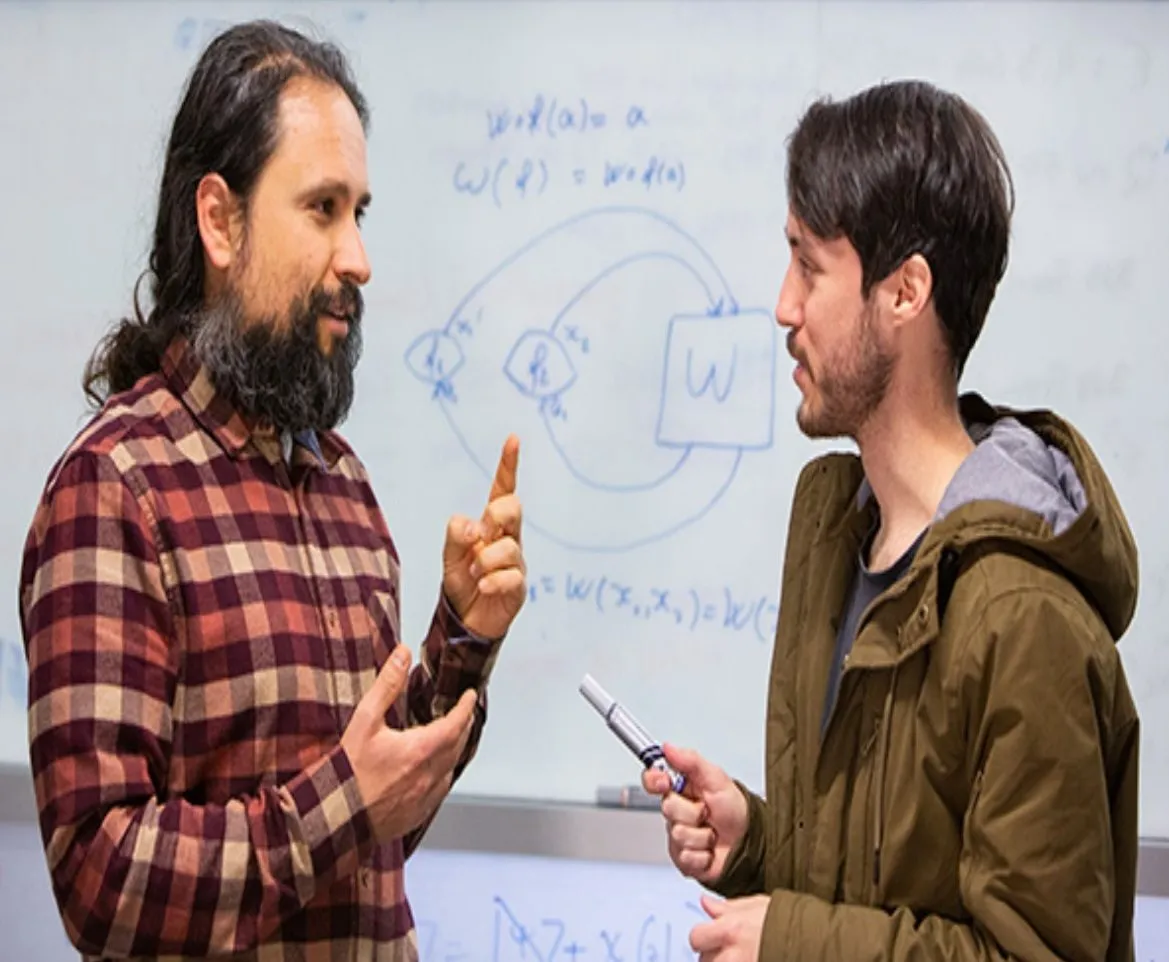
In 2020, this paradigm was published in the peer-reviewed journal Classical and Quantum Gravity. University of Queensland researcher Germain Tobar, working alongside theoretical physicist Dr. Fabio Costa, constructed a rigorous mathematical proof demonstrating that time travel can operate consistently within Einsteinian physics. In essence, they formulated a non-paradoxical mathematical resolution to the longstanding temporal paradoxes that have plagued theoretical physics.
Einstein’s Relativity and Closed Timelike Curves
The mathematical formalism involves Closed Timelike Curves (CTCs), geometric trajectories through curved spacetime permitted by Albert Einstein’s general theory of relativity. A CTC loops through spacetime, allowing an object to return to its own past. Tobar and Costa proved that within these closed loops, multiple localized regions can freely execute deterministic processes without ever colliding with causal inconsistency. Reality naturally settles into a seamless, globally consistent configuration.
The Grandfather Paradox and Pandemic Scenarios
Dr. Costa illustrated this mechanism using a tangible modern scenario: imagine traveling back to late 2019 to prevent Patient Zero from catching COVID-19. Under classical logic, succeeding in this mission would mean the pandemic never occurred—which in turn eliminates your original motive for journeying back in time. This circular contradiction is the quintessential time-travel paradox.
Nature’s Self-Correcting Equilibrium
Tobar and Costa’s mathematics demonstrates that physical laws would self-correct to avoid contradictions. You might successfully prevent Patient Zero from catching the pathogen, but in doing so, you or someone nearby would become infected instead, preserving the overall outbreak. The broad trajectory of timeline history remains conserved while accommodating localized variations.
The Butterfly Effect versus Reality’s Invariable Outcomes
Popular culture often warns of the “butterfly effect,” where a butterfly flapping its wings in the Jurassic era supposedly alters human history. Yet this mathematical model paints a different picture, echoing W. W. Jacobs’ classic tale The Monkey’s Paw, where interventions unwittingly guide circumstances toward the inevitable result. In Tobar’s words: “No matter what you do, you cannot create a paradox in a closed time loop because reality naturally recalibrates itself.”
Destiny, Free Will, and Future Time Machines
While this research resolves a celebrated theoretical roadblock, it offers a sobering revelation for anyone hoping to travel backward to rewrite history or prevent tyranny. If time travel is inherently self-regulating, the macroscopic fabric of historical destiny remains unbreakable. Even if humanity someday engineers a functional time machine, the tapestry of fate will stubbornly endure.