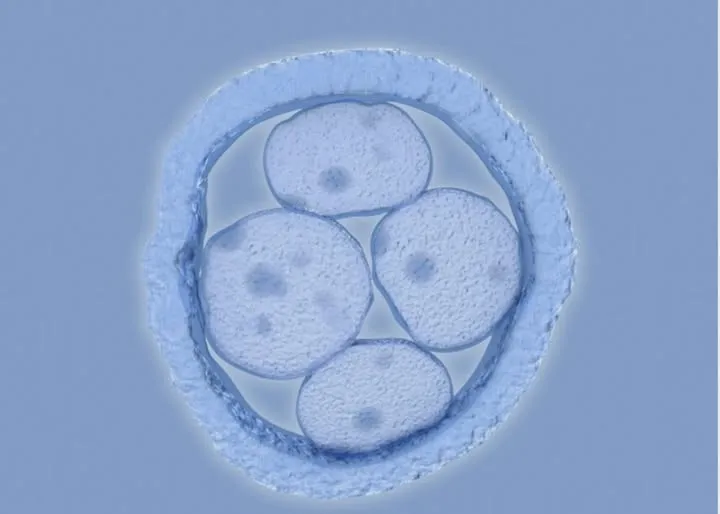
Life's Start Button: How NANOG Ignites Embryos
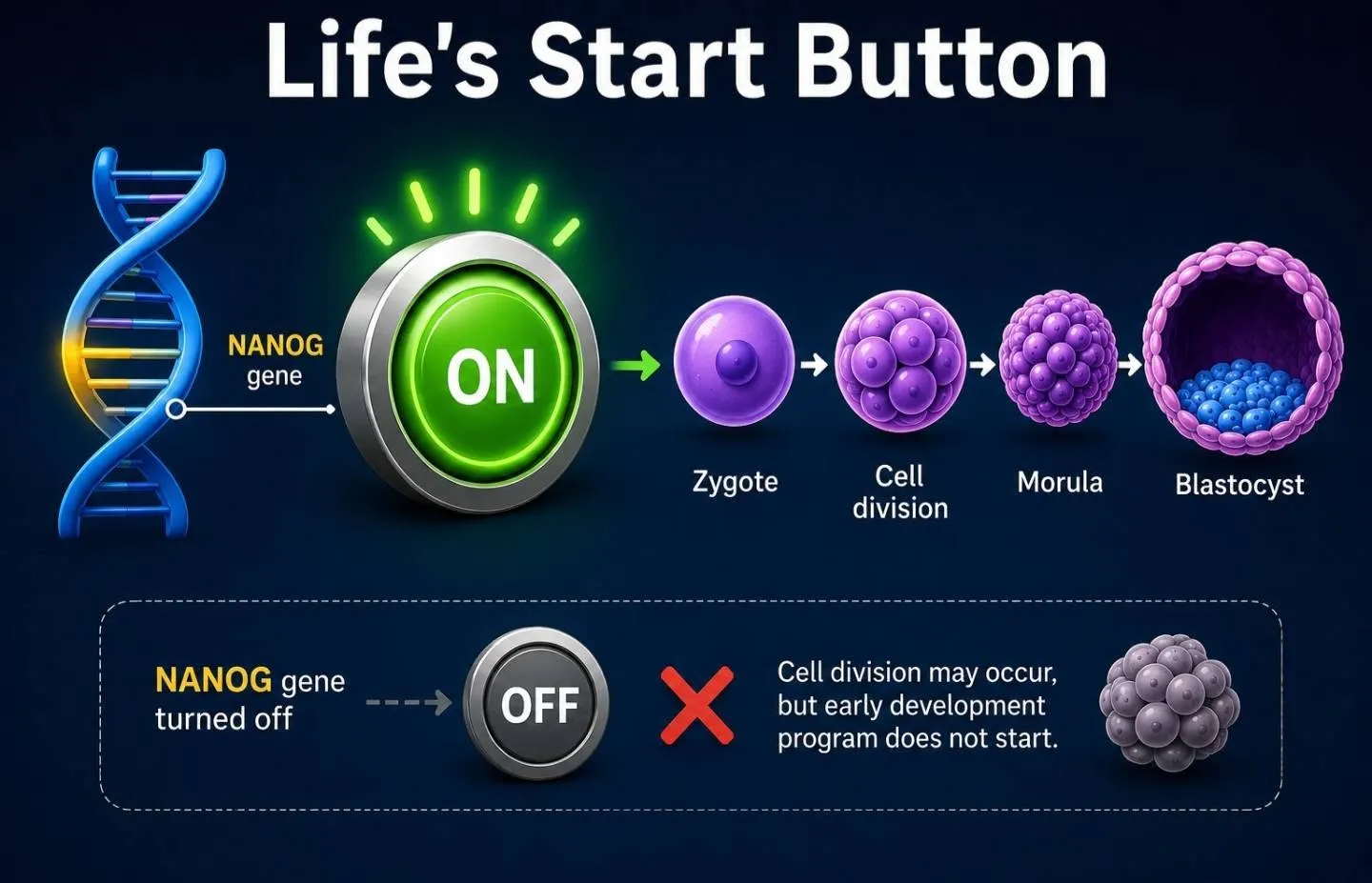
When does human life truly begin? At what precise moment inside a fertilized egg does the genetic program of development ignite? Science has pursued this question for decades. Now, researchers at the University of Cambridge have unveiled a critical piece of the puzzle.
The Role of the NANOG Gene in Human Embryonic Development
Their research reveals that a gene named NANOG functions as the master initiator of human embryonic development. Simply put, it acts like life’s “start button.” Without this gene activated, a fertilized egg may continue cell division, but the fundamental architecture of an embryo fails to form.
The Remarkable Precision of Base Editing
The researchers utilized an ultra-precise gene-editing technique: base editing. Rather than cutting the DNA double helix with conventional CRISPR, they modified a single genetic letter to silence the NANOG gene and observed the developmental outcome. The results were striking.
From the outside, NANOG-silenced embryos appeared morphologically normal under a microscope, yet internally their developmental blueprint had halted. Visual appearance alone cannot confirm whether deep genetic instructions are functioning properly.
New Horizons for IVF and Reproductive Medicine
This discovery carries profound clinical implications. It may explain why many seemingly healthy embryos fail to implant during IVF cycles, while offering valuable insights for regenerative medicine, stem cell biology, and future gene therapies.
Nonetheless, scientists urge caution: the era of gene-edited babies has not arrived, as the technology requires further refinement before clinical application.
The transformation of a single fertilized egg into a complete human being is among nature’s most intricate and awe-inspiring journeys. Standing at the threshold of that voyage is a single gene—NANOG. The ignition of life is truly as wondrous as turning on a switch.