The Four Pests Campaign: Sparrows and the Great Famine
Agricultural Frustrations in 1950s China
During the mid-1950s, agricultural planners in the People’s Republic of China observed flocks of Eurasian tree sparrows feeding on ripening grain fields. Believing that sparrows were consuming vast amounts of grain and hindering national grain yields, authorities targeted the birds for state intervention.
Mao Zedong’s Eradication Directive
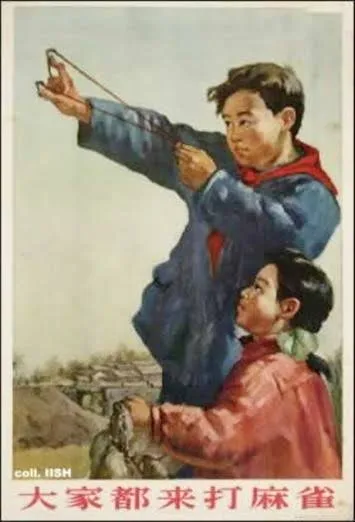
In 1958, Chairman Mao Zedong launched the Great Leap Forward, inaugurating the nationwide Four Pests campaign. Sparrows were classified alongside rats, flies, and mosquitoes as public enemies of hygiene and agriculture. Mao decreed that eradicating the sparrow population would preserve national grain reserves and boost grain harvests.
Mass Mobilization and Nationwide Extermination
The state mobilized hundreds of millions of citizens in an unprecedented ecological assault. Citizens banged pots, pans, and brass drums continuously across towns and agricultural communes, preventing terrorized sparrows from resting until the birds collapsed from exhaustion. Nests were torn down, eggs smashed, and chicks destroyed. Bounties and school competitions rewarded those who presented the most sparrow carcasses. In Shanghai alone, nearly two hundred thousand sparrows were killed in a single day. Within a year, China’s tree sparrow population was nearly decimated.
Ecological Collapse and the Great Chinese Famine
Disaster struck the following harvest. Deprived of sparrows—which consumed colossal quantities of agricultural pests alongside grains—populations of locusts, caterpillars, and leaf-eating beetles exploded uncontrollably. Swarms of locusts devoured vast swathes of agricultural land across the nation. Stripped of crops, China plunged into the Great Chinese Famine. Historians estimate that between 15 and 45 million people perished from starvation and hardship during this catastrophic ecological collapse.
A Belated Lesson in Ecological Equilibrium
Realizing the disaster, Chinese leaders quietly removed sparrows from the Four Pests list, substituting bedbugs in their place. But the ecological equilibrium had already collapsed, requiring the subsequent importation of hundreds of thousands of sparrows from the Soviet Union to replenish native stocks. The tragedy demonstrated that nature is an interconnected web; destabilizing any vital link carries catastrophic unintended consequences.
Modern Ecological Warnings
Humanity continues to test planetary boundaries through deforestation, excessive pesticide usage, microplastic pollution, and industrial greenhouse gas emissions. Nature operates under immutable ecological balances. When human recklessness fractures these delicate systems, the repercussions are unforgiving.