The Euclid Space Telescope: Hunting Dark Matter and Dark Energy
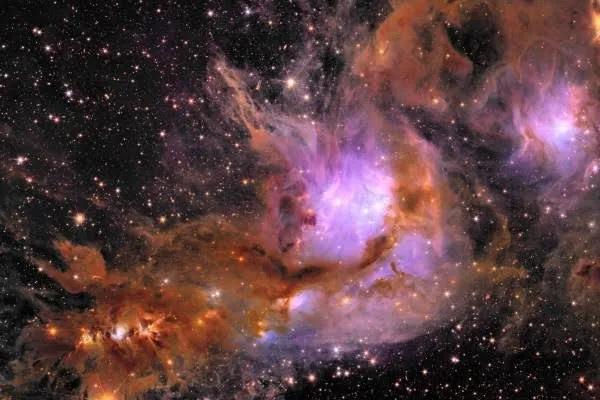
A New Frontier in Cosmic Exploration
Human curiosity about the cosmos drives ever more ambitious space missions. The European Space Agency’s Euclid telescope marks a monumental milestone, designed specifically to decode the mystery of dark matter and dark energy—the enigmatic forces governing cosmic evolution.
Launch and Orbit at Lagrange Point 2
Launched on July 1, 2023, aboard a SpaceX Falcon 9 from Cape Canaveral, Florida, Euclid journeys roughly 1.5 million kilometers from Earth to Sun-Earth Lagrange Point 2 (L2). This gravitationally stable vantage point provides an uninterrupted, thermally stable platform ideal for long-term deep-sky observations.
Decoding the Dark Sector of the Universe
Ordinary baryonic matter—everything comprising stars, planets, and human beings—accounts for barely 5 percent of the cosmic energy budget. The remaining 95 percent consists of unseen dark matter (~27%) and accelerating dark energy (~68%). Euclid’s dual scientific mission maps large-scale cosmic structure and tracks how dark energy has influenced cosmic expansion over the past 10 billion years.
Advanced Scientific Instrumentation
Euclid carries two flagship instruments: the Visible Instrument (VIS), providing razor-sharp optical imaging to capture subtle galaxy distortions, and the Near-Infrared Spectrometer and Photometer (NISP), which determines precise galaxy redshifts and cosmological distances.
Unmatched Celestial Coverage
Euclid is surveying over 15,000 square degrees—more than one-third of the entire celestial sphere. This vast dataset allows cosmologists to chart the cosmic web in 3D with unparalleled statistical precision.
Mapping Through Weak Gravitational Lensing
Euclid employs weak gravitational lensing. As light from distant background galaxies traverses intervening clumps of dark matter, the foreground gravitational field subtly shears and magnifies the images. By measuring these minute statistical alignments across billions of galaxies, scientists reconstruct the invisible dark matter distribution.
Probing Cosmic Acceleration and Dark Energy
In addition to dark matter mapping, Euclid measures baryon acoustic oscillations—primordial sound waves frozen into galaxy clustering patterns—to trace cosmic expansion history and test whether dark energy behaves as Einstein’s cosmological constant or a dynamic field.
Testing the Standard Cosmological Model
Over its planned six-year mission, Euclid will test the Standard Model of Cosmology (Lambda-CDM), illuminating potential physics beyond general relativity.
Synergy with the James Webb Space Telescope
Collaborating synergistically with NASA’s James Webb Space Telescope, Euclid provides wide-field cosmic context that guides JWST’s high-resolution deep-field observations, opening a new chapter in our understanding of the universe.