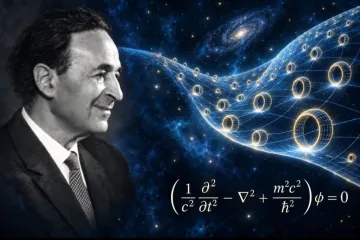
Paul Dirac: Architect of the Quantum World
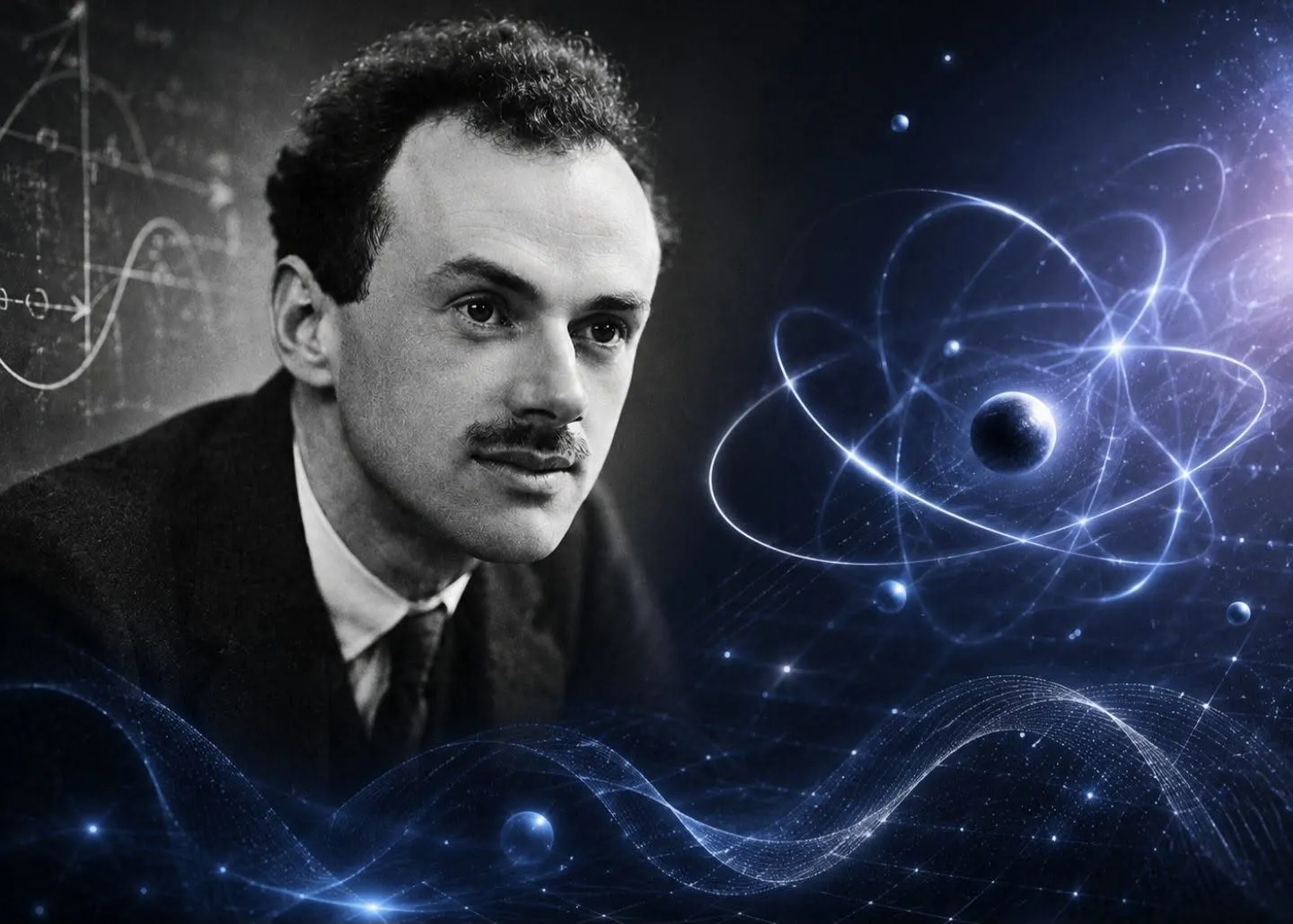
Born in Bristol, England, on 8 August 1902, theoretical physicist Paul Dirac stood as one of the paramount architects of the 20th-century quantum revolution, shaping modern quantum electrodynamics with peerless mathematical clarity.
A Breakthrough Formula: The Dirac Equation
Dirac’s crowning contribution was his relativistic wave equation for the electron. Prior to this milestone, physicists faced an intractable dilemma: reconciling quantum mechanics with Albert Einstein’s special theory of relativity.
The Positron and the Prediction of Antimatter
Through mathematical grace, Dirac harmonised both frameworks into a single formulation. The Dirac equation not only accounted naturally for electron spin, but yielded negative-energy solutions predicting a previously unimaginable particle: the positron, or antielectron.
In 1932, experimental physicist Carl Anderson confirmed the positron in cosmic ray tracks, validating Dirac’s bold hypothesis and establishing the reality of antimatter in modern physics.
Nobel Laureate and the Lucasian Chair
In 1933, Dirac was awarded the Nobel Prize in Physics alongside Erwin Schrödinger. Dirac later held Cambridge University’s esteemed Lucasian Chair of Mathematics for over three decades, the historic professorship once occupied by Sir Isaac Newton. A Fellow of the Royal Society, Dirac spent his later career conducting research at Florida State University until his death on 20 October 1984.
A Legendary Persona and Mathematical Beauty
Dirac was legendary for his extreme conciseness; colleagues jokingly coined the “dirac” as a unit of speech equivalent to one word per hour. Yet behind his quiet demeanor lay deep philosophical commitment. Dirac believed the fundamental laws of nature possess intrinsic mathematical beauty, famously declaring that beauty in one’s equations is more vital than making them fit experiment prematurely.
On his birthday, the scientific community honors a peerless thinker whose mathematical discoveries unveiled the symmetries of our universe.