In Search of Dark Matter: A Bold New Theory on Cosmic Origins
The Invisible Architecture of the Cosmos
The nature of dark matter remains one of the deepest mysteries in modern physics. Cosmological surveys reveal that all visible matter—shining stars, galaxies, nebulae, planets, and humans—accounts for barely five percent of the mass-energy content of the universe. Of the remaining cosmos, roughly 68 percent is dark energy, while approximately 27 percent consists of mysterious dark matter. Among all physical matter, dark matter comprises a staggering 85 percent. Although invisible because it neither absorbs, reflects, nor emits electromagnetic radiation, its gravitational pull sculpts the cosmic web.
A Revolutionary Origin Hypothesis from Dartmouth
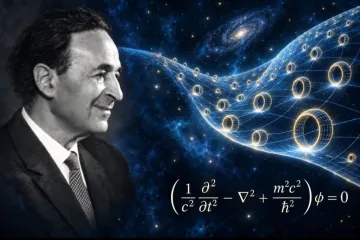
Theoretical physicists at Dartmouth College have proposed a compelling new framework that radically rethinks how dark matter formed. Rather than assuming dark matter particles were born heavy and sluggish, their model proposes that in the extreme heat immediately following the Big Bang, ultra-high-energy, virtually massless particles collided. These turbulent collisions bound the particles into pairs, causing them to rapidly shed kinetic energy and condense into massive particles—analogous to hot vapor cooling and condensing into liquid water droplets. This primordial phase change may have birthed the universe’s dark matter reservoir.
An Empirically Testable Prediction
A crucial advantage of this hypothesis is its testability.
Imprints in the Cosmic Microwave Background
The researchers determined that this primordial phase transition would leave distinctive signatures imprinted across the Cosmic Microwave Background (CMB) radiation. Upcoming high-resolution CMB polarization observatories could detect these specific gravitational wave and density distortions.
Challenging the Standard WIMP Paradigm
This theory diverges sharply from traditional dark matter assumptions. For decades, the leading candidates were Weakly Interacting Massive Particles (WIMPs)—hypothetical particles assumed to have been slow and heavy since the beginning of time. Dartmouth’s research suggests dark matter was originally ultra-relativistic and light, condensing into cold matter only as the universe cooled.
The Role of Subatomic Particles
The mathematical model indicates that this condensation requires mediator particles, potentially related to known subatomic particles like electrons, providing a tangible bridge between the Standard Model of particle physics and the hidden dark sector.
A Potential Revolution in Cosmology
Published in Physical Review Letters on May 14, 2025, this research provides a fresh conceptual roadmap for solving nature’s greatest missing matter puzzle, offering new insights into how our universe assembled its gravitational foundations.
The Path Forward in Cosmic Discovery
As next-generation ground and space telescopes scrutinize the primordial cosmos, validating this model could finally crack the mystery of dark matter, illuminating the silent scaffolding that holds galaxies together across the cosmic expanse.